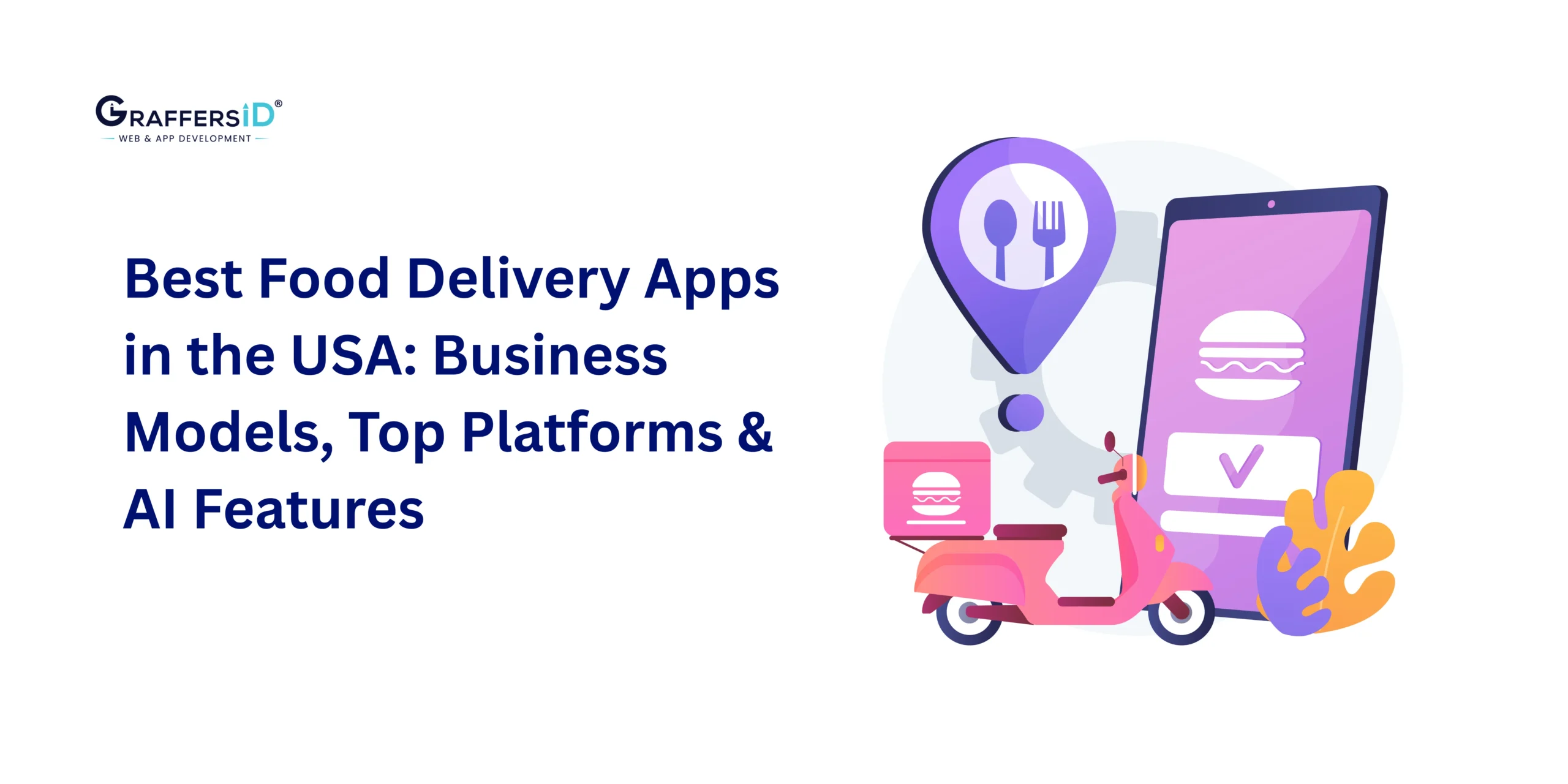
Food delivery apps are no longer a post-pandemic convenience; they are now a core layer of the U.S. digital economy. In 2026, the most successful food delivery platforms are powered by AI-driven logistics, hyper-personalized user experiences, automation-first operations, and real-time data intelligence that optimizes every step of the order journey.
For CTOs, CEOs, and product leaders, food delivery apps represent one of the most mature yet fastest-evolving app ecosystems. Consumer expectations around delivery speed, accuracy, personalization, and reliability are higher than ever. As a result, only technology-first platforms, those built with scalable architecture, intelligent algorithms, and automation, are gaining and retaining market share.
This guide breaks down everything decision-makers need to know about the best food delivery apps in the USA and the technology behind them. You’ll learn:
-
How food delivery apps work in 2026, from AI-powered order routing to predictive ETAs
-
Which food delivery apps dominate the U.S. market, and why they win
-
The business models that drive profitability and scale
-
Must-have features and AI technologies shaping next-gen platforms
-
How to build a competitive food delivery app that’s ready for growth in 2026 and beyond.
How Do Food Delivery Apps Work in 2026?
In 2026, food delivery apps work as AI-powered, multi-sided digital platforms that seamlessly connect customers, restaurants, and delivery partners through a single, intelligent system. These platforms use automation, real-time data, and predictive algorithms to ensure faster deliveries, accurate order fulfillment, and personalized user experiences.
Instead of acting as simple ordering tools, modern food delivery apps function as end-to-end logistics and commerce platforms, handling everything from restaurant discovery and payment processing to delivery routing and post-order analytics.
Who Uses a Food Delivery App? Core User Types in a Food Delivery Ecosystem in 2026
A food delivery ecosystem typically includes four interconnected user types, each supported by dedicated interfaces and AI-driven workflows.
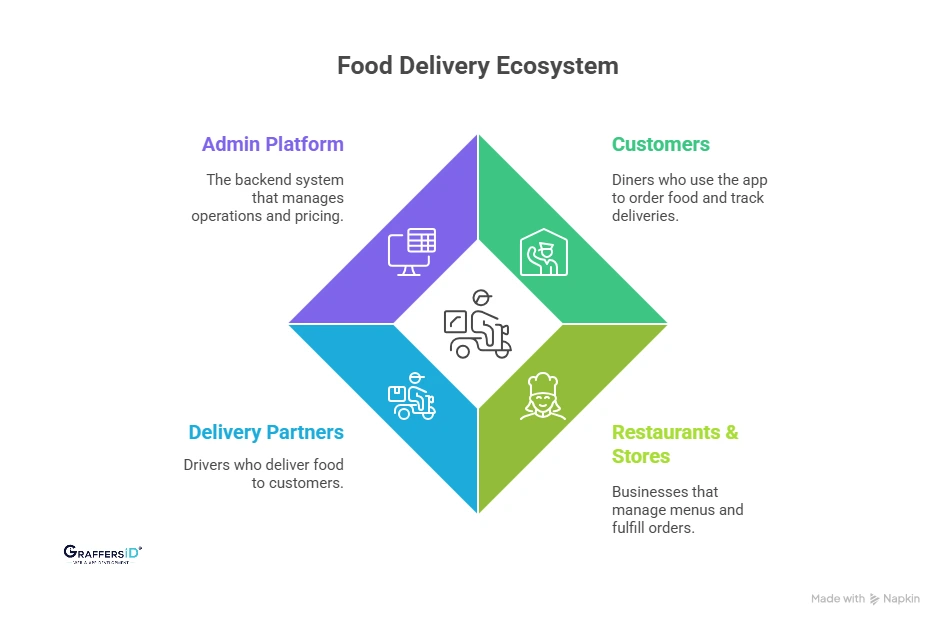
1. Customers (Diners)
Customers use the app to:
-
Discover nearby restaurants and stores using location-based search
-
Browse AI-curated menus based on preferences, time, and past orders
-
Place orders, make secure payments, and track deliveries in real time
-
Receive personalized recommendations, offers, and delivery updates
AI plays a key role in improving the customer experience through predictive ETAs, smart reordering, and contextual suggestions.
2. Restaurants & Stores
Restaurants and grocery stores use a dedicated dashboard to:
-
Manage menus, pricing, availability, and promotions
-
Accept, prepare, and fulfill incoming orders
-
Monitor demand trends and peak hours
-
Reduce cancellations using automated order status updates
In 2026, many platforms use AI demand forecasting to help restaurants prepare inventory and staffing in advance.
3. Delivery Partners (Drivers & Couriers)
Delivery partners interact with the platform through a courier app that allows them to:
-
Accept or reject delivery tasks
-
Follow AI-optimized delivery routes
-
Track earnings, incentives, and performance metrics
-
Communicate with customers and restaurants in real time
Advanced route optimization and traffic prediction help reduce delivery times and operational costs.
4. Admin Platform (Platform Owners)
The admin system is the intelligence layer of the food delivery app. It enables platform owners to:
-
Monitor real-time operations and order flow
-
Control commissions, delivery fees, and dynamic pricing
-
Detect fraud and suspicious activity using AI
-
Analyze customer behavior, retention, and lifetime value
This backend ensures the entire ecosystem runs efficiently, securely, and at scale.
Read More: AI in the Food Industry: How AI Is Transforming Modern Food Delivery App Development in 2026?
Food Delivery App Business Models: How They Work & Make Money (2026)
Food delivery apps in the USA generally operate on two proven business models. Each model impacts scalability, cost structure, user experience, and long-term profitability. Understanding these models helps choose the right approach before building or scaling a platform.
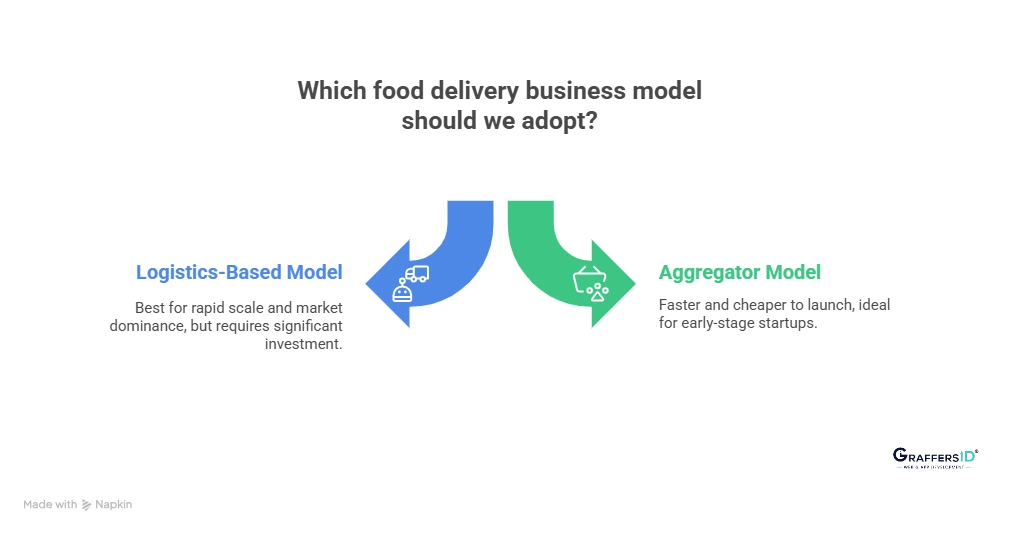
1. Logistics-Based Food Delivery Model (Most Scalable)
Used by: Uber Eats, DoorDash, Postmates
The logistics-based model is the most scalable and dominant food delivery business model in 2026. In this setup, the platform manages the entire delivery lifecycle, while restaurants focus only on preparing food.
How does the logistics-based model work?
-
The platform owns or coordinates a dedicated delivery partner network
-
AI-powered systems handle order routing, driver assignment, and delivery optimization
-
Restaurants receive, prepare, and hand off orders
-
Customers track orders in real time through the app
Best for: Venture-backed startups, large platforms, and enterprises aiming for rapid scale, market dominance, and long-term data advantage.
2. Aggregator Food Delivery Model (Lower Cost & Faster Launch)
Used by: ChowNow, local or early-stage platforms
The aggregator model connects customers with restaurants but does not manage delivery logistics. Restaurants handle deliveries using their own staff or third-party services.
How does the aggregator model work?
-
The app lists nearby restaurants and their menus
-
Customers place orders through the platform
-
Restaurants manage order preparation and delivery independently
-
The platform focuses on discovery, ordering, and payments
Best for: Early-stage startups, regional platforms, and restaurant-focused solutions prioritizing speed, simplicity, and cost efficiency.
Read More: 7 Best Programming Languages for Hospitality and Travel App Development in 2026
How Food Delivery Apps Work? Step-by-Step Order Flow (2026)
- App Launch & Smart Location Detection: When a user opens the app, their location is automatically detected using GPS and device signals. This ensures only nearby, available restaurants and stores are shown, improving accuracy and delivery speed.
- AI-Powered Restaurant Ranking: The app uses AI algorithms to rank restaurants based on user preferences, ratings, order history, real-time availability, and estimated delivery time. This helps users make faster decisions with more relevant options.
- Order Placement & Secure Payment Processing: Users select items, customize orders, and complete checkout using secure, tokenized payment systems. Payments are processed instantly to confirm the order without delays or failed transactions.
- Restaurant Order Confirmation & Preparation: The restaurant receives the order through a dedicated dashboard and confirms availability. Food preparation begins immediately, with real-time status updates sent back to the app.
- AI-Based Delivery Partner Assignment: An AI dispatch engine assigns the most suitable delivery partner based on distance, traffic conditions, workload, and predicted delivery time. This reduces delays and optimizes logistics efficiency.
- Real-Time Order Tracking & Notifications: Users track their order live with predictive ETAs and map-based updates. Push notifications provide timely alerts for order status, pickup, and arrival.
- Ratings, Reviews & Feedback Loop: After delivery, users rate the food, delivery experience, and overall service. This feedback feeds back into the platform’s AI models to improve future recommendations and service quality.
Key Features Every Successful Food Delivery App Must Have in 2026
To compete in the U.S. market, food delivery apps in 2026 must go beyond basic ordering. Leading platforms are built around AI, automation, personalization, and real-time intelligence to meet rising user expectations and operational demands.
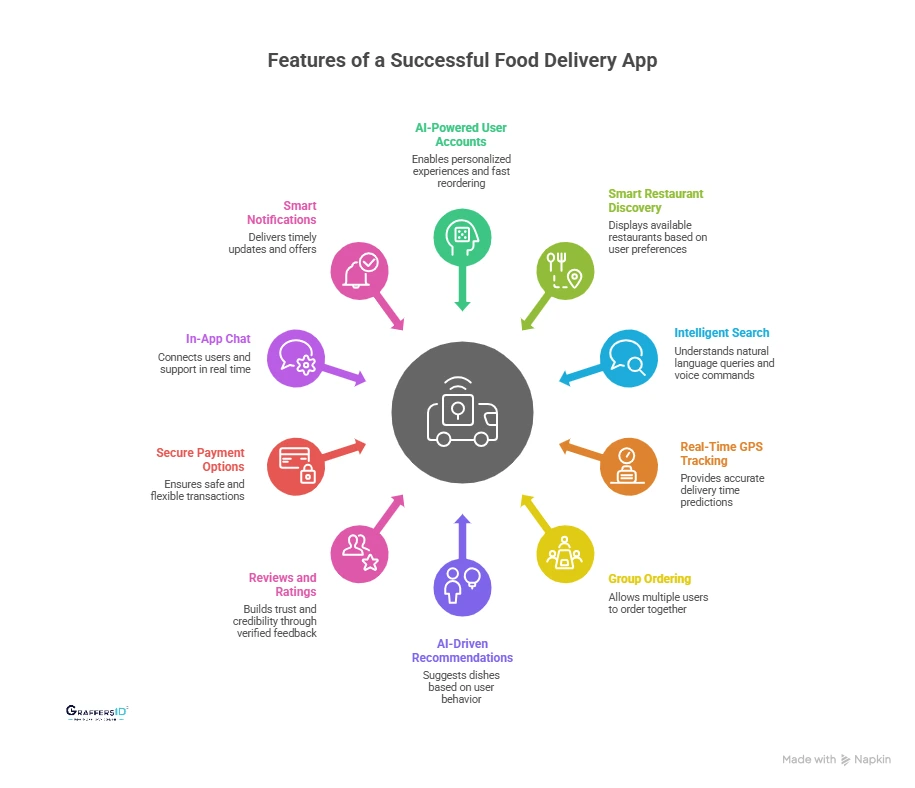
1. AI-Powered User Accounts & Onboarding
Food delivery apps must support one-click onboarding using Google, Apple, or biometric login. AI-driven profiles store order history, preferences, and payment methods to enable fast reordering and personalized experiences across devices.
2. Smart Restaurant Discovery & Real-Time Availability
Apps should display only currently available restaurants and stores using real-time data. AI-based filters help users discover options based on dietary needs, pricing, delivery time, popularity, and location relevance.
3. Intelligent Search & Voice-Based Ordering
Modern food delivery apps use NLP-powered search that understands incomplete queries, typos, and synonyms. Voice ordering via AI assistants allows hands-free ordering and improves accessibility.
4. Real-Time GPS Tracking & Predictive ETAs
Users expect live order tracking with accurate delivery time predictions. AI models analyze traffic, courier behavior, and historical data to calculate ETAs and automatically resolve GPS inconsistencies.
5. Group Ordering & Corporate Meal Management
Group ordering enables multiple users to add items to a single cart from different devices. Features like auto bill-splitting and scheduled corporate orders support office lunches and events.
6. AI-Driven Food & Restaurant Recommendations
Recommendation engines suggest dishes based on past orders, time of day, local trends, and behavioral signals. Smart upselling increases order value without overwhelming users.
7. Reviews, Ratings & Trust Indicators
Only verified customers can leave reviews, improving trust and platform credibility. AI-powered sentiment analysis and fake review detection help maintain food quality standards and platform integrity.
8. Secure, Flexible & Modern Payment Options
Apps should support cards, digital wallets, BNPL, and emerging payment pilots. Tokenization, encryption, and AI fraud detection ensure secure and seamless transactions.
9. In-App Chat & Automated Customer Support
In-app chat connects customers, delivery partners, and restaurants in real time. AI chatbots handle common issues like order delays, refunds, and cancellations, with multilingual support for a wider reach.
10. Smart Notifications & User Retention Tools
Push notifications deliver real-time order updates and personalized offers. AI optimizes notification timing to increase engagement while avoiding alert fatigue.
Latest Technologies Used in Modern Food Delivery Apps in 2026
Modern food delivery apps are built on a technology-first foundation. Some of them are:
- AI & Machine Learning in Food Delivery Apps: AI and machine learning power smarter decision-making across food delivery platforms in 2026. These technologies enable accurate demand forecasting, dynamic pricing based on real-time conditions, and intelligent route optimization to reduce delivery time, costs, and cancellations.
- Cloud Computing & Backend Architecture: Modern food delivery apps rely on cloud platforms like AWS, Google Cloud, and Microsoft Azure to ensure scalability and high availability. Serverless architecture and microservices allow platforms to handle traffic spikes, roll out features faster, and scale operations without downtime.
- Maps, GPS & Location Intelligence: Location technology is critical to delivery accuracy and speed. Advanced mapping solutions like Google Maps and Mapbox now support predictive ETAs, real-time traffic analysis, and automated route adjustments to improve delivery reliability and customer satisfaction.
- Digital Payments & Financial Infrastructure: Food delivery apps in 2026 integrate secure and flexible payment systems such as Stripe, Adyen, Apple Pay, and Google Pay. These platforms support fast checkouts, global payments, subscription billing, and AI-driven fraud detection to reduce failed transactions.
- Data Analytics & Business Intelligence: Real-time analytics help food delivery platforms track performance across users, restaurants, and delivery partners. Advanced dashboards monitor key metrics like order success rates, delivery efficiency, and customer lifetime value to support data-driven growth decisions.
6 Best Food Delivery Apps in the USA (2026): Top Platforms Compared
Below are the most popular and reliable food delivery apps in the USA, based on usability, scalability, and market adoption.
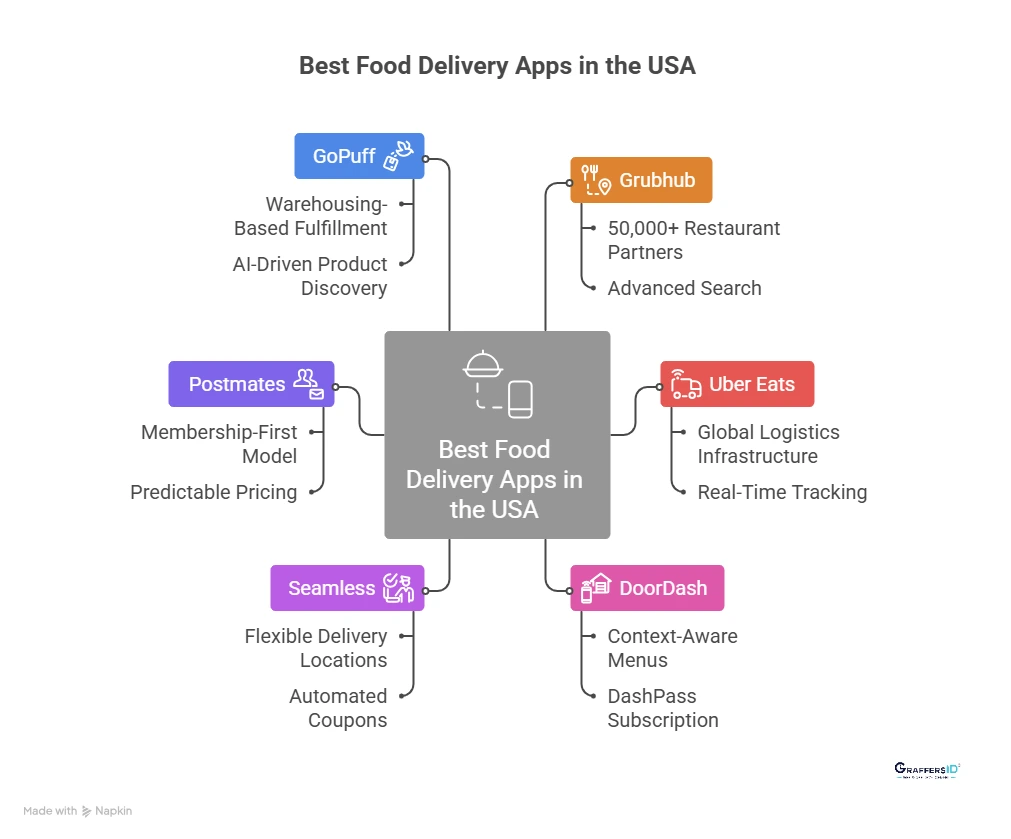
1. Grubhub: Best for Restaurant Variety & Market Stability
Grubhub offers access to 50,000+ restaurant partners across the U.S., making it one of the most diverse food delivery platforms. Its advanced search, filtering, and reliable delivery network make it a go-to choice for users seeking consistency and choice.
Platforms: iOS, Android
2. Uber Eats: Best for AI-Powered Logistics & Urban Coverage
Uber Eats leverages Uber’s global logistics infrastructure to deliver industry-leading ETAs and real-time tracking. Deep ecosystem integration enables smarter recommendations, faster delivery in metro areas, and seamless user experiences.
Platforms: iOS, Android
3. DoorDash: Best for Subscriptions & Feature-Rich Experience
DoorDash is known for its context-aware menus, strong local coverage, and DashPass subscription model. Beyond meals, it supports alcohol, grocery, and convenience store deliveries, making it a true multi-category platform.
Platforms: iOS, Android
4. Seamless: Best for Office & Scheduled Food Deliveries
Seamless excels in scheduled and workplace food ordering, particularly in urban markets. Features like flexible delivery locations, automated coupons, and dependable service make it popular among professionals and businesses.
Platforms: iOS, Android
5. Postmates (by Uber): Best for Subscription-Based Ordering
Postmates operates on a membership-first model, ideal for users who order frequently. Now fully integrated with Uber, it supports everyday food orders and office deliveries with predictable pricing and convenience.
Platforms: iOS, Android
6. GoPuff: Best for Instant Commerce & Convenience Delivery
GoPuff goes beyond restaurants by using warehousing-based fulfillment to deliver snacks, groceries, and essentials at a fixed price. Its AI-driven product discovery and fast delivery make it a leader in instant commerce.
Platforms: iOS, Android
Read More: How to Integrate Online Food Ordering for Restaurants in WordPress
Other Popular Food Delivery Platforms in the USA
-
Instacart: Best for grocery-focused delivery and same-day essentials
-
Caviar: Premium restaurant delivery experience
-
Delivery.com: Food, alcohol, groceries, and local services in one app
- ChowNow: Direct-to-restaurant ordering with lower commissions
Conclusion: Building a Future-Ready Food Delivery App in 2026
Food delivery apps in 2026 are no longer simple ordering platforms; they are AI-first digital ecosystems. Market leaders succeed by combining intelligent logistics, real-time data, automation, and hyper-personalized user experiences at scale. Platforms that fail to invest in these capabilities struggle to meet modern expectations around speed, accuracy, and reliability.
To compete with established players like Uber Eats and DoorDash, businesses must choose the right tech stack, architecture, and development strategy from day one. Scalability, AI-driven decision-making, and operational efficiency are now essential, not optional.
At GraffersID, we help startups and enterprises build scalable, AI-powered platforms by providing expert remote developers from India. Our teams specialize in web and mobile app development, AI automation, intelligent recommendations, and custom food delivery solutions tailored for growth in 2026 and beyond.
Have an app idea or looking to modernize your food delivery platform? Contact GraffersID today and build faster with the right tech and talent.