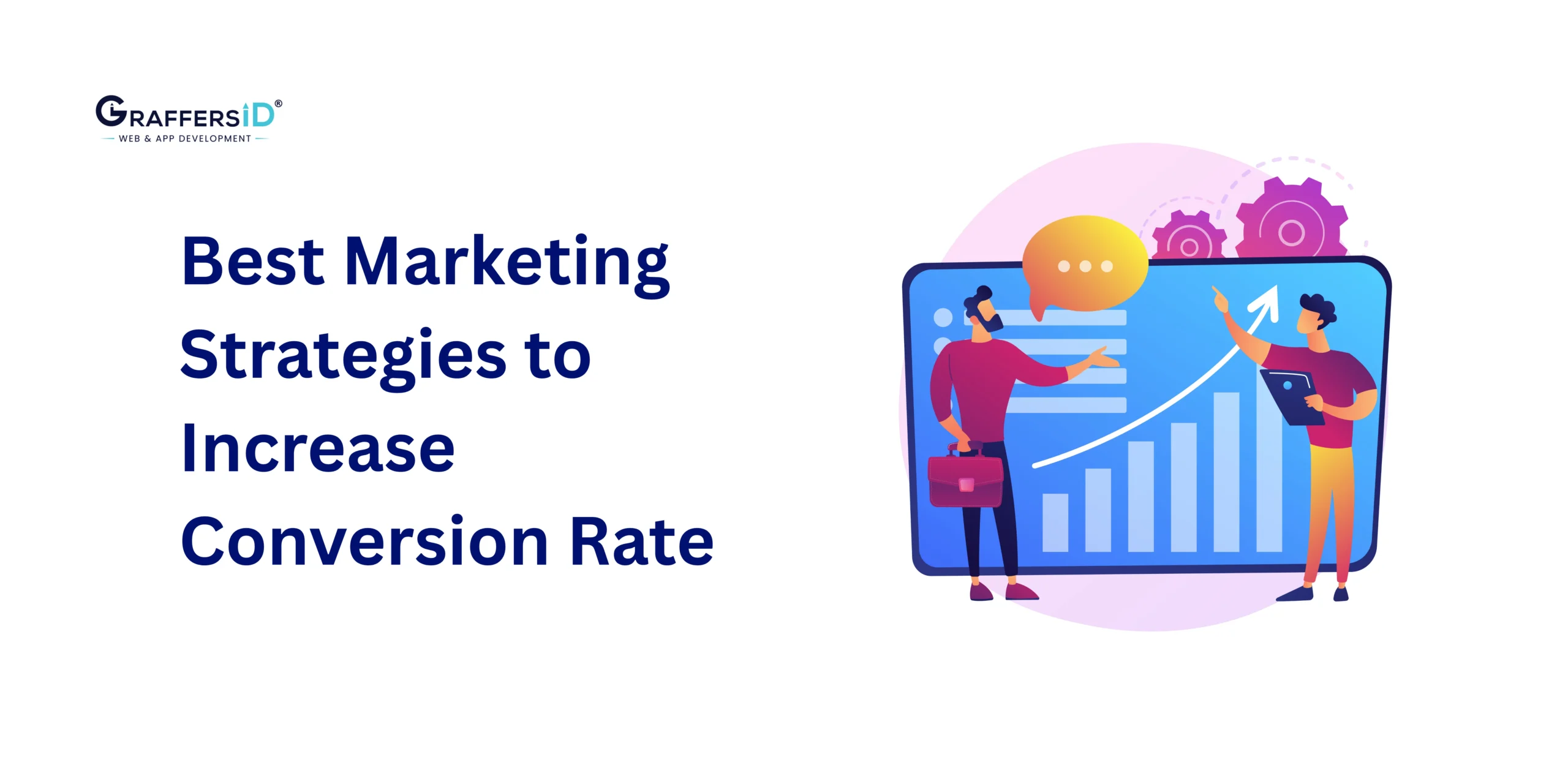
In 2026, traffic is no longer the growth metric that matters; conversions are. AI-powered search engines, zero-click results, and hyper-informed buyers have changed how people discover and choose service providers. Getting visitors to your website is easier than ever. Convincing them to trust you, engage with you, and become paying clients is where most businesses struggle.
Today’s buyers, CTOs, CEOs, founders, and product leaders don’t respond to generic pitches or bold claims. They evaluate businesses based on clarity of messaging, credibility of expertise, and confidence in execution. If your marketing doesn’t address these signals, traffic alone won’t move the needle. This is exactly where conversion marketing becomes a competitive advantage.
Conversion marketing is the strategic process of turning website visitors, leads, and prospects into qualified clients by optimizing every touchpoint, messaging, positioning, trust signal, offer, and follow-up across the buyer journey.
In this 2026-ready guide, we break down three proven conversion marketing strategies that reflect how modern buyers think, evaluate, and decide. These strategies are refined for AI-driven sales cycles, B2B service businesses, and IT, SaaS, and development companies that want measurable results, not vanity metrics.
If your goal is to convert more prospects without increasing ad spend, this guide is built for you.
What is Conversion Marketing?
Conversion marketing is a data-driven marketing approach focused on turning website visitors, leads, and prospects into paying customers or qualified clients.
Instead of measuring success by traffic or impressions alone, conversion marketing prioritizes actions that directly impact revenue, such as:
-
Booking a sales call or demo
-
Submitting a contact or proposal request form
-
Signing up for a trial or consultation
-
Completing a purchase or service agreement
In 2026, conversion marketing goes beyond traditional funnels. It combines behavior analytics, AI-powered insights, trust signals, personalization, and strategic follow-ups to guide buyers from interest to decision with minimal friction.
Read More: AI in Marketing: AI Marketing Platforms, Ethics, Best Practices in 2026
The ongoing process of improving how many users take these actions is known as Conversion Rate Optimization (CRO). CRO involves continuously testing and refining:
-
Website messaging and positioning
-
Page layouts, CTAs, and user flows
-
Offers, pricing presentation, and risk reversal
-
Sales handoffs, email follow-ups, and onboarding journeys
In simple terms: Conversion marketing ensures that the traffic you already have actually turns into business outcomes, not just visits.
Prospects vs. Leads vs. Clients: What’s the Difference & Why It Affects Conversions?
Understanding the difference between a prospect, a qualified lead, and a client is fundamental to improving conversion rates in 2026. When businesses treat all inquiries the same, sales cycles slow down, follow-ups become ineffective, and teams waste time on people who were never likely to convert.
Modern conversion marketing focuses on matching the right message, effort, and timing to the right stage of the buyer journey.
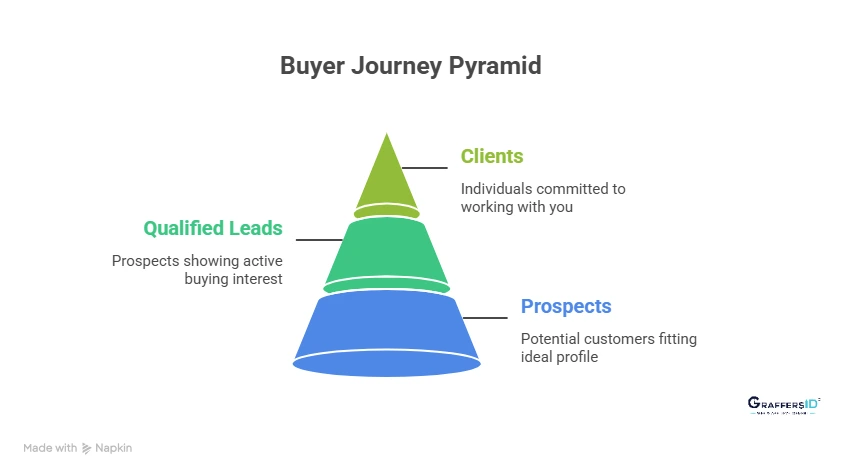
1. What is a Prospect?
A prospect is an individual or organization that fits your ideal customer profile (ICP) but has not yet shown active buying intent. Prospects typically:
-
Match your target industry, company size, or role
-
Have a potential need for your solution
-
Have not filled out a form, requested a quote, or booked a call
At this stage, your goal is education and trust-building, not selling. Pushing offers too early often leads to disengagement.
2. What is a Qualified Lead?
A qualified lead is a prospect who has taken a clear action indicating interest in your product or service. This can include:
-
Submitting a contact or inquiry form
-
Booking a consultation or demo
-
Replying to a sales email
-
Requesting pricing or timelines
Qualified leads require contextual follow-ups, deeper discovery, and proof of expertise. This is where most conversions are won or lost.
3. What is a Client?
A client is someone who has formally committed to working with you. A prospect becomes a client only after they have:
-
Agreed to the scope or proposal
-
Approved pricing and timelines
-
Completed payment or contract formalities
-
Cleared onboarding or kickoff stages
Until these steps are complete, they are not a client and should not be treated as one.
Key Conversion Insight for 2026
Many sales teams still spend significant time chasing “suspects”—people who lack urgency, budget authority, or decision-making power.
In 2026, with AI-assisted lead generation and higher inbound volumes, this mistake is even more costly.
Effective conversion marketing helps you:
-
Qualify serious buyers faster
-
Disqualify low-intent leads early
-
Personalize messaging by buyer stage
-
Focus sales efforts where conversions are most likely
The result is shorter sales cycles, higher close rates, and better use of time and resources.
Top 3 Conversion Marketing Strategies to Increase Conversion Rate in 2026
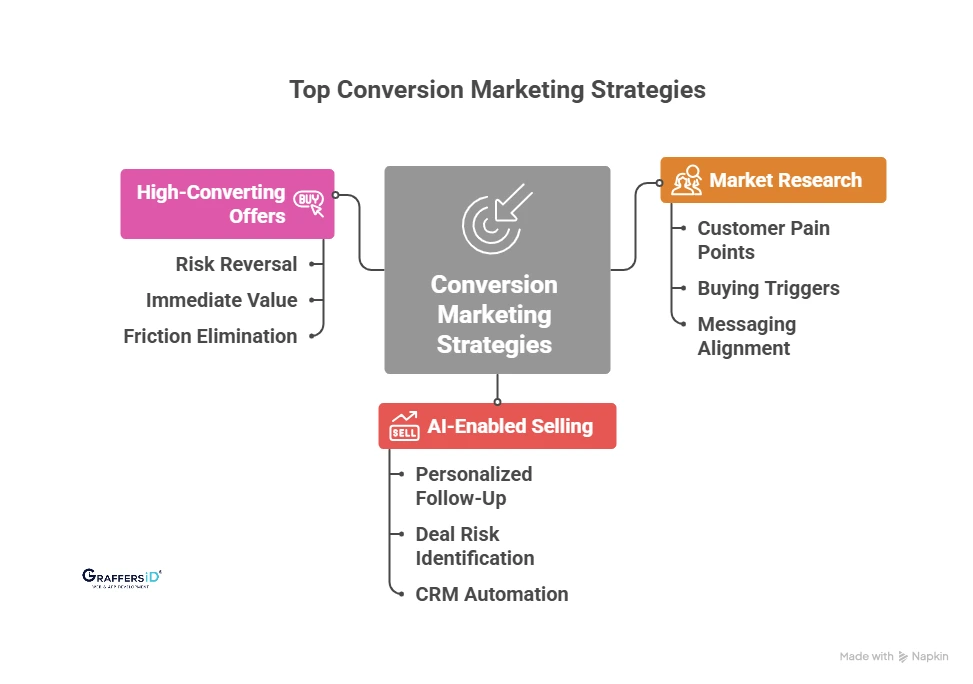
1. Use Market Research to Improve Conversion Rates
Why Market Research Directly Impacts Conversions in 2026?
In 2026, guessing what customers want is one of the fastest ways to lose conversions.
Modern buyers research extensively before they ever speak to a sales team. Data-driven market research helps businesses reduce uncertainty, sharpen positioning, and align messaging with what buyers already care about, resulting in higher conversion rates.
Instead of trying to create demand from scratch, high-performing companies identify existing demand, uncover unmet expectations, and position their solution as the best-fit choice.
This approach is faster, more cost-effective, and significantly more scalable.
How Market Research Improves Conversion Rates?
Effective market research enables you to:
-
Understand real customer pain points, not assumed ones
-
Identify buying triggers that move prospects to action
-
Discover why prospects hesitate or drop off
-
Craft messaging that matches how buyers think and search
-
Differentiate clearly in crowded and competitive markets
Third-party research, surveys, and customer interviews often reveal insights internal teams miss, such as:
-
Messaging that isn’t landing the way you expect
-
Features that add complexity but not perceived value
-
Pricing objections caused by poor value framing
-
Trust gaps in sales conversations or landing pages
Understanding your audience deeply is far more effective and less risky than pushing assumptions.
2. Improve Sales Skills with AI-Enabled Selling
Why Sales Skills Matter More Than Ever in 2026?
In 2026, buyers are:
-
Better informed
-
More skeptical of marketing claims
-
Less tolerant of pushy or scripted sales tactics
The highest-converting sales professionals don’t push products; they guide decisions. Modern sales is no longer about persuasion. It’s about education, clarity, and trust-building.
How Modern Sales Teams Convert More Leads?
High-performing sales teams focus on:
-
Asking smarter, context-driven questions
-
Sharing insights instead of pitching features
-
Recommending solutions based on real-world use cases
-
Helping buyers make informed decisions before asking for commitment
AI now plays a critical role in enabling this approach.
How AI Improves Sales Conversions in 2026?
AI-enabled sales tools help teams:
-
Analyze call sentiment and buyer intent
-
Suggest personalized follow-up talking points
-
Identify deal risks early in the sales cycle
-
Automate CRM updates and activity tracking
This allows sales teams to focus on high-value conversations, not manual tasks. Strong sales skills compound over time, improving close rates, deal size, and long-term client value.
3. Create High-Converting Offers That Remove Buyer Friction
Why Most Offers Fail to Convert in 2026?
In today’s market, doing nothing is the default choice. Prospects won’t move forward unless:
-
Risk feels minimal
-
Value is immediately clear
-
The next step feels easy and safe
An effective offer reduces hesitation and makes moving forward feel like the logical choice.
What Makes an Offer Convert in 2026?
High-converting offers are designed to:
-
Remove perceived risk
-
Add immediate, tangible value
-
Eliminate hidden friction in the buying process
-
Clearly communicate differentiation
Well-structured offers, especially those that include risk reversal, clarity, and fast value, can increase conversion rates by up to 300%.
Conversion marketing isn’t about tricks or aggressive tactics. It’s about reducing uncertainty, building trust, and guiding buyers to confident decisions.
How to Increase Client Replies and Follow-Ups in 2026?
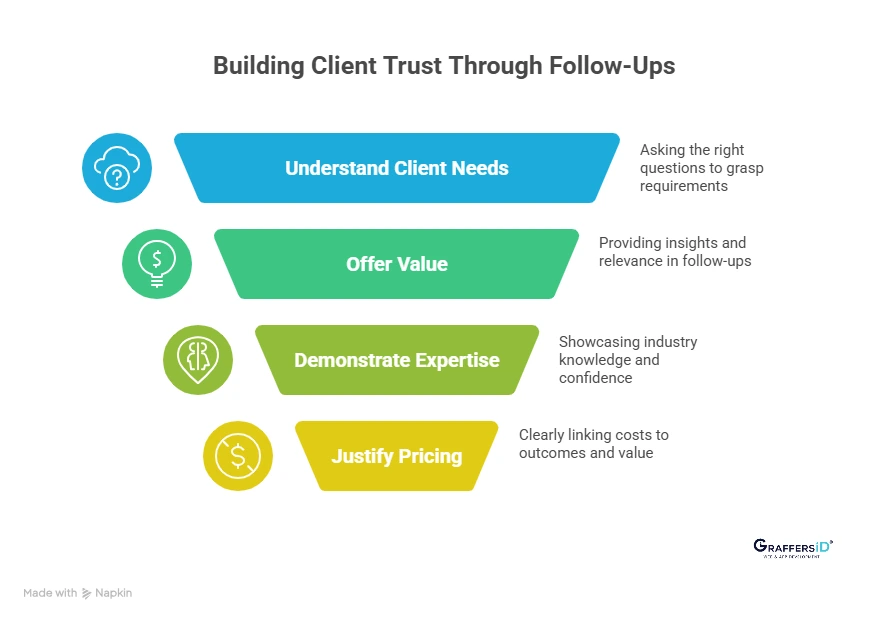
Why Follow-Ups Are Critical for Client Conversions?
In 2026, 60–70% of IT and B2B service deals close after consistent follow-ups, making follow-up strategy a major conversion driver rather than a secondary activity.
Why Most Follow-Ups Fail to Get Responses?
Many follow-ups don’t convert because they repeat the same message, fail to offer new value, and feel transactional instead of helpful.
- Follow-Ups Without Value Get Ignored: Prospects disengage when follow-up emails or messages don’t provide insights, clarity, or relevance to their business problem.
- Generic Follow-Ups Reduce Trust: Messages that sound copied, automated, or desperate lower credibility and push prospects to delay or disengage.
Read More: How to Build a Successful AI Adoption Strategy in 2026: A Proven Framework for CEOs and CTOs
Why Clients Don’t Reply After the First Conversation?
- Poor Requirement Understanding: Clients stop responding when they feel their needs weren’t fully understood, or the right questions weren’t asked.
- Low Confidence in Expertise: If prospects sense uncertainty in your communication, they hesitate to move forward, even if your solution is strong.
- Weak Domain Knowledge Signals Risk: A lack of industry or domain insight makes clients question whether you can execute effectively.
- Pricing Feels Unjustified: When pricing isn’t clearly tied to value or outcomes, clients delay decisions or go silent.
All of these point to one root cause: Lack of trust! When trust isn’t established early, follow-ups feel like pressure instead of progress.
Follow-Up Strategy That Converts Leads into Clients in 2026
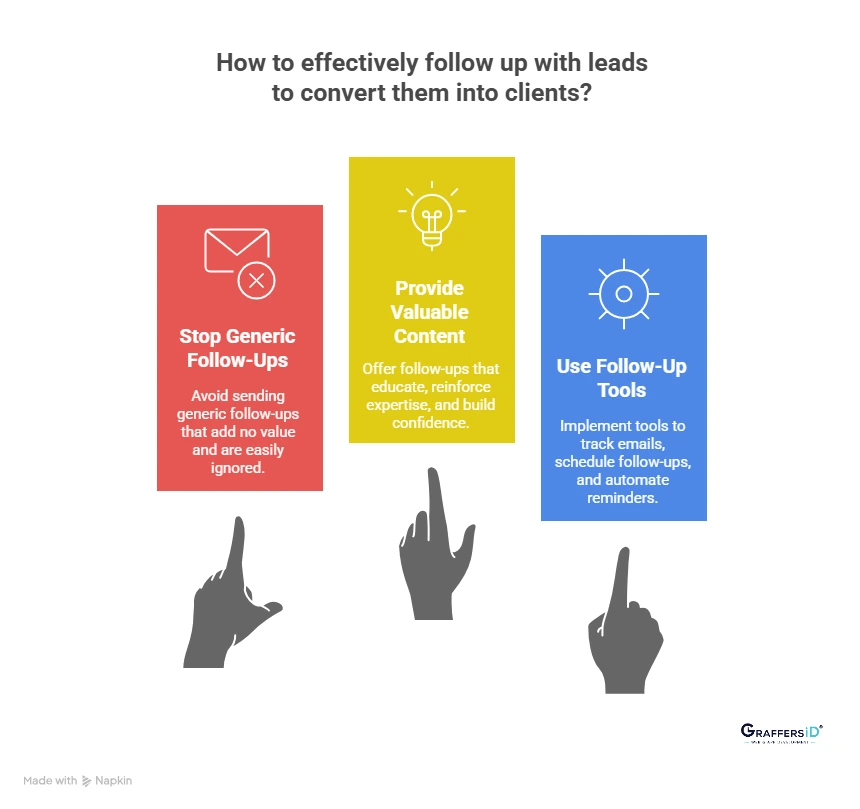
Rule 1: Stop Sending “Just Checking In” Follow-Ups
Generic follow-ups like “Any update?” add no value and are easily ignored by modern, high-intent buyers.
Rule 2: Make Every Follow-Up Valuable
Effective follow-ups educate the prospect, reinforce your expertise, and build confidence instead of chasing responses.
What to Include in Value-Driven Follow-Ups?
- Competitor Strategies That Work: Highlight proven approaches competitors are using successfully in the same market.
- Failed or Ineffective Industry Tactics: Share common mistakes or outdated strategies to help prospects avoid costly errors.
- Latest Industry or Technology Trends: Reference relevant innovations, tools, or shifts shaping the client’s industry in 2026.
- Risks and Mitigation Insights: Identify potential project or market risks and explain how they can be addressed early.
- UX and Usability Improvements: Suggest small usability or experience enhancements that improve adoption and engagement.
- Gaps in Initial Requirements: Politely point out missing considerations that could impact scalability or user satisfaction.
Tools That Improve Follow-Up Conversions
- Email Tracking Tools: Use open and engagement tracking to time follow-ups more effectively.
- AI-Based Email Scheduling: Leverage AI tools to send follow-ups at optimal engagement times.
- CRM Reminders and Automation: Automate follow-up reminders to maintain consistency without manual effort.
Even if they don’t reply, you stay top of mind.
Final Takeaway: Why Conversion Marketing Wins in 2026
In 2026, conversion marketing is no longer about aggressive tactics or short-term persuasion. It’s about building trust at every stage of the buyer journey through clarity, consistency, and confidence.
Businesses that convert effectively focus on three fundamentals:
-
They understand their audience deeply, not just demographically but contextually
-
They communicate with confidence and credibility, not hype
-
They deliver real value at every touchpoint, from first visit to final follow-up
When these elements align, prospects don’t need to be pushed. They choose you, often without comparing alternatives.
At GraffersID, we help businesses execute with confidence by combining the right talent, technology, and delivery approach. Our teams support companies by providing expert AI developers and dedicated remote tech teams, building scalable, performance-driven web and mobile applications, and implementing AI-powered automation and custom software tailored to business goals
Contact GraffersID today and build solutions that move your business forward.