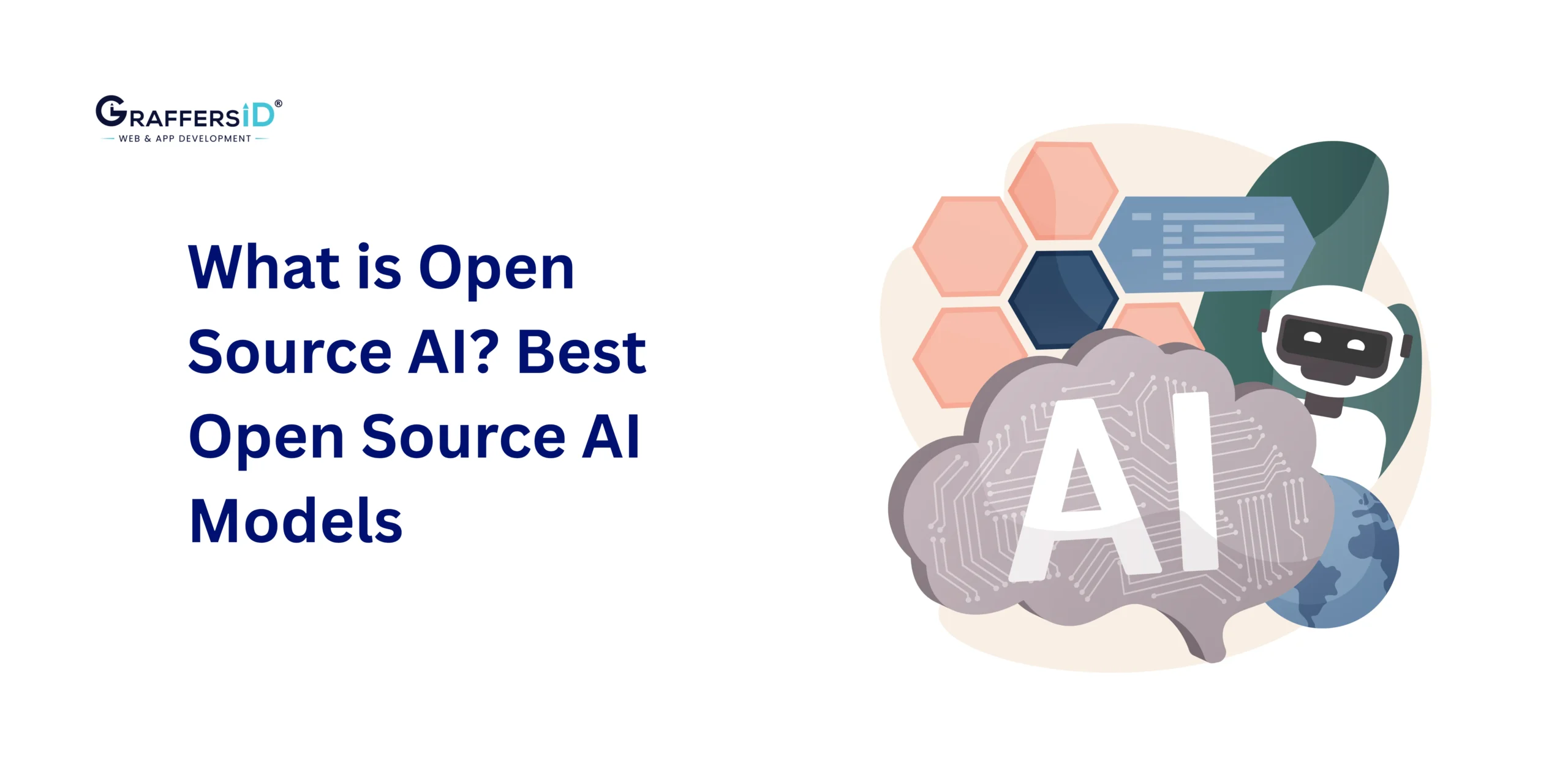
In 2026, open-source AI is no longer just a developer experiment; it’s a global movement redefining how businesses build, scale, and deploy intelligent systems. Unlike closed, proprietary models locked behind paywalls, open-source AI puts the power of innovation directly in the hands of enterprises, startups, and independent developers.
By making model architectures, training data, and source code publicly accessible, Open AI encourages transparency, adaptability, and collaboration, the very principles shaping the future of digital transformation.
Today, leading organizations are adopting open-source AI to gain control, cost efficiency, and customization over their AI infrastructure. Whether it’s Meta’s LLaMA 3, Mistral 8x7B, or Falcon 2, these open-weight models are now matching, and sometimes outperforming, commercial alternatives in performance and reliability.
This article breaks down everything you need to know about open-source AI, including what it really means, its core business benefits, top open models shaping the market, key challenges to watch, and the future trends driving the next era of AI innovation.
What Is Open Source AI in 2026?
Open-source AI refers to artificial intelligence systems where the model code, weights, and datasets are publicly available for anyone to use, modify, and improve.
Unlike closed, proprietary models like GPT-5 or Gemini 2, open-source AI promotes transparency, flexibility, and community-driven innovation, allowing organizations to build and customize their own AI systems without vendor lock-in.
Key Features of Open Source AI
1. Transparency: Anyone can inspect the source code, architecture, and data used in training, ensuring full visibility and accountability.
2. Flexibility: Open models can be easily fine-tuned and customized for specific business needs or industry applications.
3. Community Collaboration: Thousands of developers worldwide contribute to improving model accuracy, performance, and ethical standards.
4. Reproducibility: Open frameworks allow teams to replicate results, test performance, and validate outputs across environments.
5. Cost Efficiency: With no licensing restrictions, businesses can deploy enterprise-grade AI at a fraction of the cost of proprietary tools.
How Open Source AI Evolved (2020–2026)?
The open-source AI revolution began with models like BERT (2019) and GPT-2 (2020). Over time, communityed innovation accelerated, giving rise to next-gen open models capable of reasoning, multimodal tasks, and code generation.
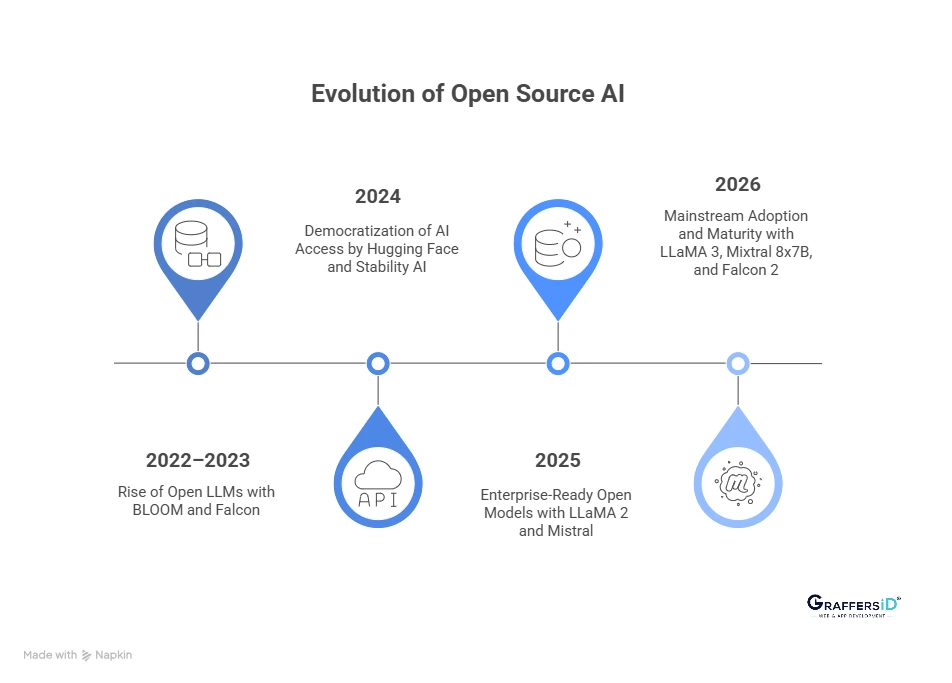
1. Rise of Open LLMs (2022–2023): Projects like BLOOM and Falcon marked the first generation of open large language models that matched commercial systems in reasoning and scale.
2. Democratization of AI Access (2024): Platforms such as Hugging Face and Stability AI made open-source AI tools and models easily accessible, empowering startups and researchers globally.
3. Enterprise-Ready Open Models (2025): The release of LLaMA 2 and Mistral transformed open AI from research experiments into reliable, enterprise-grade technologies.
4. Mainstream Adoption and Maturity (2026): Models like LLaMA 3, Mixtral 8x7B, and Falcon 2 became dominant in enterprise deployments, driving scalable, transparent, and ethical AI systems.
According to IDC, by 2026, roughly 60 % of organisations in Asia-Pacific (excluding Japan) will develop applications based on open-source foundation models, driven by demands for faster innovation, operational sovereignty, and cost-control.
Read More: What Is Artificial Intelligence in 2025? Definition, Types, Benefits & Real-World Use Cases
Top Benefits of Open Source AI for Businesses in 2026
Open-source AI is not just a cost-saving measure; it’s a strategic advantage for modern enterprises. Here’s why leading CTOs and AI architects are adopting it in 2026:
1. Transparency and Trust: Open-source AI gives full visibility into how models are trained and operate, building trust and accountability in sensitive industries.
2. Lower Costs and Easy Access: It eliminates expensive licensing fees, making enterprise-level AI tools affordable for startups and growing companies.
3. Customization for Every Industry: Businesses can easily fine-tune open models like LLaMA 3 or Falcon 2 to match specific use cases across sectors such as fintech, legal, and healthcare.
4. Faster Innovation and Upgrades: A global open-source community continuously improves models, driving faster innovation and performance optimization.
5. Better Security and Data Control: Open AI lets enterprises deploy models on private infrastructure, ensuring data privacy and independence from third-party providers.
Top Open Source AI Models to Use in 2026
The open AI landscape is now as powerful as proprietary platforms. Below are the most advanced and reliable open-source AI models in 2026:
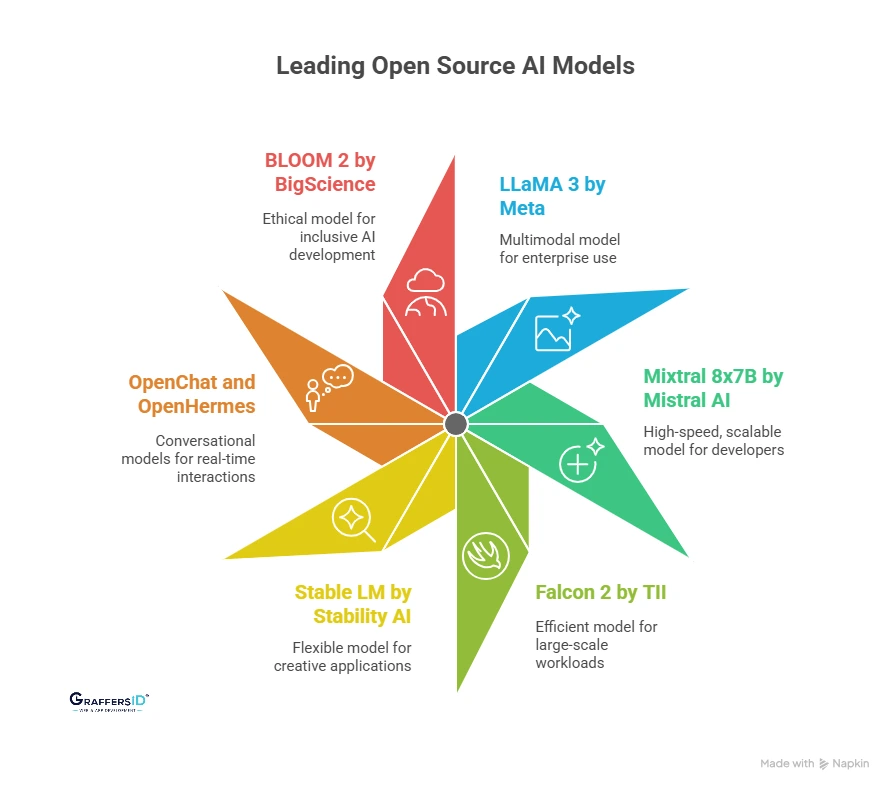
1. LLaMA 3 by Meta
Meta’s LLaMA 3 stands at the forefront of open-source large language models in 2026. It’s a multimodal model capable of processing text, images, and code, making it highly versatile for enterprise use. LLaMA 3’s open license and optimized architecture allow organizations to fine-tune it for tasks like document summarization, chatbot development, and AI-powered automation with unmatched efficiency and low latency.
2. Mixtral 8x7B by Mistral AI
The Mistral AI models, including the powerful Mixtral 8x7B, have set new benchmarks in open AI performance. Using a mixture-of-experts (MoE) design, Mixtral offers exceptional speed and scalability while maintaining GPT-4-level quality. Its fully open access and modular structure make it ideal for developers building advanced assistants, analytics tools, and private LLM deployments at enterprise scale.
3. Falcon 2 by TII
Developed by the Technology Innovation Institute (TII), Falcon 2 continues to be one of the most efficient open-source AI models in 2026. Known for its strong reasoning, summarization, and context retention capabilities, Falcon 2 is optimized for large-scale enterprise workloads. It’s widely adopted by organizations seeking secure, high-performing AI for knowledge management, automation, and multilingual processing.
4. Stable LM by Stability AI
Stable LM by Stability AI is a flexible and creative open-source model designed for tasks spanning text generation, code completion, and conversational AI. In 2026, it’s particularly popular among startups and digital creators due to its ease of integration with multimodal applications and open APIs. Stable LM’s balance between creative freedom and technical control makes it a go-to model for AI app innovation.
5. OpenChat and OpenHermes
The OpenChat and OpenHermes models are advanced, instruction-tuned open-source LLMs delivering conversational quality comparable to GPT-grade systems. They excel in real-time interactions, making them ideal for building AI assistants, customer service bots, and workflow automation tools. Their open licensing and active developer community make them reliable and continuously improving platforms for enterprise adoption.
6. BLOOM 2 by BigScience
BLOOM 2, developed by the BigScience research community, remains a flagship model in ethical and transparent AI. Fully multilingual and open-source, it’s widely used in academia, public research, and government AI initiatives. In 2026, BLOOM 2 continues to play a key role in promoting inclusive AI development, providing a foundation for education, cross-language understanding, and responsible AI practices.
These open-source AI models are helping businesses gain freedom from vendor lock-in, reduce costs, and maintain full control over data privacy and customization.
Best Open-Source AI Frameworks & Tools for 2026
Building and deploying AI applications in 2026 requires the right combination of open-source frameworks and tools. These platforms power innovation, simplify AI integration, and help enterprises build faster, more secure AI systems.
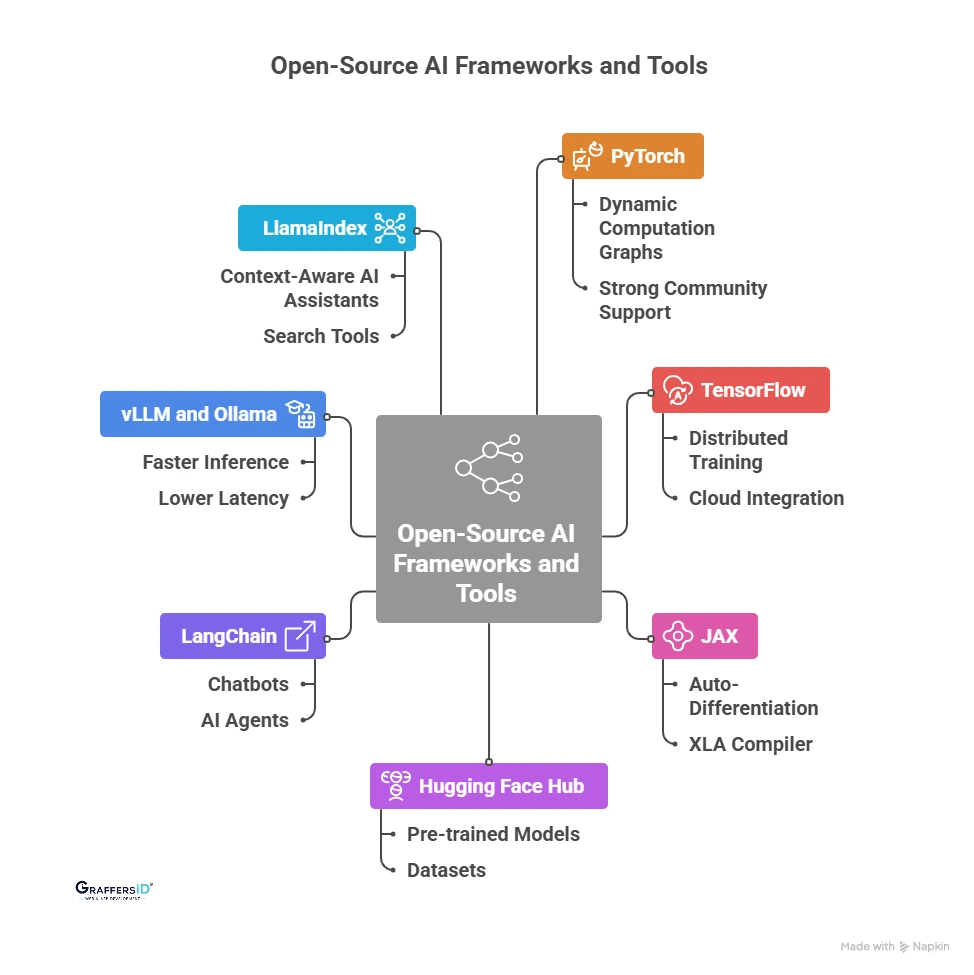
1. PyTorch: The Core Framework for AI Development
PyTorch remains the most widely used open-source AI framework in 2026. Its flexible architecture, dynamic computation graphs, and strong community support make it ideal for building, testing, and deploying deep learning models at scale.
2. TensorFlow: Scalable Framework for Enterprise AI
TensorFlow continues to dominate large-scale AI production environments. Backed by Google, it supports distributed training, high-performance inference, and seamless integration with cloud-based ML pipelines, making it perfect for enterprise-grade AI deployment.
3. JAX: Fast and Efficient Framework for Research and Experimentation
JAX is the go-to framework for experimental AI research and high-speed model training. Its auto-differentiation and XLA compiler accelerate performance, helping researchers and developers push the limits of modern AI innovation.
4. Hugging Face Hub: Open Platform for AI Models
Hugging Face has evolved into the central hub for open-source AI collaboration. It hosts thousands of pre-trained models, datasets, and APIs, allowing developers to discover, share, and fine-tune AI models across industries quickly.
5. LangChain: Framework for Building AI Applications
LangChain helps developers connect large language models (LLMs) with external data, APIs, and tools. It’s widely used to create chatbots, AI agents, and autonomous applications that understand and act on real-world data.
6. vLLM and Ollama: Tools for Local AI Inference
vLLM and Ollama are the leading solutions for running open-source AI models locally or on private infrastructure. They enable faster inference, lower latency, and greater control, ideal for privacy-first enterprises in 2026.
7. LlamaIndex: Framework for Connecting LLMs with Business Data
LlamaIndex bridges the gap between large language models and proprietary enterprise data. It enables businesses to build context-aware AI assistants, search tools, and chatbots that understand internal documentation and workflows.
Together, these open-source AI frameworks and tools make it easier for enterprises to adopt, customize, and scale AI solutions securely and efficiently in 2026.
Read More: 5 Best AI Frameworks and Libraries in 2025 Trusted by Leading Tech Companies
Key Challenges & Risks in Open-Source AI (2026)
Despite its advantages, open AI adoption comes with a few challenges that business leaders must navigate carefully:
1. Security and Ethical Risks: Open AI models can be misused for biased or harmful content, making responsible use and AI watermarking essential in 2026.
2. High Compute and Infrastructure Costs: Running or fine-tuning large open models demands powerful GPUs and scalable cloud setups, increasing operational expenses.
3. No Universal Standards or Licenses: Varying open-source licenses and unclear compliance rules create confusion around commercial use and data ownership.
4. Data Privacy and Copyright Concerns: Some open datasets may include sensitive or copyrighted information, requiring strict audits and data filtering before deployment.
5. Difficulty in Monetization: Turning open-source AI into profitable business models remains tough for startups and developers without strong value differentiation.
How Enterprises Can Use Open Source AI in 2026?
Here are practical application routes decision-makers should consider:
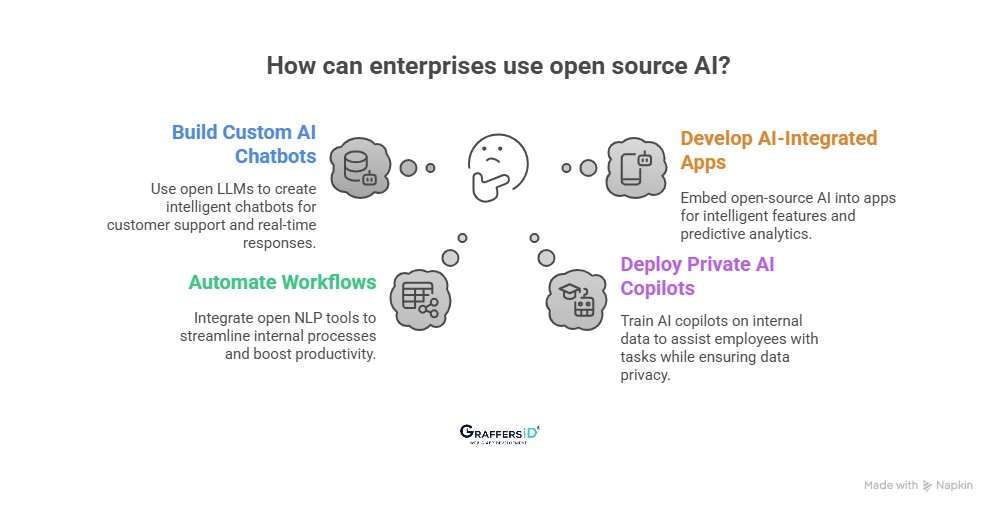
1. Build Custom AI Chatbots with Open LLMs
Companies use open-source language models like LLaMA 3 or Mistral to create intelligent chatbots that understand customer intent, automate support, and deliver real-time responses, without depending on proprietary APIs.
2. Automate Workflows Using Open NLP Frameworks
By integrating open NLP tools such as LangChain and Hugging Face Transformers, enterprises streamline internal workflows, document processing, and data analysis, boosting productivity across teams.
3. Deploy Private AI Copilots for Teams
Organizations are creating private AI copilots trained on internal data to assist employees with reports, coding, and communication, ensuring complete data privacy and compliance.
4. Develop AI-Integrated Mobile and Web Apps
Businesses are embedding open-source AI directly into their apps and software platforms, enabling features like intelligent search, recommendations, voice commands, and predictive analytics.
Read More: AI Assistants vs. AI Agents (2025): Key Differences, Features, and Use Cases Explained
How to Implement Open Source AI in Your Business in 2026? Step-by-Step Guide
Use this roadmap to plan your adoption of open-source AI.
1. Select the Right Model for Your Use Case: Start by selecting a model that fits your business use case, for example, LLaMA 3 for text generation or Falcon 2 for summarization.
2. Fine-Tune the Model on Your Data: Customize the model with your company’s proprietary datasets to improve accuracy and domain relevance.
3. Deploy on Secure, Private, or Hybrid Infrastructure: Host your AI models in a private or hybrid cloud to ensure compliance and protect sensitive business data.
4. Continuously Monitor and Optimize: Regularly evaluate model performance, update datasets, and retrain models to keep results accurate, ethical, and aligned with evolving business goals.

Conclusion: The Future Belongs to Open-Source AI
Open-source AI isn’t just changing how we build technology; it’s redefining how innovation happens.
By 2026, the shift from proprietary models to open collaboration has accelerated digital transformation across every industry. Businesses that leverage open-source AI gain agility, transparency, and a global community of innovation, giving them a clear competitive edge in this new era.
As enterprises move toward AI-powered automation, those who embrace open ecosystems will outpace closed systems in both speed and scalability. Open-source AI is not just the future of technology; it’s the foundation of smarter, faster, and more ethical innovation.
At GraffersID, we empower companies to build scalable AI solutions, custom AI agents, and intelligent automation systems.
Hire top remote AI developers from India and bring your open-source AI vision to life. Contact us now!