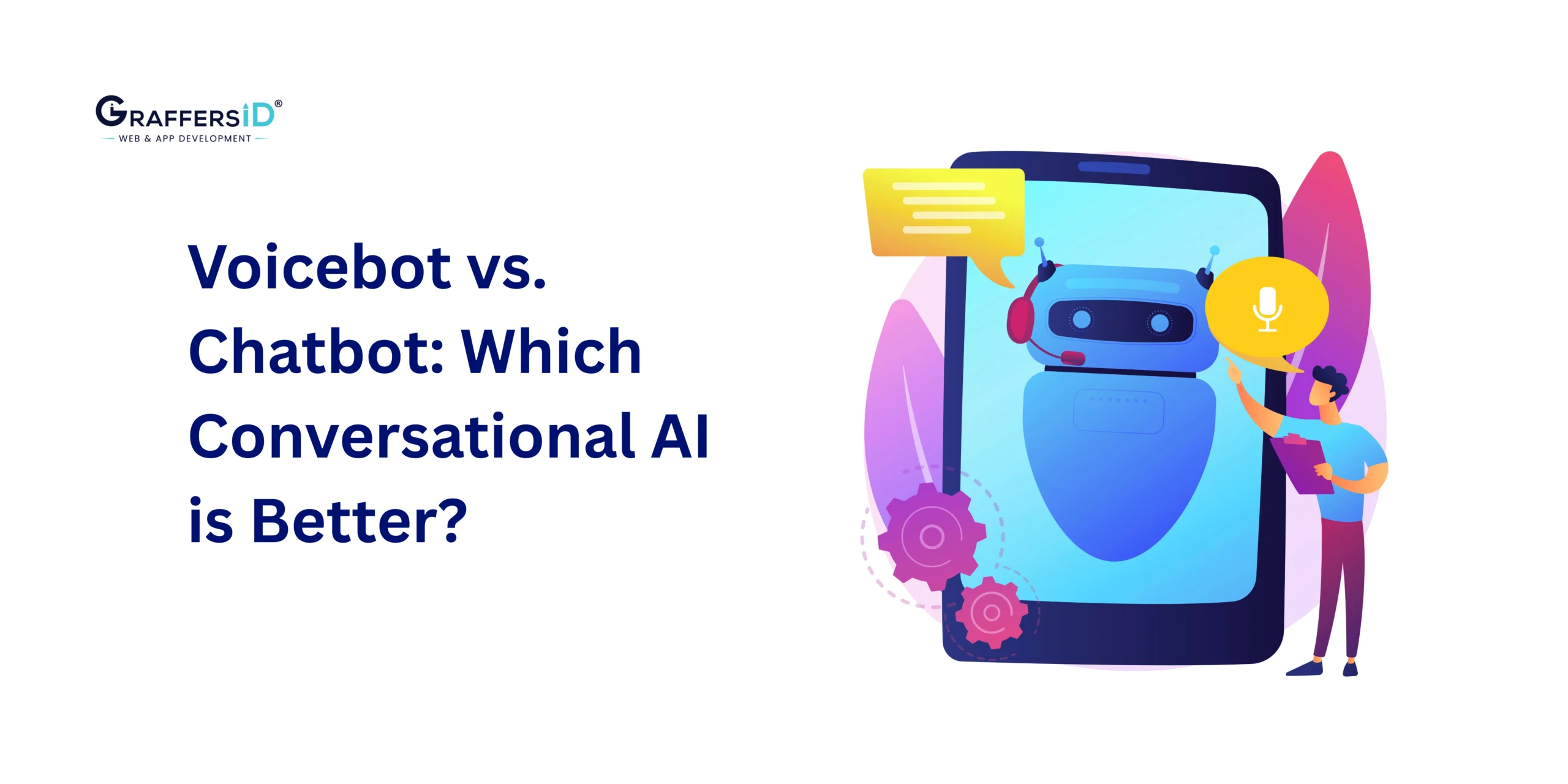
Conversational AI has moved far beyond basic customer support. In 2026, it has become core business infrastructure. Chatbots and voicebots now power customer experience, automate operations, and directly influence revenue across digital and voice-first channels.
For CTOs, CEOs, and product leaders, the conversation has shifted. The real decision isn’t whether to adopt conversational AI, but which interface, chatbot, voicebot, or a hybrid of both, delivers the highest ROI based on user behavior, preferred channels, and operational complexity.
This guide answers the questions leaders are actively searching for today:
-
What chatbots and voicebots really are in 2026
-
How they differ in technology, user experience, and business impact
-
When a chatbot outperforms a voicebot, and when voice wins
-
How modern organizations choose, implement, and scale the right conversational AI strategy.
By the end of this blog, you’ll have a clear, future-ready framework to decide how conversational AI should work for your business.
What is a Chatbot?
A chatbot is a text-based conversational AI system that enables businesses to communicate with users through written messages across websites, apps, and digital messaging platforms. In 2026, modern chatbots are no longer rule-based scripts; they are AI-powered assistants capable of understanding context, intent, and user behavior in real time.
Today’s chatbots act as a digital front line for customer engagement, handling everything from customer support and lead qualification to sales assistance and internal workflow automation.
How Chatbots Work in 2026?
Modern chatbots use advanced AI models to process conversations intelligently and respond accurately.
-
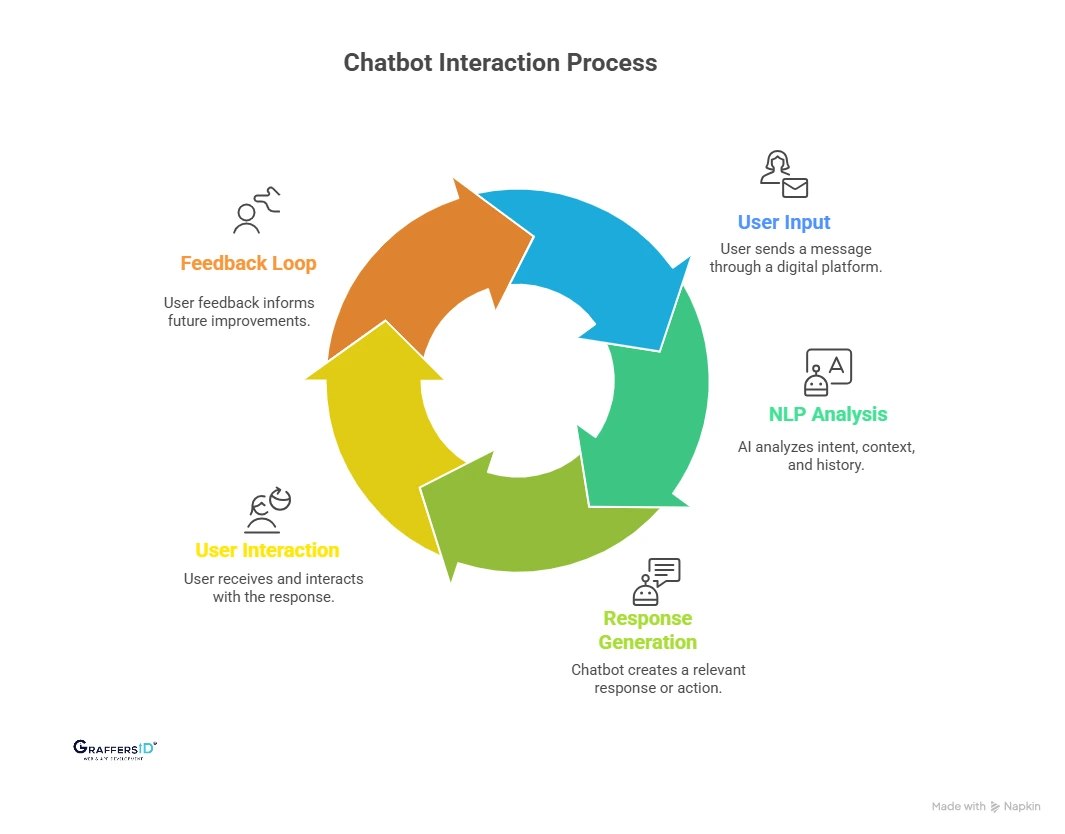
A user enters a message through a website, mobile app, or messaging platform
-
Natural Language Processing (NLP) and Large Language Models (LLMs) analyze intent, context, and conversation history
-
The chatbot generates a relevant response, triggers an action, or routes the conversation to a human agent when needed
This AI-driven approach allows chatbots to deliver more natural, human-like interactions while maintaining speed and consistency at scale.
Read More: How to Build an AI Chatbot in 2026: Types, Tech Stack & Step-by-Step Guide
Common Uses of Chatbots in 2026
Chatbots are deployed across multiple digital channels to meet users where they already communicate.
- Business websites and landing pages
- Mobile applications
- Messaging platforms such as WhatsApp, Slack, and Microsoft Teams
- Customer support and self-service portals
This omnichannel presence helps businesses provide consistent, always-on support without increasing operational costs.
What is a Voicebot?
A voicebot is an AI-powered conversational system that allows users to interact with software using spoken language instead of text. In 2026, voicebots go far beyond traditional IVR systems; they understand natural speech, respond in real time, and handle complete conversations without human intervention.
Businesses use voicebots to automate phone-based interactions such as customer support, appointment scheduling, call routing, and voice-enabled transactions, delivering faster responses and lower operational costs.
How Voicebots Work in 2026?
Modern voicebots rely on multiple AI technologies working together in real time to understand and respond to users.
-
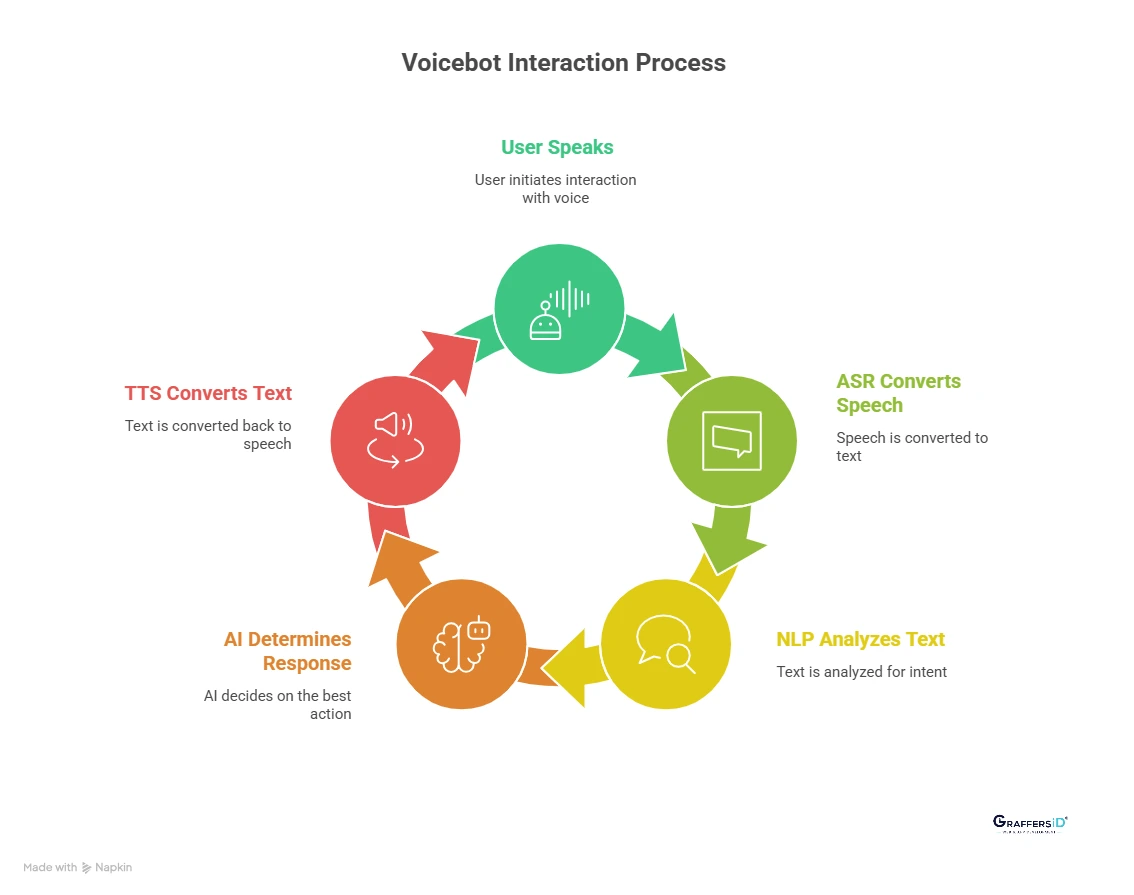
The conversation starts when a user speaks a command, question, or request through a phone call or voice-enabled device.
-
Automatic Speech Recognition (ASR) converts spoken words into text that AI systems can process.
-
Natural Language Processing (NLP) analyzes the text to understand user intent, context, and meaning.
-
The AI determines the best response or action based on business logic, workflows, and connected systems.
-
Text-to-Speech (TTS) technology converts the response back into natural-sounding speech for the user.
This end-to-end process happens within seconds, creating a smooth, human-like conversation.
Read More: What is an AI Voicebot? How Voicebots Work, Benefits & Use Cases for Businesses in 2026
Common Uses of Voicebots in 2026
Voicebots are designed for environments where voice is the primary or preferred interface.
-
Phone calls and IVR systems for customer support
-
Smart speakers and voice assistants
-
In-car infotainment and navigation systems
-
Voice-enabled mobile and enterprise applications
These channels make voicebots ideal for hands-free, real-time interactions.
Voicebot vs. Chatbot: Key Differences in 2026
1. User Interaction: Text-Based vs. Voice-Based Communication
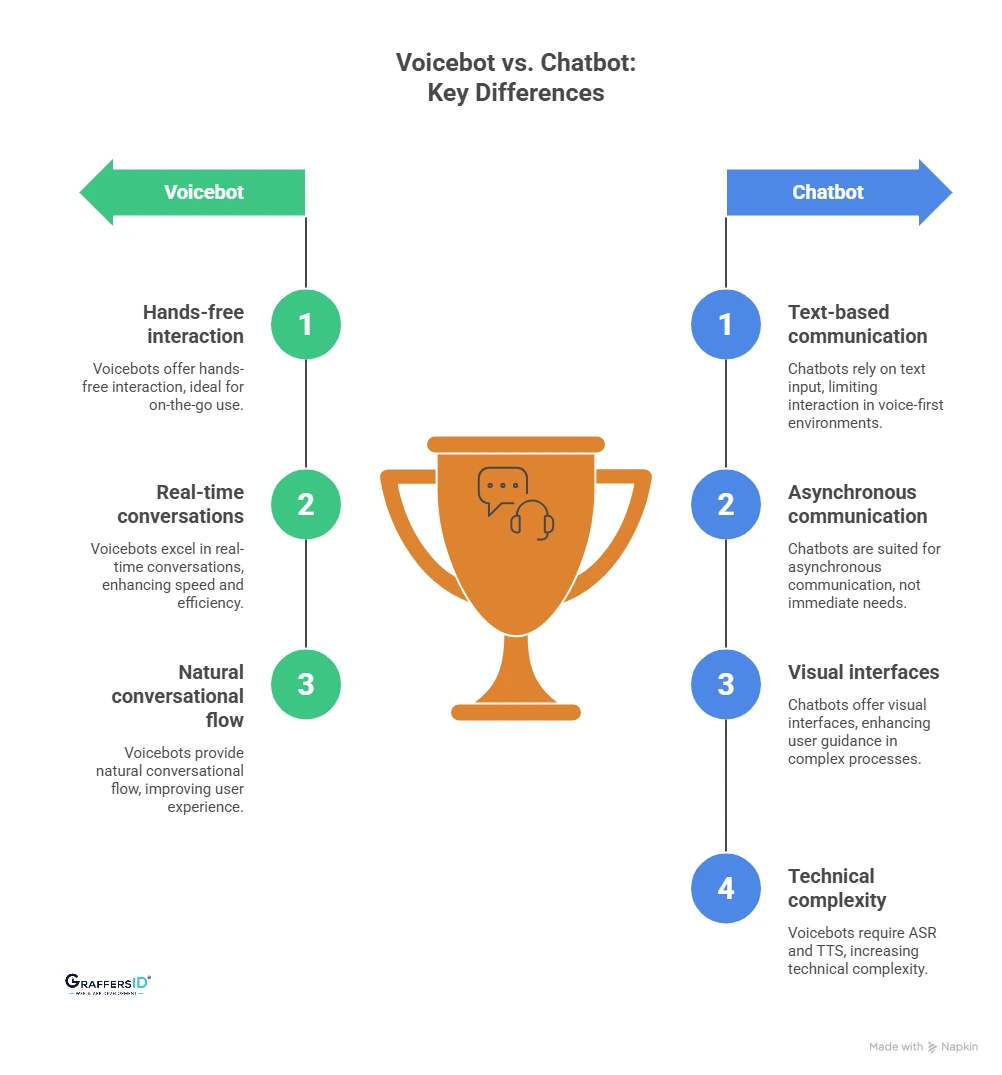
Chatbots interact with users through text input and visual responses. Users type their queries and read replies, making chatbots ideal for digital-first environments such as websites, apps, and messaging platforms.
Voicebots, on the other hand, enable spoken conversations. Users speak naturally, and the system responds with synthesized speech, creating a hands-free, voice-first experience that closely mirrors human interaction.
2. Speed and Context: Asynchronous vs. Real-Time Conversations
Chatbots are well-suited for asynchronous communication, where users can pause, return, or multitask without breaking the conversation. This makes them effective for browsing, support tickets, and step-by-step workflows.
Voicebots are designed for real-time, immediate interactions. They excel in scenarios where speed matters, such as phone calls, customer helplines, appointment confirmations, or on-the-go use cases where typing isn’t practical.
3. User Experience: Visual Interfaces vs. Conversational Flow
Chatbots offer rich visual experiences, including buttons, quick replies, links, forms, and structured options. This makes them highly effective for guiding users through complex processes like onboarding, product selection, or form submissions.
Voicebots focus on natural conversational flow rather than visuals. They rely on tone, pacing, and contextual understanding to keep interactions intuitive, making them better suited for simple, repetitive, or voice-driven tasks.
4. Technology and Complexity: NLP vs. Speech-Enabled AI Systems
Chatbots primarily depend on Natural Language Processing (NLP), intent recognition, and backend integrations to understand user queries and deliver accurate responses.
Voicebots build on the same NLP foundation but add additional layers such as Automatic Speech Recognition (ASR) and Text-to-Speech (TTS). These extra components increase technical complexity but enable fully voice-driven automation.
Chatbot vs. Voicebot: Key Comparison for Businesses (2026)
| Aspect | Chatbot | Voicebot |
|---|---|---|
| Primary Interaction | Text-based communication | Voice-based communication |
| Best Used On | Websites, apps, messaging platforms | Phone calls, IVR, voice-enabled apps |
| User Experience | Visual, structured, self-paced | Conversational, real-time, hands-free |
| Response Style | Asynchronous or near real-time | Fully real-time conversations |
| Core Technologies | NLP, LLMs, backend integrations | ASR, NLP/LLMs, TTS, telephony |
| Complexity to Build | Lower to moderate | Moderate to high |
| Cost & Scalability | More cost-effective and easier to scale | Higher cost due to voice processing |
| Best for Customer Support | FAQs, order tracking, and onboarding | Call routing, scheduling, urgent queries |
| Accessibility | Requires a screen and typing | Ideal for hands-free and accessibility needs |
| Business Impact | Scales digital support efficiently | Reduces call load and wait times |
| Ideal Choice When | Users prefer chat and visual guidance | Users prefer calling or need instant help |
Voicebot vs. Chatbot: Which is Better for Customer Service in 2026?
When it comes to customer service in 2026, there is no one-size-fits-all winner. The better option depends on how customers prefer to interact, the complexity of support requests, and how quickly issues need to be resolved.
Below is a clear breakdown to help businesses choose the right conversational AI for customer service.
When Chatbots Are Better for Customer Support?
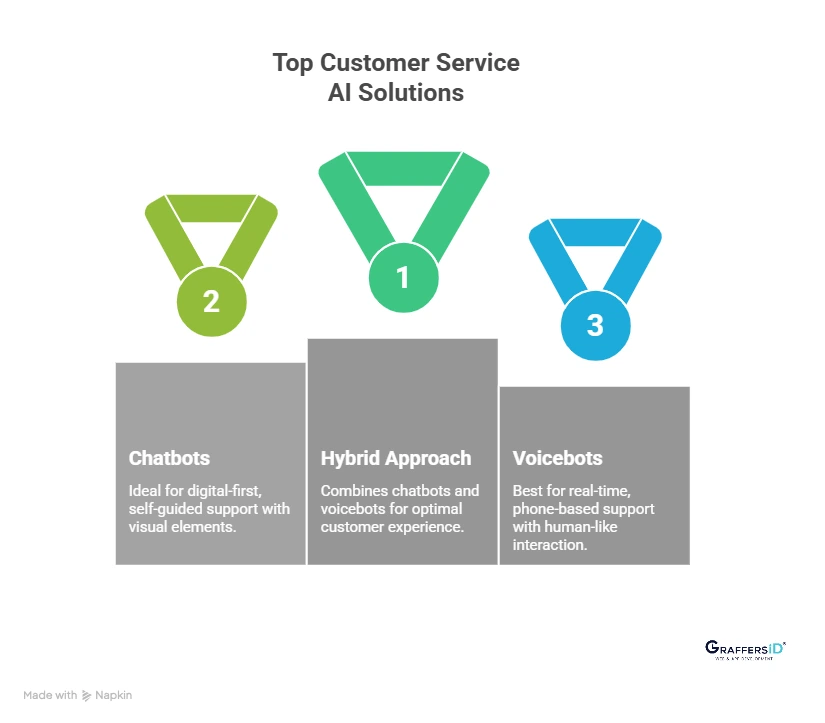
Chatbots work best for digital-first customer service environments where users expect fast, visual, and self-guided support.
Chatbots are ideal when:
-
Customers interact mainly through websites, apps, or messaging platforms
-
Support queries involve links, forms, order details, or step-by-step instructions
-
Conversations are non-urgent and can happen asynchronously
-
Businesses want scalable, low-cost support for high-volume queries
Typical customer service use cases for chatbots include:
-
FAQs and knowledge base access
-
Order tracking and account updates
-
Ticket creation and status checks
-
Onboarding and product guidance
From a cost and scalability perspective, chatbots are often the most efficient first layer of customer support.
When Voicebots Are Better for Customer Support?
Voicebots perform best in real-time, phone-based, or urgency-driven support scenarios where speed and human-like interaction matter.
Voicebots are ideal when:
-
Customers prefer calling over typing
-
Immediate responses are critical
-
Hands-free interaction improves experience
-
Support teams handle high call volumes
Typical customer service use cases for voicebots include:
-
Call routing and IVR automation
-
Appointment scheduling and confirmations
-
Payment reminders and notifications
-
Basic troubleshooting over the phone support
Voicebots significantly reduce call wait times and agent workload while maintaining a more natural conversational experience.
Which Delivers Better Customer Experience in 2026?
In 2026, the best customer service strategies use both chatbots and voicebots together.
Why hybrid customer service works better?
-
Customers choose text or voice based on context
-
Chatbots handle detailed, visual workflows
-
Voicebots manage real-time and urgent queries
-
Human agents step in only when needed
This hybrid approach improves first response time, resolution speed, customer satisfaction (CSAT), and operational efficiency.
How to Choose Between a Chatbot and a Voicebot for Your Business in 2026?
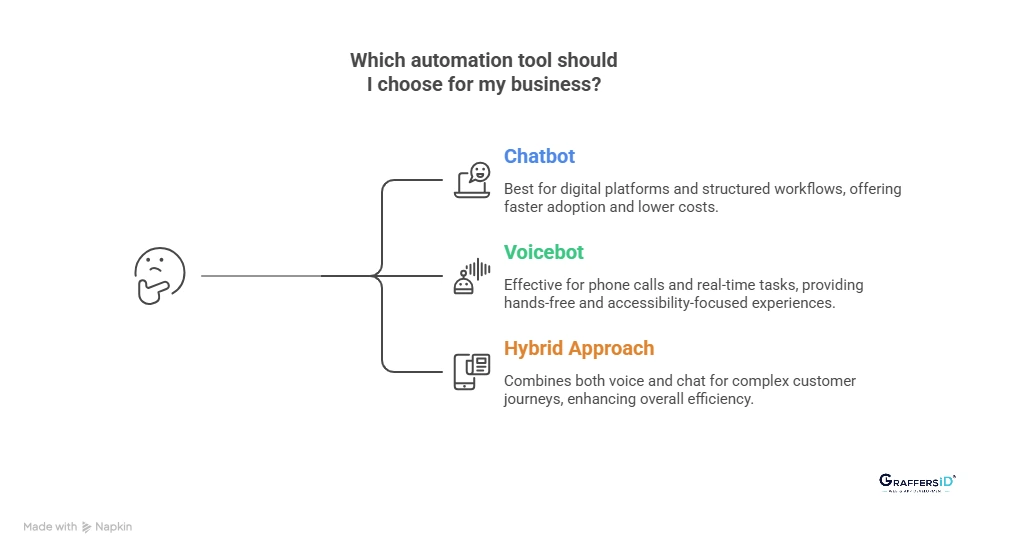
Choosing between a chatbot and a voicebot in 2026 depends less on technology and more on how your customers interact with your business and where automation delivers the highest return. Use the framework below to make a data-driven decision.
1. Identify Your Primary Customer Communication Channels
Start by understanding where most customer interactions happen today.
-
Chatbots work best on websites, mobile apps, and messaging platforms like WhatsApp or Slack.
-
Voicebots are more effective for phone calls, IVR systems, and voice-enabled applications.
If your customers already rely on digital chat, a chatbot provides faster adoption. If calls dominate your support or sales workflows, a voicebot delivers greater efficiency.
2. Analyze Customer Behavior and Interaction Preferences
Look at how users prefer to communicate.
-
Text-based interactions suit users who want quick, quiet, and visual responses.
-
Voice interactions suit users who need hands-free, real-time, or accessibility-focused experiences.
Analyzing session data, call logs, and user feedback helps determine which interface feels more natural to your audience.
3. Define Automation Goals and Task Complexity
Not all automation needs are the same.
-
Chatbots excel at structured workflows like FAQs, lead qualification, order tracking, and onboarding.
-
Voicebots are better for time-sensitive tasks such as call routing, appointment scheduling, and confirmations.
For complex journeys, many businesses in 2026 adopt a hybrid approach where voice and chat work together.
4. Evaluate Cost, Scalability, and Expected ROI
Finally, assess financial and operational impact.
-
Chatbots generally have lower development and scaling costs.
-
Voicebots require additional speech processing layers, increasing complexity and investment.
The right choice is the one that reduces operational load, improves customer experience, and delivers measurable ROI over time.
Conclusion: Chatbot vs. Voicebot: What Businesses Should Do in 2026?
The key takeaway for businesses in 2026 is clear: voicebots and chatbots are not competing technologies; they are complementary layers of modern conversational AI.
Chatbots are best suited for digital, visual, and asynchronous interactions across websites, apps, and messaging platforms. Voicebots, on the other hand, excel in real-time, phone-based, and hands-free scenarios where speed, accessibility, and natural conversation matter most. The most successful organizations don’t choose one over the other; they integrate both into a unified conversational AI strategy.
Build Smarter Conversational AI with GraffersID
At GraffersID, we help businesses design, build, and scale intelligent conversational AI solutions.
Contact GraffersID today and turn AI strategy into real impact.