In 2026, choosing between a full-stack developer vs. an Android developer isn’t just a technical hiring decision; it’s a core business strategy move. For CTOs, CEOs, and product leaders, this choice directly impacts speed to market, AI adoption, scalability, cost efficiency, and long-term product viability.
Whether you’re launching a web-based SaaS platform, scaling an AI-driven enterprise system, or building a mobile-first Android application, the type of developer you hire will shape not only how your product is built, but how it evolves in an AI-first, automation-driven world.
The challenge? Both roles are in high demand, both come with distinct strengths, and both serve very different business goals.
This guide breaks it down clearly and practically. You’ll learn:
-
What full-stack developers and Android developers actually do in 2026 (beyond outdated definitions)
-
How AI, automation, and modern tooling are reshaping both roles
-
A side-by-side comparison of skills, costs, tools, and real-world use cases
-
A clear decision framework to help you choose the right developer based on your product roadmap, not trends
If your goal is to build a future-ready product and hire talent that delivers measurable business outcomes, this guide will help you make the right call.
What is Full-Stack Development in 2026?
Full-stack development is the process of designing, building, deploying, and maintaining the entire software application stack, from user-facing interfaces to backend logic, APIs, databases, and AI-powered integrations.
In 2026, full-stack development has evolved far beyond traditional web development. It is now AI-augmented, cloud-ready, automation-driven, and product-focused, making full-stack developers critical for building scalable, intelligent digital products.
Read More: Java Full Stack vs. MERN Stack in 2026: Which Technology Stack Should You Choose?
For businesses, this means one role can help deliver:
-
Faster MVPs and product launches
-
AI-enabled features and automation
-
Scalable, secure, and future-ready systems
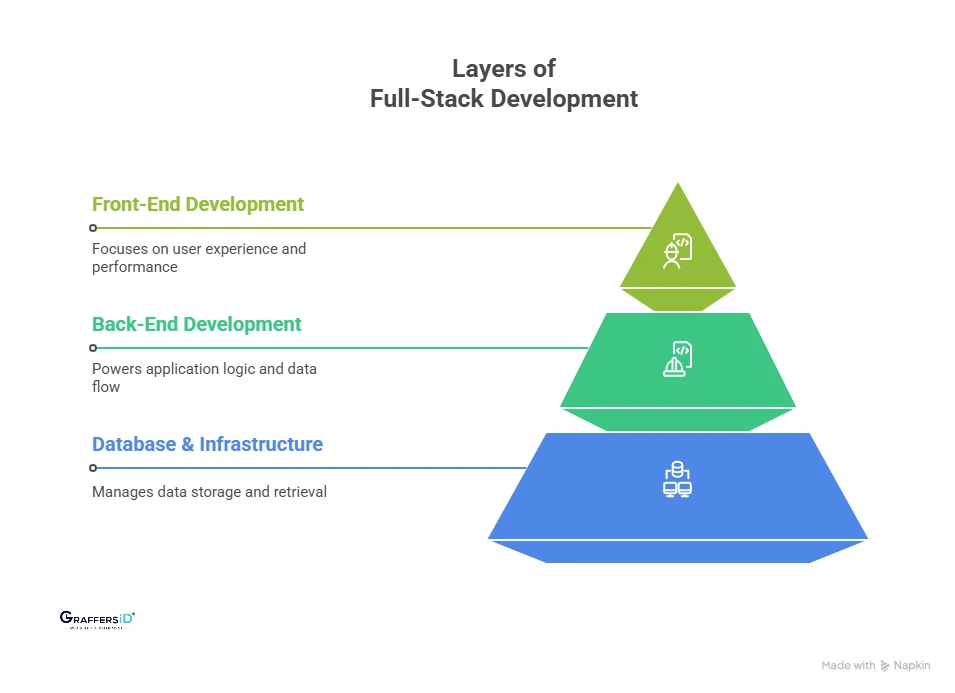
Core Layers of Full-Stack Development in 2026
1. Front-End Development (Client Side)
The front end is everything users see, click, and interact with. In 2026, front-end development focuses heavily on performance, personalization, and user experience, especially across devices.
Modern front-end priorities in 2026:
-
Component-based UI architecture for faster development
-
Performance optimization aligned with Google Core Web Vitals
-
AI-assisted personalization (dynamic layouts, recommendations, adaptive UI)
-
Mobile-first and accessibility-focused design
Common front-end technologies used in 2026:
-
HTML5, CSS3, JavaScript (ES2026)
-
React, Next.js, Angular
-
Tailwind CSS, Bootstrap
2. Back-End Development (Server Side)
The back end powers the application logic, data flow, authentication, and system integrations. In 2026, backend systems are designed to be API-first, AI-compatible, and highly scalable.
Modern back-end focus areas:
-
API-first architecture for web, mobile, and AI agents
-
AI-enabled workflows (chatbots, automation, decision engines)
-
Secure authentication and authorization
-
High availability and scalability for growing user bases
Common back-end technologies in 2026:
-
Python (Django, FastAPI)
-
REST and GraphQL APIs
-
Secure authentication systems (OAuth, JWT-based flows)
3. Database & Infrastructure Layer
This layer manages how data is stored, retrieved, and prepared for analytics or AI-driven features.
Modern database and infrastructure focus:
-
Structured and unstructured data handling
-
AI-ready data pipelines for automation and insights
-
Scalable data storage to support growth
Common technologies used:
-
SQL databases: PostgreSQL, MySQL
-
NoSQL databases: MongoDB, Firebase
-
Data layers optimized for AI and automation workflows
Why Full-Stack Development Matters in 2026?
From a business perspective, full-stack development enables:
-
Faster product development cycles
-
Lower dependency on multiple specialists
-
Easier integration of AI and automation tools
-
Better alignment between product, engineering, and growth teams
This is why full-stack developers remain one of the most in-demand roles in 2026, especially for SaaS platforms, AI-powered applications, and enterprise software.
Who is a Full-Stack Developer in 2026? (Roles, Skills & Responsibilities)
A full-stack developer in 2026 is a modern, end-to-end software engineer who builds, scales, and maintains complete digital products, from user interfaces to backend systems and AI-powered workflows.
Unlike traditional developers focused on a single layer, full-stack developers today are expected to work across the entire application lifecycle while leveraging AI-assisted development tools to move faster and build smarter.
What Does a Full-Stack Developer Do in 2026?
A full-stack developer typically handles:
-
End-to-end application development: Designs and builds both the front end (UI/UX) and back end (APIs, logic, databases) of web and software applications.
-
AI and automation integration: Connects applications with AI APIs, including large language models (LLMs), chatbots, workflow automation tools, and intelligent dashboards.
-
System architecture and scalability: Helps design systems that can scale from MVPs to enterprise-grade platforms without major rework.
-
Cross-functional collaboration: Works closely with product managers, AI teams, designers, and stakeholders to translate business requirements into technical solutions.
Key Skills of a Full-Stack Developer in 2026
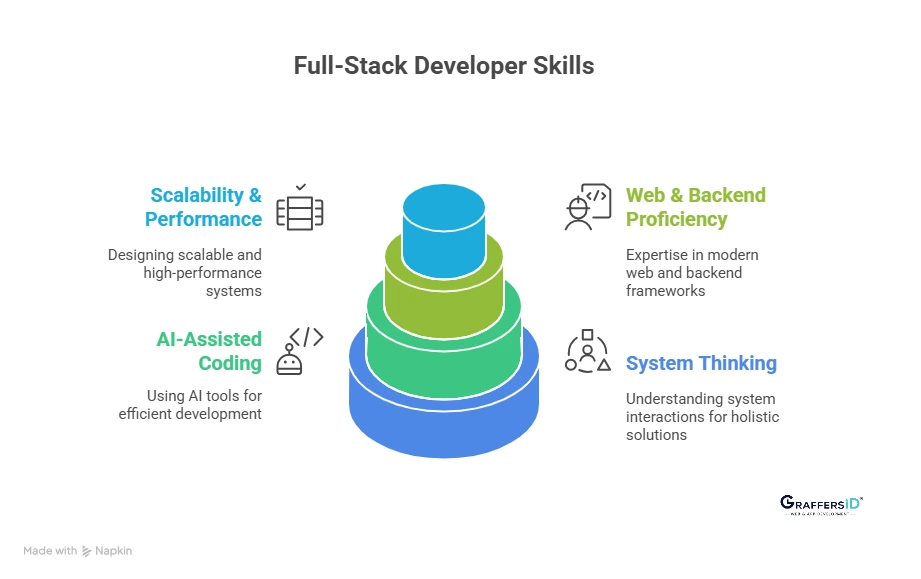
To stay relevant in an AI-first development landscape, full-stack developers are expected to have:
-
Strong system thinking: Ability to understand how front-end, backend, databases, APIs, and third-party services interact as a complete system.
-
AI-assisted coding expertise: Hands-on experience with tools like GitHub Copilot, Amazon CodeWhisperer, and AI-powered IDEs to improve speed, quality, and code consistency.
-
Modern web and backend proficiency: Knowledge of frameworks such as React, Next.js, Node.js, Django, or FastAPI, along with REST and GraphQL APIs.
-
Scalability and performance mindset: Experience turning early-stage MVPs into production-ready, enterprise applications with performance, security, and maintainability in mind.
What is Android App Development in 2026?
Android app development in 2026 refers to the process of building native and AI-enabled applications for the Android ecosystem, including smartphones, tablets, wearables, smart TVs, foldable devices, and enterprise-grade Android hardware.
Unlike earlier years, Android development today goes far beyond basic mobile functionality. Modern Android apps are designed to be intelligent, responsive, and deeply integrated with device-level capabilities, enabling richer user experiences and real-time personalization.
Key Characteristics of Android Apps in 2026
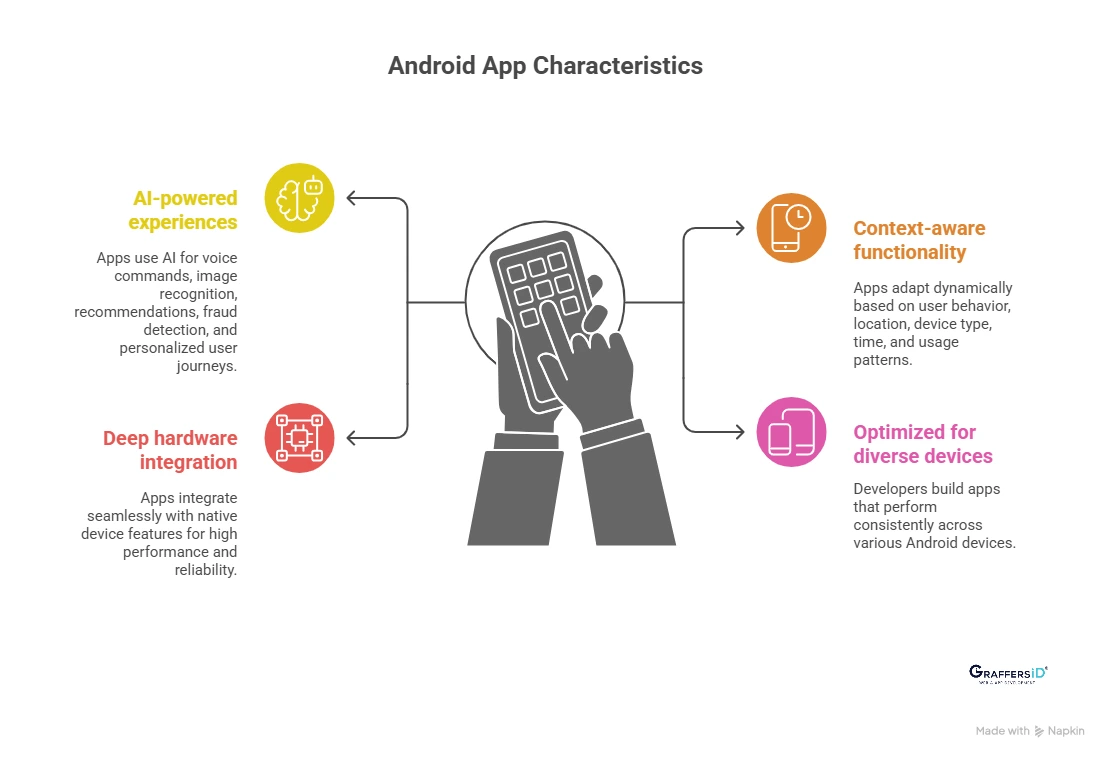
In 2026, Android applications are built with the following capabilities at their core:
-
AI-powered experiences: Android apps now leverage AI for voice commands, image recognition, recommendations, fraud detection, and personalized user journeys.
-
Context-aware functionality: Apps adapt dynamically based on user behavior, location, device type, time, and usage patterns, delivering smarter and more relevant interactions.
-
Deep hardware integration: Android applications integrate seamlessly with native device features such as cameras, biometric authentication, sensors, GPS, NFC, and offline storage for high performance and reliability.
-
Optimized for diverse devices: Developers build apps that perform consistently across phones, tablets, foldables, wearables, and Android TV, ensuring scalability across the entire Android ecosystem.
Popular Android development today includes AI assistants, fintech apps, health platforms, and enterprise mobility solutions.
Who is an Android Developer in 2026? (Roles, Skills & Responsibilities)
An Android developer in 2026 is a specialized software engineer responsible for designing, building, and maintaining high-performance Android applications that run reliably across smartphones, tablets, wearables, foldables, and other Android-powered devices.
Beyond traditional app development, modern Android developers focus on AI-powered experiences, enterprise-grade security, and performance optimization to meet the expectations of today’s mobile-first users and businesses.
What Does an Android Developer Do in 2026?
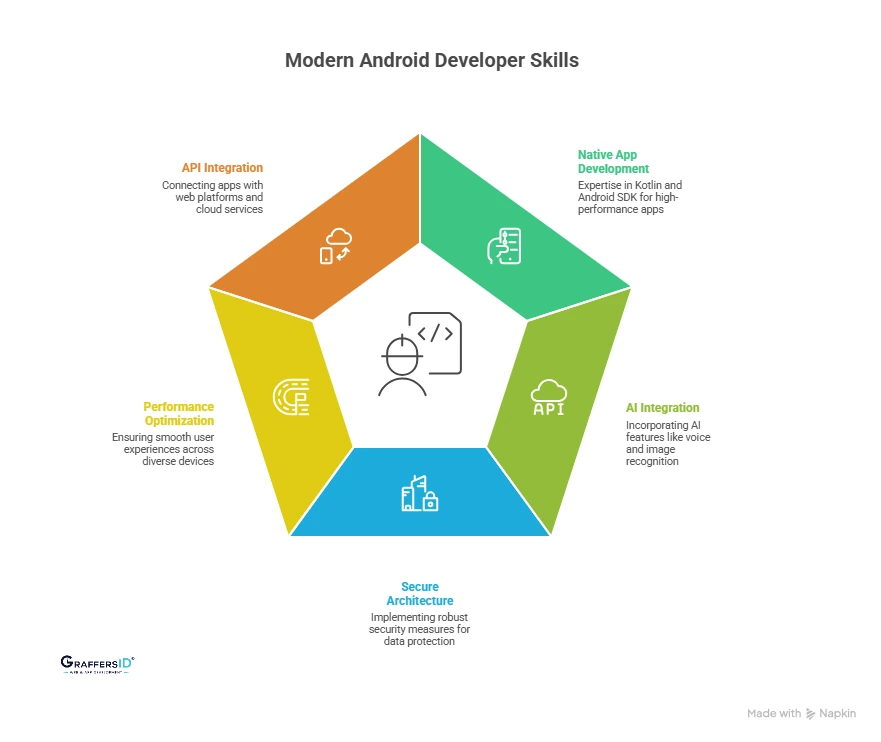
A modern Android developer is expected to handle the full lifecycle of Android app development, including:
-
Native Android app development using Kotlin and Android SDK for maximum performance and stability
-
AI feature integration, such as voice assistants, image recognition, personalized recommendations, and on-device AI capabilities
-
Secure application architecture, including authentication, encryption, and data protection best practices
-
Performance optimization across devices, ensuring smooth user experiences on different screen sizes, hardware configurations, and Android versions
-
API and backend integration to connect mobile apps with web platforms, cloud services, and enterprise systems
Read More: AI Assistants vs. AI Agents (2026): Key Differences, Features, and Use Cases Explained
Key Skills of an Android Developer in 2026
Android developers today combine mobile expertise with AI and system-level knowledge:
-
Proficiency in Kotlin and modern Android frameworks
-
Experience with Android Studio, Android SDK, and Jetpack libraries
-
Understanding of AI-powered mobile features (speech, vision, personalization)
-
Knowledge of app performance tuning, memory management, and battery optimization
- Familiarity with security, compliance, and scalable app architecture
Why Hire a Full-Stack Developer in 2026?
Hiring a full-stack developer in 2026 makes sense when you need speed, flexibility, and long-term scalability, especially for web and AI-driven products.
1. End-to-End Ownership: A full-stack developer can manage the entire development lifecycle, from user interface design to backend logic and third-party integrations.
2. AI & Automation Ready: Modern full-stack developers are AI-ready by default. In 2026, they can:
- Integrate AI chatbots
- Automate workflows
- Build intelligent dashboards
3. Faster Time-to-Market: Because full-stack developers handle multiple layers of development, they significantly reduce development cycles. This is especially valuable for startups, MVPs, and SaaS platforms.
4. Cost-Effective Scaling: Hiring a full-stack developer helps businesses optimize development costs by reducing reliance on multiple specialized roles.
Best For: Full-stack developers are best suited for:
- SaaS platforms and web-based products
- Web applications with AI and automation features
- Enterprise software and internal tools
Read More: AI in App Development: Complete Guide on How to Build an AI-Powered Mobile App in 2026?
Why Hire an Android Developer in 2026?
Hiring an Android developer in 2026 is the right choice when mobile experience, performance, and device-level integration are critical to your product’s success.
1. Native Performance: Android developers build native apps optimized specifically for the Android ecosystem.
2. Mobile-First User Experience: Android developers specialize in leveraging Android-specific capabilities, including:
- Device sensors
- Push notifications
- Offline access
3. Enterprise-Grade Security: Security is a top priority in Android app development. Android developers implement secure authentication and data protection.
4. AI-Powered Mobile Experiences: In 2026, Android apps are increasingly AI-driven. Android developers enable features such as:
- Voice assistants
- Computer vision
- Personalized recommendations
Best For: Android developers are best suited for:
- Consumer-facing mobile applications
- Enterprise mobility and workforce apps
- Fintech, healthcare, logistics, and on-demand platforms
Full-Stack vs. Android Developer: Key Differences in 2026
| Aspect | Full-Stack Developer | Android Developer |
|---|---|---|
| Primary Focus | Builds & manages complete web applications (frontend, backend, & APIs) | Designs & develops native applications for Android devices |
| Platform Coverage | Web platforms, SaaS products, APIs, and backend systems | Android operating system (phones, wearables, TVs) |
| AI Integration | Integrates LLMs, workflow automation, analytics, & AI-powered web features | Implements voice AI, computer vision, personalization, & on-device AI capabilities |
| Development Flexibility | Highly flexible: can adapt across multiple layers of a product | Platform-specific: deep specialization within the Android ecosystem |
| Time-to-Market Advantage | Faster for launching and scaling web-based products and MVPs | Faster for building high-performance, mobile-first Android applications |
Choose a full-stack developer if your product is web-based, SaaS, or AI-enabled at the platform level.
Choose an Android developer if your product is mobile-first and requires deep Android hardware or OS integration.
Salary Comparison: 2026 Estimates – USA
Full-Stack Developer Salary
- Entry-level: $60k–$80k
- Mid-level: $80k–$120k
- Senior: $120k–$180k+
Android Developer Salary
- Entry-level: $50k–$70k
- Mid-level: $70k–$100k
- Senior: $100k–$160k
Remote developers from India offer 40–60% cost savings.

Conclusion: How to Choose the Right Developer in 2026?
There is no single winner in the full-stack developer vs. Android developer debate, because the right choice depends entirely on your business goals, not just technology preferences.
In 2026, high-performing companies make hiring decisions based on:
- Product vision (web-first, mobile-first, or platform-led)
- Platform strategy (SaaS, enterprise systems, or consumer apps)
- AI readiness and automation goals
- Budget efficiency and scalability plans
A full-stack developer is the right fit when you need end-to-end ownership, faster web product launches, and AI-powered system scalability. An Android developer is essential when your product is mobile-first and demands native performance, deep device integration, and optimized user experiences on Android.
The smartest organizations align developer skills with measurable business outcomes, speed to market, product reliability, and future growth, rather than following hiring trends.
GraffersID helps startups, scaleups, and enterprises hire AI-ready remote developers specializing in AI automation and intelligent workflows, web & mobile app development, full-stack, and Android development teams.
Hire expert remote developers with GraffersID today!