
In 2026, chat is no longer just a feature; it has become a standalone product category. From platforms like WhatsApp and Discord to industry-specific communication tools, businesses are increasingly building dedicated chat applications to drive engagement, retention, and network effects.
These are not simple widgets inside a website; they are real-time systems designed to handle millions of concurrent users, instant delivery across regions, and uncompromising reliability.
For decision-makers, the challenge is, “How do we build a scalable chat application that users rely on daily?”
This guide explains exactly how to build a chat app in 2026, from features and architecture to cost, scalability, and technology choices.
How to Define Your Chat App Idea and Use Case in 2026?
Before building a chat application, you need a clear understanding of what problem your app will solve and who it is for. This decision shapes your features, architecture, and overall cost.
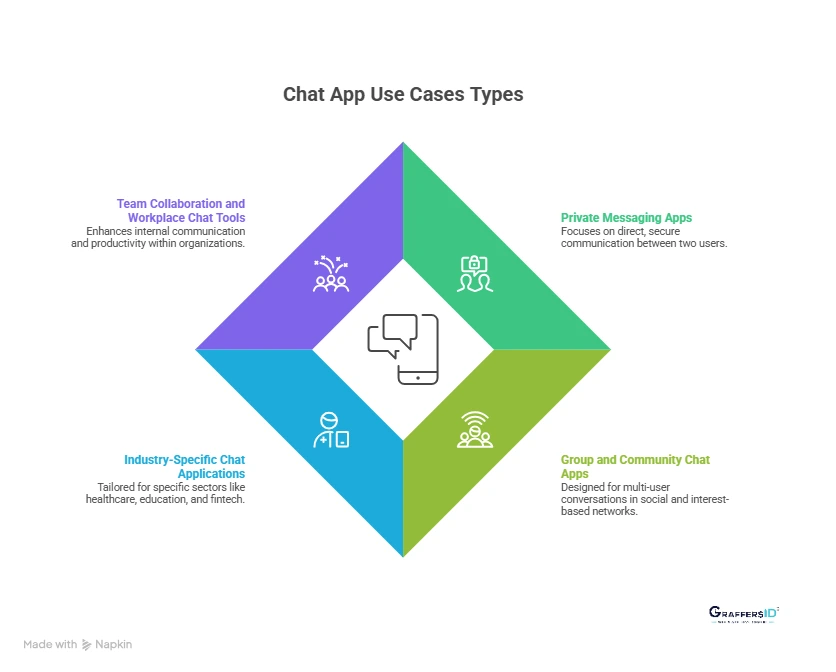
1. Private Messaging Apps (One-to-One Chat Apps)
These apps focus on direct communication between two users with high reliability and speed.
- Used for personal conversations, secure messaging, or niche communication platforms
- Requires strong privacy, encryption, and real-time delivery systems
2. Group and Community Chat Apps
Designed for multi-user conversations, including groups, channels, or large communities.
- Common in social platforms, gaming communities, and interest-based networks
- Requires a scalable architecture to handle thousands of concurrent users and messages
3. Industry-Specific Chat Applications
Built for specific sectors like healthcare, education, fintech, or marketplaces with tailored workflows.
- Example: doctor-patient chat, student collaboration, buyer-seller communication
- Requires compliance, data security, and integration with domain-specific systems
4. Team Collaboration and Workplace Chat Tools
Focused on internal communication, productivity, and team coordination within organizations.
- Includes features like channels, file sharing, and integrations with work tools
- Requires role-based access, data control, and high reliability for daily operations
Should You Build a Chat App from Scratch or Use Chat APIs in 2026?
Now comes the question: “Do you want to own and scale a real-time messaging system long-term?”
Modern teams choose between building from scratch or using chat infrastructure (APIs/SDKs) based on product strategy and scalability needs.
Read More: How to Build an AI Chatbot in 2026: Types, Tech Stack & Step-by-Step Guide
When to Build a Chat App from Scratch
Choose this approach when chat is your core product, not just a feature.
- Chat is your main product offering: If your app is centered around messaging (like a social or communication platform), owning the system gives you full control over innovation and differentiation.
- You need complete control over data and workflows: Building in-house allows you to customize message handling, security, and user experience without third-party limitations.
- You are ready to invest in long-term scalability: Owning chat means handling uptime, latency, moderation, and scaling as usage grows; this is an ongoing engineering commitment.
When to Use Chat APIs or Messaging Infrastructure
This is the preferred approach for most modern products.
- You want faster time-to-market: APIs allow you to launch a working chat experience in weeks instead of months by avoiding infrastructure setup.
- You need proven scalability and reliability: Managed solutions already handle real-time delivery, message ordering, and global infrastructure challenges.
- You want to reduce engineering overhead: Your team can focus on core product features instead of maintaining complex messaging systems.
Recommended Approach in 2026: Hybrid Model
Most high-performing products follow a hybrid strategy:
- Use real-time messaging infrastructure for delivery: Offload complexity like WebSockets, scaling, and uptime to specialized providers.
- Build custom product logic and user experience: Keep control over UI, workflows, and business-specific features that differentiate your app.
- Scale gradually without rebuilding everything: Start with APIs, then move to custom systems only when scale or differentiation demands it.
Must-Have Features for a Chat App in 2026 (Complete Feature List)
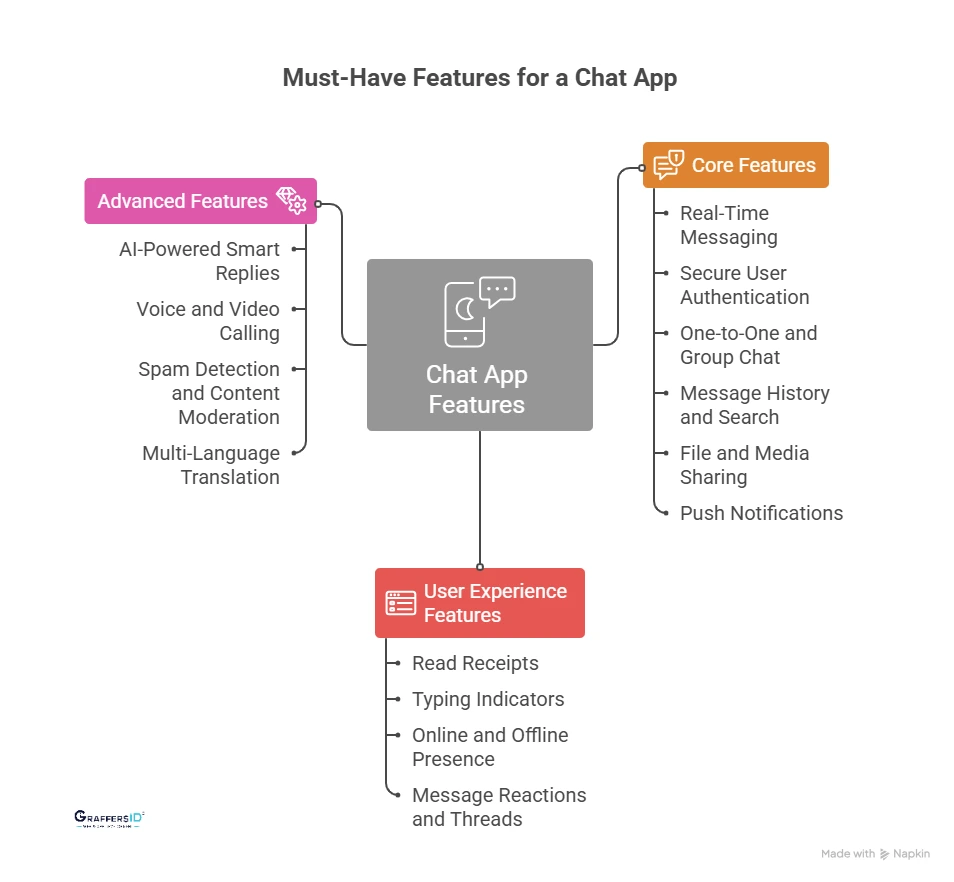
Core Features Every Chat App Needs
1. Real-Time Messaging
- Messages should be delivered instantly using technologies like WebSockets.
- Low latency is critical to ensure smooth conversations without delays.
2. Secure User Authentication
- Implement secure login systems such as OTP, OAuth, or multi-factor authentication.
- This ensures user identity protection and prevents unauthorized access.
3. One-to-One and Group Chat
- Support both private conversations and group discussions.
- Group chat should allow multiple participants with scalable message handling.
4. Message History and Search
- Store conversations securely so users can access past messages anytime.
- Advanced search helps users quickly find specific messages, files, or keywords.
5. File and Media Sharing
- Allow users to share images, videos, documents, and links.
- Optimize media handling to ensure fast uploads and downloads without affecting performance.
6. Push Notifications
- Notify users instantly about new messages, mentions, or updates.
- Smart notification controls improve user engagement without overwhelming them.
Features That Improve User Experience in Chat Apps
1. Read Receipts
- Show when messages are delivered and read by the recipient.
- Helps users understand communication status and improves transparency.
2. Typing Indicators
- Display when another user is typing a message in real time.
- Makes conversations feel more interactive and human-like.
3. Online and Offline Presence
- Show whether users are active, online, or last seen.
- Useful for setting expectations around response time.
4. Message Reactions and Threads
- Allow users to react with emojis instead of sending multiple messages.
- Threaded replies help organize conversations in busy chats.
Advanced Features in Modern Chat Applications (2026 Trends)
1. AI-Powered Smart Replies
- Suggest quick responses using AI to speed up conversations.
- Improves efficiency, especially in high-volume messaging environments.
2. Voice and Video Calling
- Enable real-time audio and video communication within the app.
- Uses technologies like WebRTC for seamless calling experiences.
3. Spam Detection and Content Moderation
- Automatically detect spam, abusive language, or harmful content.
- Helps maintain a safe and trustworthy user environment.
4. Multi-Language Translation
- Translate messages in real time for global communication.
- Breaks language barriers and improves accessibility for diverse users.
Users don’t compare your chat app with direct competitors; they compare it with the best communication experience they’ve ever had.
That means your product is always being benchmarked against apps like WhatsApp, even if you’re building for a niche use case.
How Chat App Architecture Works in 2026?
Understanding chat app architecture is critical because it directly impacts speed, scalability, and reliability. A modern chat application is built as a real-time distributed system, not just a basic frontend-backend setup.
Core Components of a Chat Application
A scalable chat app consists of multiple layers working together:
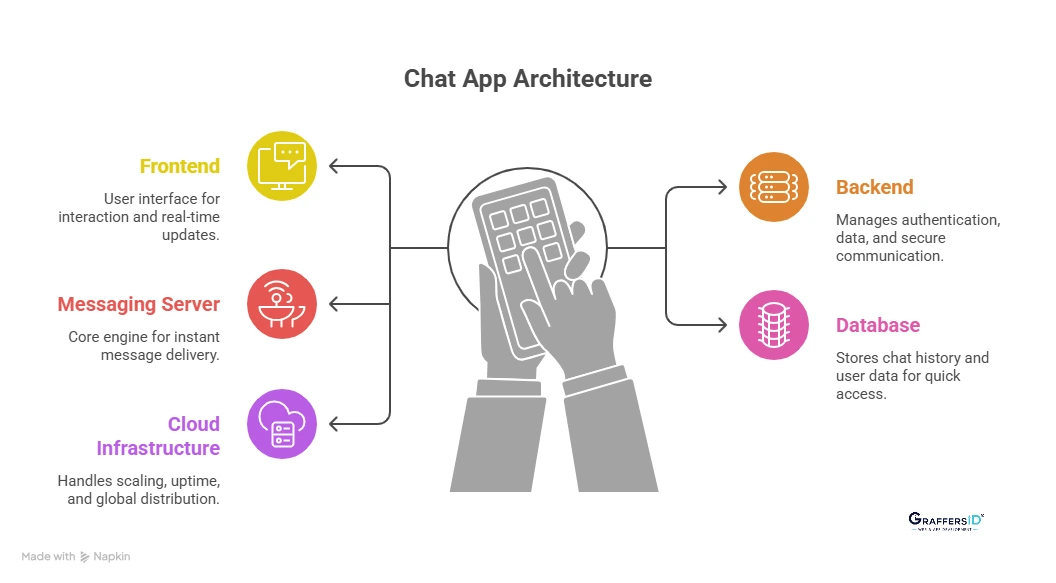
1. Frontend (Mobile or Web Interface):
- This is what users interact with, built using technologies like React, Flutter, or native apps.
- It handles UI, message display, and real-time updates to ensure a smooth user experience.
2. Backend (APIs and Business Logic):
- The backend manages authentication, user data, and message processing.
- It ensures secure communication between users and coordinates system-level operations.
3. Real-Time Messaging Server:
- This is the core engine that enables instant message delivery.
- It maintains persistent connections and ensures messages are sent and received without delay.
4. Database (Message Storage and Retrieval):
- Stores chat history, user data, and metadata for quick access.
- Designed for high read/write performance to handle millions of messages efficiently.
5. Cloud Infrastructure (Scalability Layer):
- Cloud platforms like AWS or GCP handle scaling, uptime, and global distribution.
- Enables the app to support users across regions with minimal latency.
How Real-Time Messaging Works?
- User Sends a Message: The message is created on the frontend and sent to the server through a persistent connection.
- Message is transmitted via WebSocket: WebSockets keep a continuous connection open, allowing instant data transfer without repeated requests.
- Server Processes and Routes the Message: The backend validates, processes, and determines the correct recipient(s) using routing logic.
- Recipient Receives the Message Instantly: The message is delivered in real time to the recipient’s device with minimal delay.
- Message is Stored in the Database: The system saves the message for history, synchronization, and future retrieval across devices.
Technologies Used in Real-Time Chat Systems in 2026
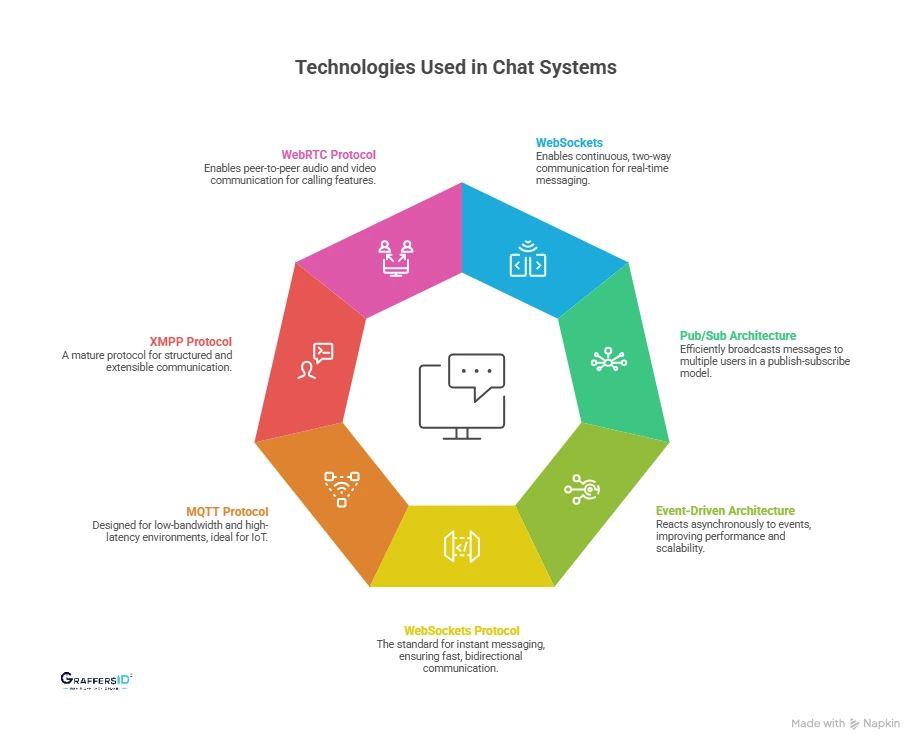
1. WebSockets (Persistent Communication Layer):
- Enables continuous, two-way communication between client and server.
- Essential for real-time messaging without delays caused by repeated HTTP requests.
2. Pub/Sub Architecture (Message Distribution System):
- Uses a publish-subscribe model where messages are broadcast to multiple users efficiently.
- Helps scale chat systems to support large user bases and group conversations.
3. Event-Driven Architecture (Scalability Backbone):
- System reacts to events (like sending or receiving messages) asynchronously.
- Improves performance and allows independent scaling of different components.
Protocols Used in Chat App Development
1. WebSockets (Real-Time Standard):
- The most widely used protocol for instant messaging systems.
- Ensures fast, bidirectional communication between users.
2. MQTT (Lightweight Messaging Protocol):
- Designed for low-bandwidth and high-latency environments.
- Commonly used in IoT-based chat or lightweight applications.
3. XMPP (Structured Messaging Protocol):
- A mature protocol used in earlier messaging systems.
- Still relevant for structured communication and extensibility.
4. WebRTC (Voice and Video Communication):
- Enables peer-to-peer audio and video communication.
- Used for adding calling features inside chat applications.
A chat app is not just a frontend feature; it’s a real-time distributed system. The stronger your architecture, the more reliable your chat application becomes at scale.
How to Build a Chat App in 2026?
Building a chat application requires a phased approach, starting with a lean MVP and gradually evolving into a scalable, feature-rich platform. This ensures faster go-to-market while minimizing risk.
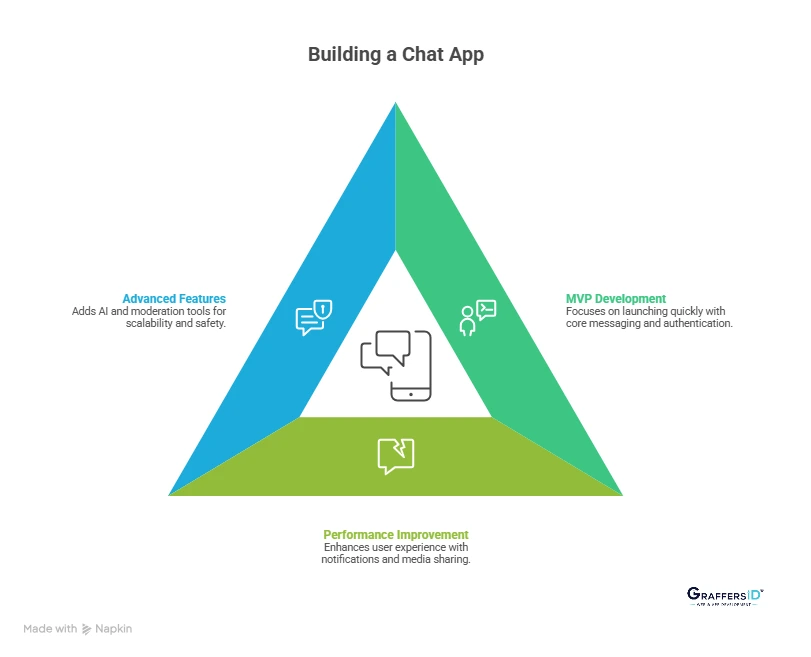
Step 1: Build a Minimum Viable Chat App (MVP)
The goal of the MVP is to launch quickly with core messaging functionality and validate your product idea.
1. Basic Messaging Functionality
- Enable real-time sending and receiving of messages between users.
- Focus on reliability and speed rather than advanced features at this stage.
2. User Authentication System
- Implement secure login/signup using email, phone, or social authentication.
- This ensures user identity and lays the foundation for personalized messaging.
3. Simple and Clean User Interface
- Design an intuitive chat interface that is easy to use across devices.
- Prioritize message clarity, responsiveness, and smooth navigation.
Step 2: Improve Chat App Performance and User Experience
Once the MVP is stable, the focus shifts to performance, engagement, and usability.
1. Push Notifications and Alerts
- Notify users instantly when they receive new messages.
- Helps improve engagement and ensures users return to the app frequently.
2. Media Sharing Capabilities
- Allow users to send images, videos, documents, and other files.
- Enhances communication and makes the app more versatile.
3. Speed and Performance Optimization
- Reduce latency and improve message delivery speed.
- Optimize backend and database queries to handle growing user activity.
Step 3: Add Advanced Features to Scale Your Chat App
At this stage, the goal is to differentiate your product and support large-scale usage.
1. AI-Powered Features
- Add smart replies, auto-suggestions, or AI-based conversation assistance.
- Improves user experience and aligns with modern AI-driven expectations.
2. Analytics and User Insights Dashboard
- Track user behavior, engagement metrics, and message activity.
- Helps product teams make data-driven decisions and improve retention.
3. Moderation and Safety Tools
- Implement spam detection, content filtering, and reporting systems.
- Essential for maintaining a safe and scalable communication environment.
A successful chat app is not built all at once; it evolves in phases. The faster you launch and iterate, the stronger your product-market fit becomes.
How Much Does It Cost to Build a Chat App in 2026?
The cost of building a chat app depends on complexity, scalability, and feature set. Below is a realistic estimate based on modern development standards.
Estimated Cost to Build a Chat Application
MVP Chat App ($30,000 – $50,000)
- Includes basic features like messaging, authentication, and simple UI.
- Ideal for startups testing product-market fit.
Scalable Chat Application ($150,000 – $250,000+)
- Includes advanced features, high-performance infrastructure, and global scalability.
- Suitable for products expecting rapid user growth and heavy usage.
Read More: AI in App Development: Complete Guide on How to Build an AI-Powered Mobile App in 2026?
Key Factors That Affect Chat App Development Cost
- Features and Functionality: More features like video calls, AI, or moderation increase development time and cost.
- Technology Stack: Choosing scalable technologies (real-time systems, cloud infrastructure) impacts both initial and long-term costs.
- Team Structure and Expertise: Costs vary based on whether you hire freelancers, an in-house team, or a development partner.
Security Best Practices for Building a Chat App
Security is critical for chat applications because they handle real-time, sensitive user data at scale.
Essential Security Measures for Chat Applications
- End-to-End Encryption: Ensures messages are encrypted and only accessible to the sender and receiver.
- Secure Authentication Systems: Use methods like OAuth, multi-factor authentication, and token-based access.
- Data Privacy Compliance: Follow global regulations like GDPR to protect user data and avoid legal risks.
- Abuse and Spam Prevention: Implement moderation tools, rate limiting, and AI-based detection to prevent misuse.

Conclusion: How to Successfully Build a Scalable Chat App in 2026?
Building a chat app in 2026 is not just about enabling messaging; it’s about designing a high-performance, real-time communication system that users can depend on every day.
The most successful chat applications today are built on strong foundations that deliver messages instantly with minimal latency, scale seamlessly as user demand grows, maintain a consistent, reliable user experience across devices, and prioritize security and data protection from day one.
For decision-makers, one thing is clear: costs increase with scalability, performance, and reliability requirements. Cutting corners early may reduce initial costs, but it often leads to performance bottlenecks, system failures, and expensive rebuilds later.
At GraffersID, we help startups and enterprises build robust, real-time chat applications designed for performance, scalability, and long-term growth.
Hire remote developers from GraffersID to build your chat application faster, smarter, and ready for scale.