

E-commerce in 2026 is no longer about simply launching an online store. It’s about building intelligent, scalable, and conversion-focused digital commerce ecosystems that can adapt to rapidly changing customer expectations and market dynamics.
Today’s fastest-growing brands don’t win with templates or plug-and-play solutions. They invest in AI-driven personalization, headless and composable commerce architectures, ultra-fast performance, and seamless omnichannel experiences that turn visitors into long-term customers. Security, scalability, and flexibility are no longer optional; they are business-critical.
For CTOs, CEOs, and product leaders, choosing the right e-commerce development company has become a strategic decision, not a technical one. The right partner directly impacts revenue growth, customer retention, time-to-market, and future scalability.
This curated guide features the top e-commerce website development companies in the USA for 2026, agencies, and technology partners known for delivering AI-enhanced, high-performance, and future-ready e-commerce solutions. Whether you’re building from scratch, modernizing an existing platform, or scaling globally, this list will help you identify the right development partner for your next phase of growth.
Top 10 E-Commerce Website Development Companies in 2026
Choosing the right e-commerce development company in 2026 is no longer just a technical decision; it’s a growth, scalability, and revenue decision. The companies listed below are recognized for building AI-ready, high-performance, and scalable e-commerce platforms tailored for modern businesses.
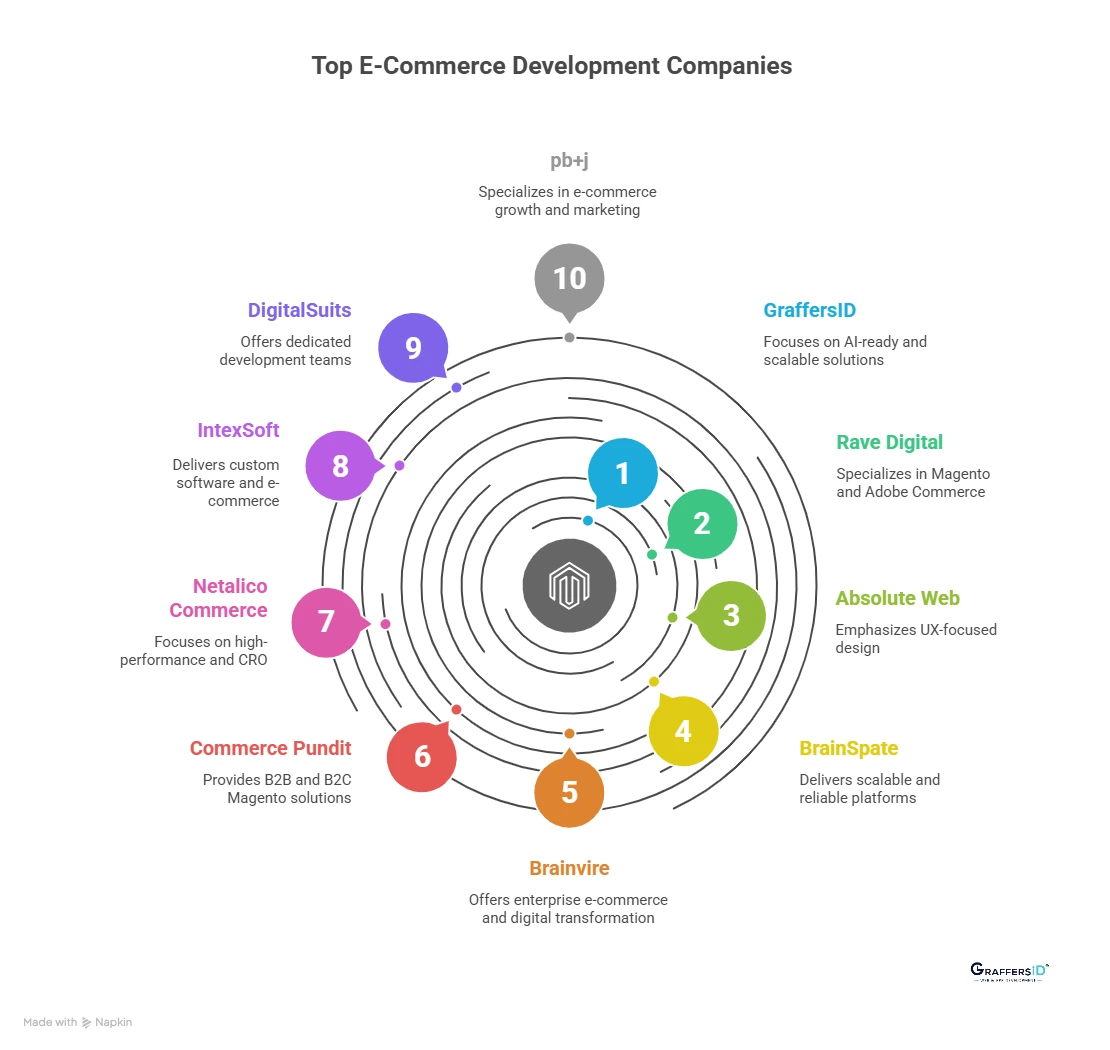
1. GraffersID: Best AI-Ready & Scalable E-Commerce Development Company

GraffersID ranks as one of the top e-commerce website development companies in 2026 due to its strong focus on AI-driven commerce, performance optimization, and flexible hiring models.
GraffersID helps startups, growing brands, and enterprises build, scale, and modernize e-commerce platforms without the risks of long-term hiring or rigid development contracts.
Why GraffersID ranks #1 in 2026:
-
Custom e-commerce development using Shopify, WooCommerce, and headless commerce.
-
AI-powered automation for personalization, recommendations, and customer workflows.
-
Conversion-focused UI/UX design built for higher engagement and sales.
-
Performance-first architecture optimized for Core Web Vitals.
-
Flexible remote developers and staff augmentation models.
Best for: CTOs, founders, and product leaders looking for cost-effective, scalable, AI-enabled e-commerce solutions.
2. Rave Digital: Magento & Adobe Commerce Development Experts

Rave Digital is a certified Adobe Commerce (Magento) solutions partner known for delivering complex B2B and B2C e-commerce platforms.
Key strengths:
-
Adobe Commerce Cloud implementations
-
Open-source Magento development solutions
-
Enterprise-grade system integrations
-
Global delivery capabilities and support teams
Best for: Mid-to-large enterprises that require robust, Magento-based commerce ecosystems.
3. Absolute Web: UX-Focused E-Commerce Development Agency

Absolute Web specializes in design-led e-commerce development, combining branding, performance, and user experience.
Key strengths:
-
Custom e-commerce UX/UI design
-
CRO-focused storefront development
-
Shopify and Magento build
-
Digital commerce strategy & consulting
Best for: Brands that prioritize premium design, storytelling, and customer experience.
4. BrainSpate: Scalable & Reliable E-Commerce Development Company

BrainSpate focuses on delivering clean, fast, and scalable e-commerce websites that support long-term growth.
Key strengths:
-
Custom e-commerce store development
-
Platform upgrades and ongoing maintenance
-
Scalable and secure architecture
-
Business-aligned development approach
Best for: Growing businesses needing stable and future-proof e-commerce platforms.
5. Brainvire: Enterprise E-Commerce & Digital Transformation Partner

With over 20 years of experience, Brainvire supports large-scale e-commerce and digital transformation initiatives.
Key strengths:
-
Enterprise-level e-commerce platforms
-
Mobile commerce solutions
-
ERP and third-party integrations
-
Multi-region and global deployments
Best for: Enterprises seeking end-to-end, global e-commerce execution.
6. Commerce Pundit: B2B & B2C Magento Commerce Specialists

Commerce Pundit is known for building custom Magento-based e-commerce solutions for diverse industries.
Key strengths:
-
B2B and B2C commerce solutions
-
Industry-specific customization
-
Performance and scalability optimization
-
Dedicated e-commerce development teams
Best for: Businesses that rely heavily on Magento-centric commerce architectures.
7. Netalico Commerce: High-Performance E-Commerce Development Agency

Netalico focuses on speed, scalability, and conversion optimization, making it a strong choice for growth-focused brands.
Key strengths:
-
Shopify, Magento, and BigCommerce development
-
Data-driven UX and design decisions
-
High-performance storefront optimization
-
Hands-on, personalized support
Best for: Brands prioritizing conversion rate optimization (CRO) and site speed.
8. IntexSoft: Custom Software & E-Commerce Development Company

IntexSoft provides end-to-end custom software and e-commerce development services for technology-driven businesses.
Key strengths:
-
Custom-built commerce platforms
-
SaaS-based e-commerce solutions
-
Long-term development partnerships
-
Business-focused delivery models
Best for: Companies needing bespoke e-commerce solutions integrated with custom software.
9. DigitalSuits: Dedicated E-Commerce Development Teams

DigitalSuits offers flexible engagement models, including dedicated development teams and staffing support.
Key strengths:
-
Shopify and custom e-commerce development
-
Dedicated and scalable development teams
-
Flexible delivery models
-
Long-term growth and support services
Best for: Companies seeking dedicated e-commerce developers without internal hiring overhead.
10. pb+j: E-Commerce Growth & Performance Marketing Agency

pb+j is a performance-driven agency focused on helping DTC brands scale revenue and profitability.
Key strengths:
-
E-commerce performance optimization
-
Conversion rate optimization (CRO)
-
Data analytics and insights
-
Revenue-focused growth strategies
Best for: DTC brands in health, wellness, beauty, and lifestyle sectors.
How E-Commerce Website Development Works in 2026: Step-by-Step Process
E-commerce website development in 2026 follows a strategic, technology-first approach that blends business goals, user experience, AI capabilities, and scalable architecture. Below is a clear breakdown of how modern e-commerce platforms are planned, built, and scaled.
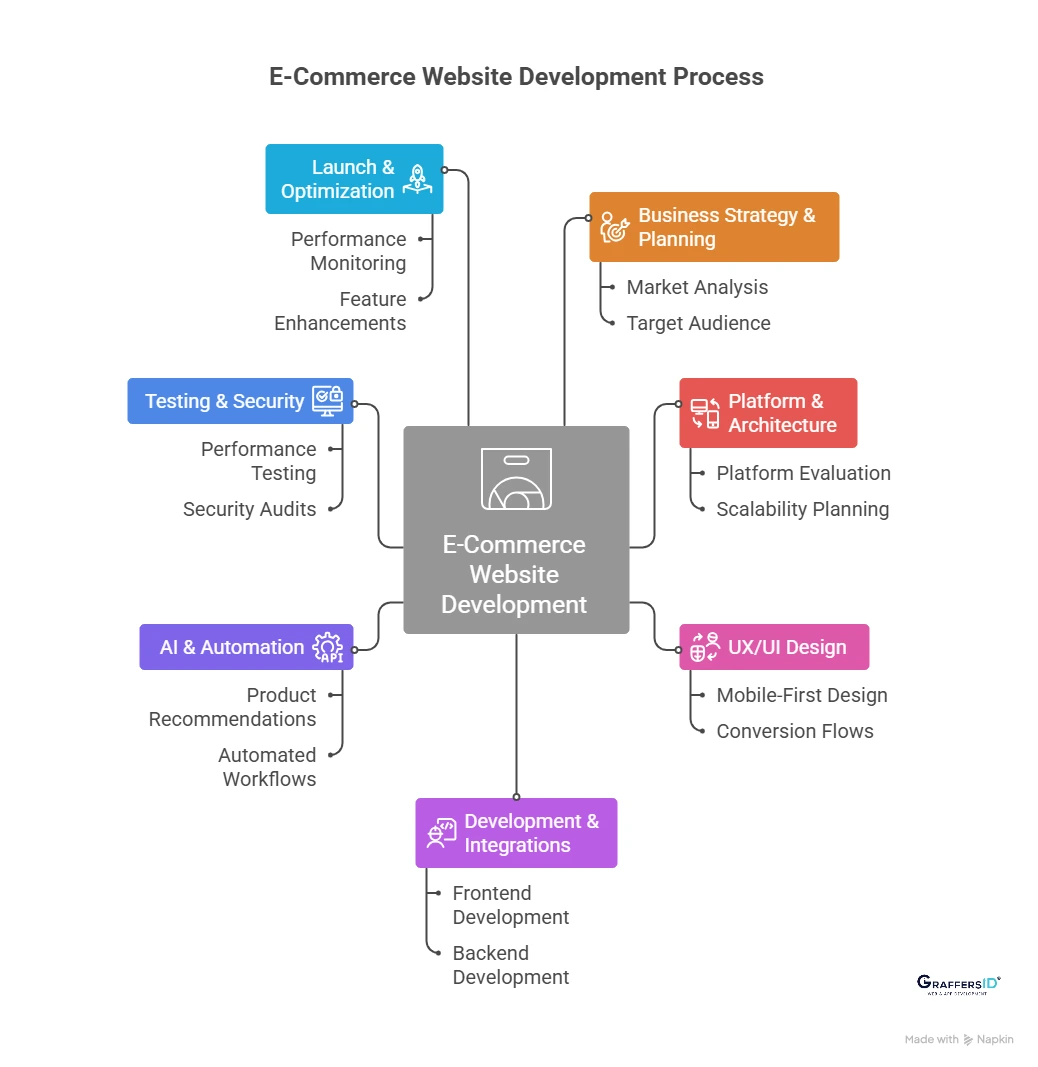
Step 1: Business Strategy & E-Commerce Planning
Every successful e-commerce project starts with business alignment, not code. This phase focuses on:
-
Market and competitor analysis to identify gaps and opportunities
-
Defining the target audience, buyer personas, and user journeys
-
Creating a feature roadmap aligned with business goals
-
Setting measurable KPIs such as conversion rate, cart abandonment, and lifetime value
Without a clear strategy, even the best technology fails to deliver ROI.
Step 2: Choosing the Right E-Commerce Platform & Architecture
Selecting the right platform is a long-term scalability decision. This step includes:
-
Evaluating platforms like Shopify, WooCommerce, and headless commerce solutions
-
Planning for traffic spikes, international expansion, and performance
-
Ensuring readiness for third-party integrations (payments, shipping, CRM, analytics)
Many fast-scaling brands are moving toward headless and composable commerce to improve speed, flexibility, and omnichannel delivery.
Read More: 7 Best Programming Languages For Retail & E-Commerce
Step 3: UX/UI Design & Conversion Optimization
Design in 2026 is about clarity, speed, and conversion, not just aesthetics. Key focus areas:
-
Mobile-first and responsive layouts
-
Conversion-optimized user flows (search, product pages, checkout)
-
Accessibility and usability for all users
-
Clear CTAs and friction-free navigation
Better UX improves dwell time, engagement, and conversion signals.
Step 4: E-Commerce Development & System Integrations
This is where the platform comes to life. Development includes:
-
Secure payment gateway integration
-
API-based connections with inventory, CRM, ERP, and logistics systems
-
Performance optimization for fast page load times
Clean architecture and modular development make it easier to scale features and integrate AI tools later.
Step 5: AI & Automation Implementation
Modern e-commerce platforms are increasingly AI-powered. This step enables:
-
AI-driven product recommendations
-
Personalized content and pricing experiences
-
Automated workflows for orders, support, and marketing
-
AI chatbots for sales and customer support
AI improves conversions, reduces operational costs, and enhances customer experience.
Step 6: Testing, Security & SEO Optimization
Before launch, platforms must be secure, fast, and search-ready. This phase covers:
-
Performance and load testing
-
Security audits and compliance checks
-
SEO optimization, including Core Web Vitals
-
Cross-browser and device testing
Search engines prioritize speed, security, and structured data, making this step critical for ranking and visibility.
Step 7: Launch, Optimization & Continuous Growth
E-commerce development doesn’t end at launch; it evolves continuously. Post-launch activities include:
-
Performance monitoring and analytics tracking
-
Conversion rate optimization (CRO)
-
Feature enhancements based on user behavior
-
Ongoing SEO, UX, and AI improvements
Continuous optimization ensures the platform stays competitive, scalable, and aligned with changing search and user behavior.
How to Choose the Right E-Commerce Development Company?
Choosing the right e-commerce development company in 2026 is a strategic business decision, not just a technical one. The ideal partner should help you build a platform that is scalable, secure, AI-ready, and conversion-focused. Here are the most important factors to evaluate before making your choice:
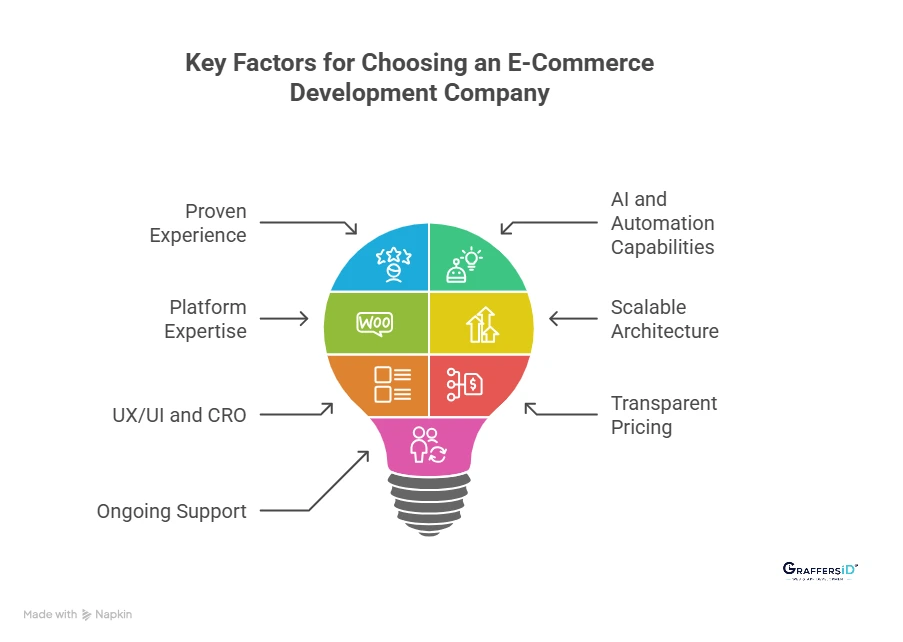
1. Proven Experience in E-Commerce Development
Look for a company with a strong track record in e-commerce projects, not just general web development. Review their portfolio, case studies, and client testimonials to see whether they have built platforms similar to your business model (B2B, B2C, DTC, or marketplaces). Experience across industries is a strong indicator of problem-solving maturity.
2. AI and Automation Capabilities
In 2026, modern e-commerce platforms rely heavily on AI-driven personalization, smart recommendations, automated workflows, and intelligent customer support. Choose a development partner that understands how to integrate AI and automation to improve user experience, operational efficiency, and conversion rates.
3. Platform Expertise and Architecture Knowledge
Ensure the company has deep expertise in leading e-commerce platforms such as Shopify, WooCommerce, and headless or composable commerce architectures. They should be able to recommend the right platform based on your scalability needs, traffic expectations, and future expansion plans, rather than forcing a one-size-fits-all solution.
Read More: E-commerce Automation Trends 2026: How Retailers Are Using AI and Automation to Scale
4. Scalable, Secure, and Future-Ready Architecture
Your e-commerce website should be built to handle growth, high traffic, and evolving business requirements. The development company must follow best practices for performance optimization, data security, and compliance, ensuring your platform remains reliable, fast, and secure over time.
5. Strong Focus on UX, UI, and Conversion Optimization
A visually appealing website is not enough. The right e-commerce partner prioritizes user experience (UX), intuitive navigation, mobile-first design, and conversion rate optimization (CRO). These elements directly impact customer engagement, cart completion rates, and overall revenue.
6. Transparent Pricing and Realistic Timelines
Choose a company that offers clear pricing models, well-defined project scopes, and realistic delivery timelines. Transparency helps avoid hidden costs and ensures smoother collaboration throughout the development lifecycle. A reliable partner will clearly communicate milestones, dependencies, and risks.
7. Ongoing Support, Maintenance, and Optimization
E-commerce success does not end at launch. The best development companies provide ongoing support, performance monitoring, security updates, and continuous optimization. Long-term partnership ensures your platform evolves alongside market trends, customer behavior, and new technologies.

Conclusion: Choosing the Right E-Commerce Development Partner in 2026
In 2026, e-commerce success is driven by intelligent technology, smooth customer experiences, and scalable engineering foundations. Brands that lead the market don’t just launch online stores; they build future-ready digital commerce platforms designed to adapt, scale, and convert.
The e-commerce development companies highlighted in this guide have proven their ability to deliver high-performance, AI-enabled, and growth-focused solutions. Choosing the right partner can directly impact:
-
Faster time-to-market and smoother product launches
-
Higher conversion rates through optimized UX and performance
-
Stronger customer retention with personalized experiences
-
Long-term scalability without technical bottlenecks
If you’re planning to build, modernize, or scale an AI-ready e-commerce platform in 2026, GraffersID is your trusted development partner.
With GraffersID, you can build custom, high-performance e-commerce websites, hire experienced e-commerce developers, and implement automation and intelligent workflows for efficiency.
Contact GraffersID today to future-proof your e-commerce business with a scalable, AI-driven digital commerce solution built for long-term growth.