

Every second your website underperforms, a competitor is ranking higher, converting better, and getting cited by AI.
In 2026, the rules of web design have fundamentally shifted. Google’s AI Overviews, ChatGPT, and Perplexity no longer just crawl your pages; they judge them. They evaluate how fast your site loads, how clearly your content is structured, how users engage with it, and whether your information is trustworthy enough to surface in AI-generated answers.
The websites winning in this environment aren’t just visually polished. They’re built as performance systems, engineered to rank, convert, and get recommended by both humans and AI. So what separates a high-performance website from one that quietly leaks traffic, trust, and revenue?
In this guide, we break down the 10 must-have web design features that directly influence your search visibility, AI discoverability, user experience, and bottom line.
Why Modern Web Design is Important for SEO & AI Rankings in 2026?
In 2026, a website is no longer just a digital presence; it’s a core growth system that impacts how your business ranks, engages users, and converts traffic into revenue.
Search engines and AI platforms now evaluate websites based on multiple performance and experience signals. Even a visually appealing site can underperform if it lacks structure, speed, or usability.
Key Factors That Define Website Performance in 2026
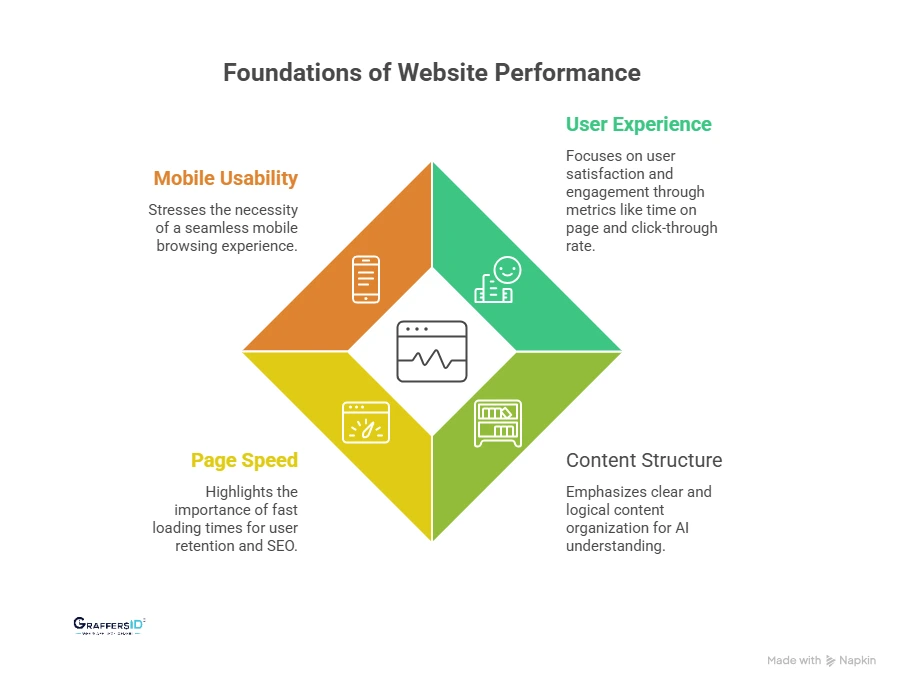
1. User Experience and Engagement Signals
Search engines and AI systems prioritize websites where users stay longer and interact more. Metrics like time on page, click-through rate, and bounce rate directly influence visibility.
2. Content Structure and Clarity for AI Understanding
Well-structured content (clear headings, concise answers, logical flow) helps AI systems extract and display your content in AI Overviews and answers. Poorly structured pages are harder to interpret and rank lower.
3. Page Speed and Core Web Performance
Fast-loading websites improve both rankings and user satisfaction. Slow pages increase drop-offs and negatively impact SEO performance.
4. Mobile-First and Cross-Device Usability
With most users browsing on mobile, websites must deliver a seamless experience across all devices. Mobile usability is now a primary ranking factor, not an afterthought.
Business Risks of Poor Web Design
- Lower Search Visibility: Websites with weak structure, slow speed, or poor UX struggle to rank in both search results and AI-generated answers.
- Higher Bounce Rates: If users don’t find what they need quickly, they leave, reducing engagement signals that impact rankings.
- Lost Conversions and Revenue: A confusing or slow website directly affects trust and decision-making, leading to missed business opportunities.
To stay competitive, businesses must adopt modern, performance-driven web design features that align with both user expectations and AI systems.
Top 10 Website Design Features for Better SEO, UX, and Conversions in 2026
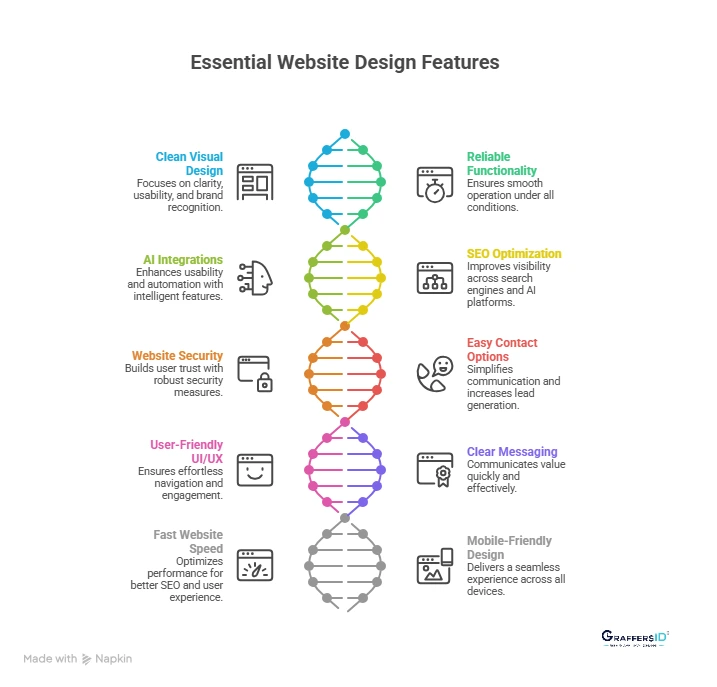
1. Clean Visual Design That Improves User Experience and Branding
In 2026, effective design focuses on clarity, usability, and brand recognition, not just visual appeal. A clean interface helps users navigate faster and improves engagement signals.
What works:
- Simple layouts with clear visual hierarchy
- Subtle micro-interactions (hover, scroll feedback)
- Consistent branding across all pages
- AI-assisted design systems for faster updates
What to avoid:
- Too many animations or distractions
- Cluttered layouts that overwhelm users
- Prioritizing design over usability
Pro Tip: Use A/B testing and heatmaps to understand real user behavior.
2. Reliable Website Functionality and Performance Stability
A high-performing website must function smoothly under all conditions, including high traffic. Stability is the foundation of trust and long-term scalability.
Key requirements:
- No broken links or UI errors
- High uptime and reliable hosting
- Scalable backend infrastructure
- Compatibility across browsers and devices
Users and search engines penalize websites that crash, lag, or fail to load properly.
3. Smart Features Using AI and API Integrations
Modern websites go beyond static pages by integrating intelligent features that improve usability and automation. These features enhance user experience and business efficiency.
Examples:
- AI chatbots and virtual assistants
- Personalized dashboards and recommendations
- Integrations with CRMs, payment systems, and analytics tools
- Workflow automation
When implementing integrations, ensure strong API security to protect data and maintain system reliability.
4. SEO and AI Optimization for Better Online Visibility
Websites must now be optimized for both search engines and AI-driven platforms. This ensures visibility across Google results and AI-generated answers.
Best practices:
- Use structured headings (H1, H2, H3)
- Answer user queries clearly and directly
- Implement schema markup
- Build intent-focused landing pages
5. Website Security Features That Build User Trust
Security plays a direct role in user trust, SEO rankings, and conversion rates. A secure website reassures users that their data is protected.
Must-have features:
- HTTPS and SSL certificates
- Secure login and authentication systems
- Data encryption protocols
- Regular security audits and testing
Security warnings can instantly drive users away and damage brand credibility.
6. Easy Contact Options That Increase Conversions
A high-impact website makes it simple for users to reach out or take action. Clear communication channels directly improve lead generation.
Best practices:
- Dedicated and easy-to-find contact page
- Multiple contact options:
-
Email
-
Phone
-
Live chat
-
Social media links
-
-
AI-powered chat for instant responses
Businesses that simplify communication often see higher conversion rates.
7. Simple and User-Friendly UI/UX Design
Strong UI/UX design ensures users can navigate your website effortlessly and find what they need quickly. This directly improves engagement and retention.
Key elements:
- Clear navigation and menus
- Logical page structure
- Consistent design patterns
- Minimal cognitive load
AI-powered personalization adapts content based on user behavior and preferences.
Read More: UI vs. UX Design in 2026: Key Differences, Examples, and How AI Is Transforming Digital Experiences
8. Clear Messaging That Explains Your Value Quickly
Your website should clearly communicate what you offer and why it matters within seconds. Strong messaging improves engagement and decision-making.
Include:
- Mission and vision
- Unique value proposition
- Case studies and testimonials
- Transparent business practices
Avoid generic content or claims without proof.
9. Fast Website Speed and Performance Optimization
Page speed is a critical factor for SEO, user experience, and conversions. Faster websites retain users and rank better in search results.
Optimize for:
- Core Web Vitals
- Image and asset compression
- Lazy loading
- CDN and efficient hosting
Faster load times lead to better rankings, lower bounce rates, and higher conversions.
10. Mobile-Friendly and Responsive Website Design
With the majority of users browsing on mobile devices, your website must deliver a seamless experience across all screen sizes.
Ensure:
- Responsive layouts for all devices
- Touch-friendly navigation
- Optimized images and fonts
- Consistent user experience
Mobile-first design is now the standard for both users and search engines.
How to Balance Web Design Elements for Better SEO, UX, and Conversions (2026 Guide)
Building a high-impact website in 2026 isn’t about excelling in just one area; it’s about balancing performance, user experience, and growth factors to meet both user expectations and AI ranking systems.
Below is a simple framework decision-makers can use to evaluate and improve their websites.
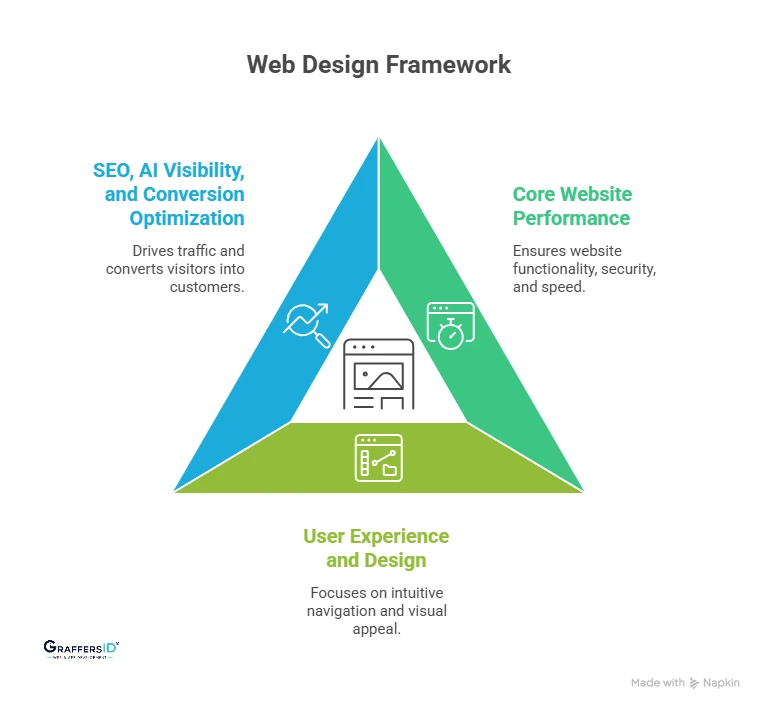
1. Core Website Performance (Functionality, Security, Speed)
This is the foundation of your website; if this fails, everything else underperforms.
- Functionality: Your website should work seamlessly across all pages, with no broken links, errors, or usability issues.
- Security: Implement HTTPS, secure authentication, and safe integrations to build trust and prevent data risks.
- Performance: Optimize load speed, Core Web Vitals, and server response time to reduce bounce rates and improve rankings.
Without a strong foundation, even great design and content won’t rank or convert.
2. User Experience and Design (UI/UX, Visuals, Mobile-First)
This layer focuses on how users interact with and perceive your website.
- UI/UX Design: Ensure intuitive navigation, clear structure, and minimal friction so users can find what they need quickly.
- Visual Design: Use clean layouts, consistent branding, and subtle interactions to enhance engagement without overwhelming users.
- Mobile Optimization: Design for mobile-first experiences, ensuring responsiveness and usability across all devices.
Strong UX improves engagement signals, which directly impact SEO and AI rankings.
Read More: Why UI/UX Design Matters in Web App Development (2026): Impact on SEO, Conversions & User Experience
3. SEO, AI Visibility, and Conversion Optimization
This is where your website turns traffic into measurable business results.
- SEO + AI Optimization: Structure content for both search engines and AI systems using clear headings, schema, and direct answers.
- Integrations and Automation: Connect tools like CRMs, analytics, and AI assistants to improve efficiency and user experience.
- Conversion Optimization: Use clear CTAs, landing pages, and trust signals to guide users toward action.
In 2026, visibility alone isn’t enough; your website must also convert effectively.