
Every year, thousands of startups invest months of development time and often hundreds of thousands of dollars, building products that never gain traction. The problem isn’t always the idea. More often, it’s the lack of early validation.
In 2026, the way successful products are built has changed dramatically. With the rise of generative AI, no-code platforms, automation frameworks, and AI-assisted development tools, founders no longer need long development cycles to test an idea. Instead of building a complete product first, smart teams start with an AI-powered Minimum Viable Product (MVP) that can validate demand in weeks.
An MVP allows businesses to launch a functional version of their product with only the most essential features. This approach helps startups and enterprises test real user demand, collect feedback, and refine their product strategy before scaling development or investment.
In this comprehensive guide, you’ll learn:
- What a Minimum Viable Product (MVP) is and why it matters in modern product development
- How AI tools and automation are transforming MVP development in 2026
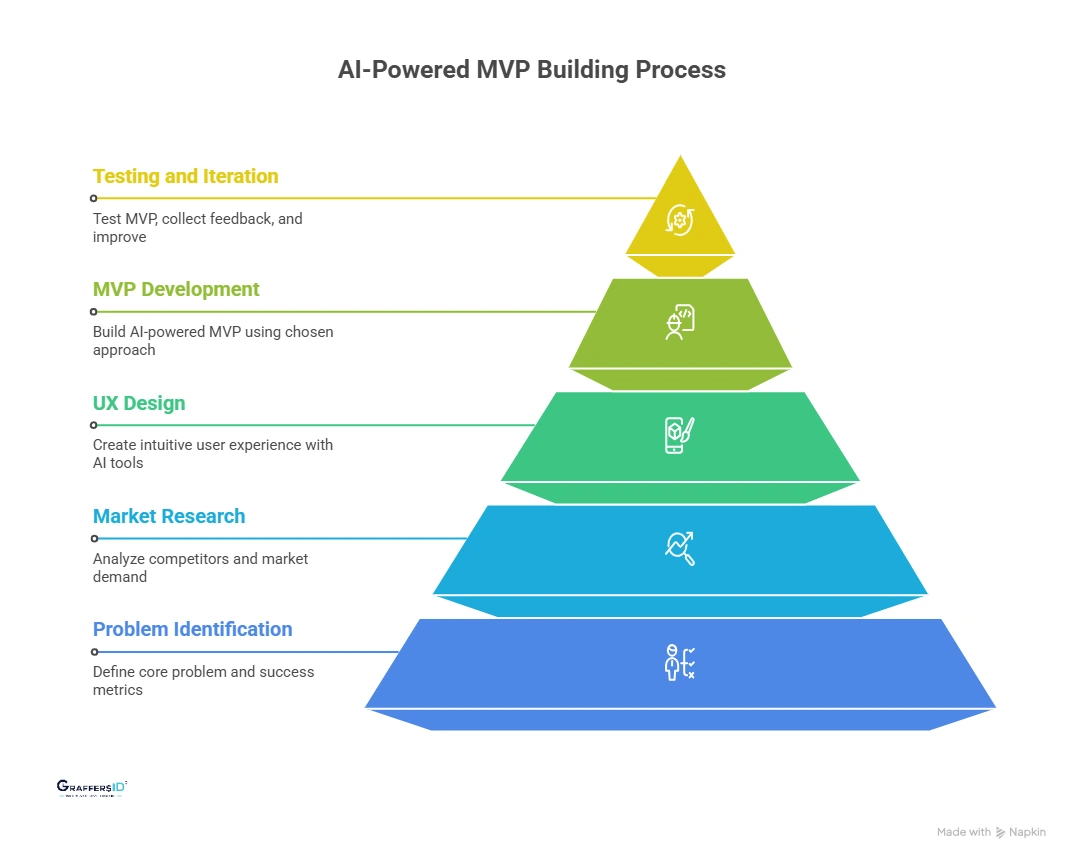
- A step-by-step process to build a successful MVP
- The essential features every MVP should include
- MVP development cost in 2026 and the factors that influence it
- Proven strategies to reduce development costs while accelerating time-to-market
What is an MVP (Minimum Viable Product)?
A Minimum Viable Product (MVP) is the earliest functional version of a product that includes only the core features required to solve a specific user problem. Instead of launching a fully developed product, companies release an MVP to test their idea in the real market, collect user feedback, and improve the product through iterative updates.
This approach allows startups and businesses to validate demand quickly while minimizing development time, cost, and risk. In modern product development, MVPs are not just basic prototypes; they are strategic tools used to test product-market fit before scaling.
Key Purpose of an MVP in Product Development in 2026
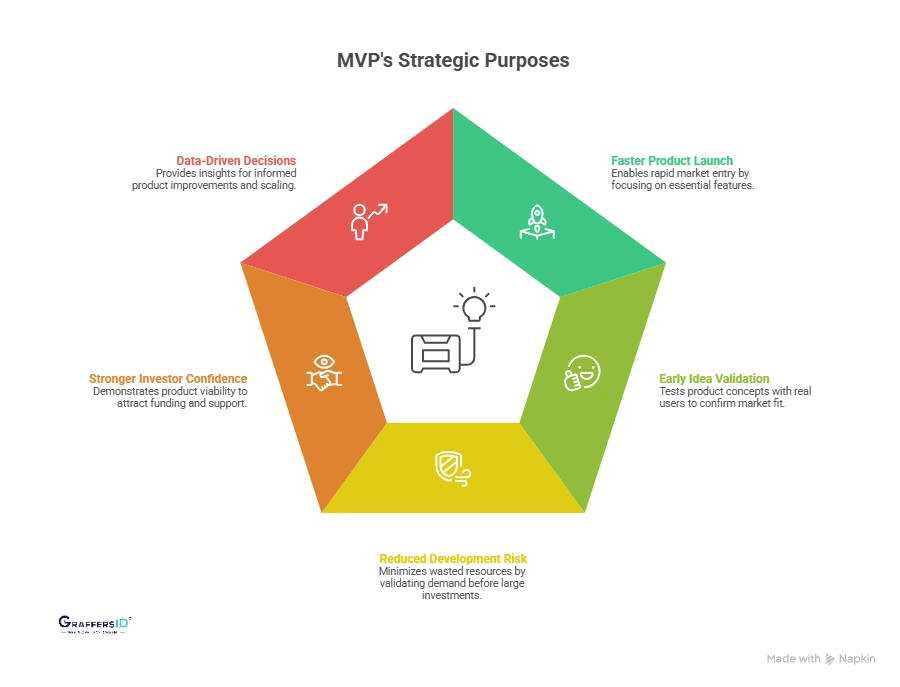
1. Faster Product Launch
An MVP focuses only on the most essential features needed for the product to function. By avoiding unnecessary features in the early stage, teams can launch the product much faster and start learning from real users sooner.
2. Early Idea Validation
Instead of relying on assumptions, an MVP allows companies to test their concept with real users in the market. User feedback, engagement patterns, and adoption rates help determine whether the idea truly solves a meaningful problem.
3. Reduced Development Risk
Building a full-scale product without validation can lead to wasted time, budget, and resources. An MVP minimizes this risk by allowing businesses to confirm demand before committing to large development investments.
4. Stronger Investor Confidence
A working MVP demonstrates that the idea is not just theoretical but already functioning in the real world. Startups often use MVP traction, such as early users, engagement metrics, or revenue, to attract investors and secure funding.
5. Data-Driven Product Decisions
An MVP allows teams to track user behavior, feature usage, and engagement metrics. These insights help product teams make data-driven decisions about which features to improve, remove, or scale.
In 2026, MVPs are no longer limited to simple product prototypes. Modern MVPs often integrate AI-powered technologies and automation tools to gain deeper insights faster.
By combining MVP strategy with AI tools, startups and product teams can validate ideas faster, identify growth opportunities earlier, and build products that better match real user needs.
MVP vs. Prototype vs. Alpha vs Beta: Product Development Stages
Understanding the difference between a Prototype, MVP, Alpha, and Beta versions is crucial for planning a successful product development lifecycle. Each stage serves a unique purpose in turning an idea into a market-ready product.
| Stage | Purpose | Key Output |
|---|---|---|
| Prototype | Visual representation or clickable mockup | UI/UX validation |
| MVP | Core product version with essential features | Market validation |
| Alpha Version | Internal testing build | Bug fixing & stability checks |
| Beta Version | Public test version | User testing & feedback before launch |
In short:
- Prototype: design concept
- MVP: working product
- Alpha: internal testing
- Beta: real user testing
Why Should You Build an MVP in 2026? Key Benefits for Startups and Enterprises
The product development landscape has changed dramatically due to AI tools, automation, and faster development frameworks. Companies now build MVPs not only to validate ideas but also to experiment with new AI-driven features quickly.
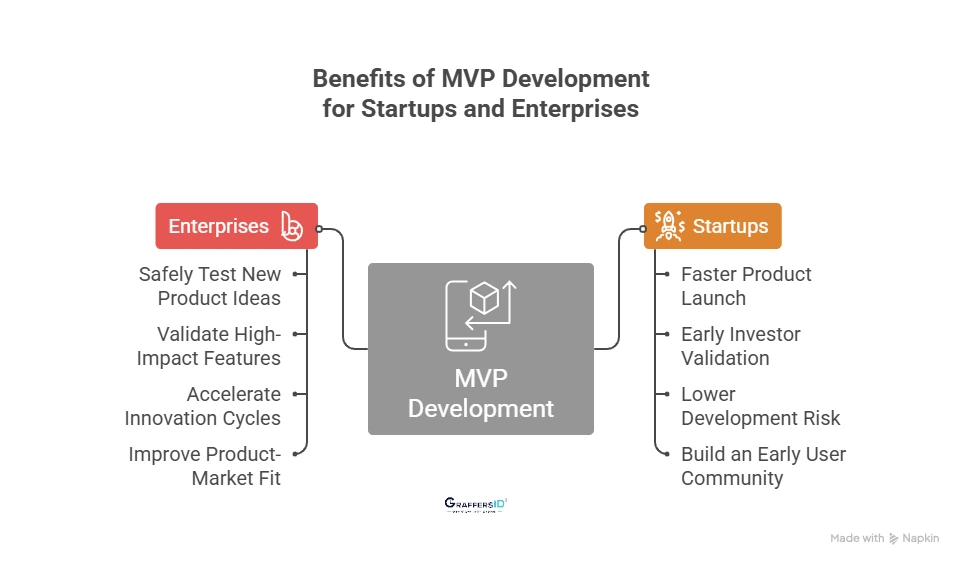
Key Benefits of MVP Development for Startups
- Faster Product Launch: AI-assisted coding tools and modern development frameworks allow startups to build MVPs within weeks instead of months. This enables founders to quickly test their idea in the market and start learning from real users.
- Early Investor Validation: A functional MVP demonstrates that the idea is technically feasible and has market potential. Investors are more likely to support startups that can show a working product and early traction.
- Lower Development Risk: Building a complete product without validation can waste time and resources. MVP development allows startups to test demand first and expand only after confirming product-market fit.
- Build an Early User Community: Launching an MVP attracts early adopters who can provide valuable feedback. These users often become the first advocates of the product and help shape future development.
Key Benefits of MVP Development for Enterprises
- Safely Test New Product Ideas: Enterprises can experiment with new digital products or AI-driven solutions using an MVP before making large investments. This reduces business risk while encouraging innovation.
- Validate High-Impact Features: An MVP helps product teams identify which features users actually value. This insight ensures development resources are focused on capabilities that drive engagement and business outcomes.
- Accelerate Innovation Cycles: Large organizations often struggle with slow development cycles. MVPs allow teams to launch smaller experiments quickly and maintain startup-like agility within enterprise environments.
- Improve Product-Market Fit: By analyzing real user behavior and feedback, companies can refine their product strategy and ensure the final product aligns closely with customer needs and market demand.
Essential Features Every MVP Should Have in 2026 for Faster Product Validation
To successfully validate a product idea, an MVP should focus on only the most important features that demonstrate the core value of the product. Below are the key features every MVP should include to launch faster, collect actionable insights, and improve product-market fit.
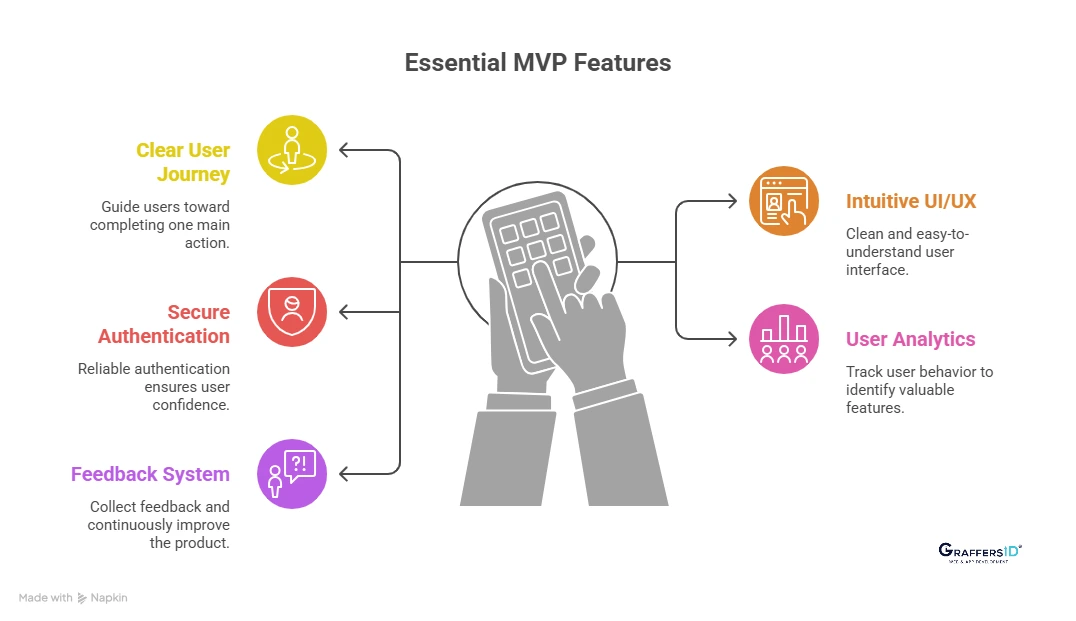
1. A Clear Core User Journey
The most important feature of any MVP is a well-defined primary user journey. Your product should guide users toward completing one main action that proves the value of your idea. Common MVP core actions include:
- Signing up or creating an account
- Making a purchase or booking a service
- Posting or sharing content
- Completing a task within the product
By focusing on one or two critical actions, teams can measure engagement, validate user interest, and identify whether the product solves a real problem.
2. Simple and Intuitive UI/UX Design
Even a minimal product must provide a clean and easy-to-understand user interface. A simple UI helps users quickly understand how the product works without requiring tutorials or onboarding complexity. Modern MVP design often uses AI-powered tools such as:
- Figma AI for rapid design iterations
- Uizard for AI-assisted wireframing
- Framer AI for fast interactive prototypes
These tools help founders and product teams create professional designs quickly while maintaining consistency and usability.
3. Secure User Authentication
Security is a fundamental requirement for any digital product, even in the MVP stage. Implementing reliable authentication ensures that users feel confident when interacting with the platform. Common authentication methods include:
- Email and password login
- Social logins (Google, Apple, LinkedIn)
- Biometric authentication (Face ID or fingerprint)
- Passwordless login using passkeys
Secure authentication not only protects user data but also builds trust with early adopters and investors.
4. User Analytics and Behavior Tracking
Analytics play a crucial role in understanding how users interact with an MVP. Tracking user behavior helps product teams identify which features are valuable and where users drop off. Popular analytics tools used in MVPs include:
- Mixpanel for product analytics
- Firebase Analytics for mobile app insights
- Amplitude for user journey tracking
- Hotjar for heatmaps and session recordings
In 2026, many analytics platforms also include AI-powered insights that automatically detect patterns in user behavior and highlight growth opportunities.
5. In-App Feedback and Bug Reporting System
One of the main purposes of an MVP is to collect feedback and continuously improve the product. Providing users with an easy way to share feedback ensures that teams receive valuable insights early. An effective feedback system may include:
- In-app feedback forms
- Bug reporting tools
- Feature request options
- Short user satisfaction surveys
This feedback loop helps product teams prioritize improvements, resolve issues quickly, and refine the product before scaling development.
MVP Development Cost in 2026: Complete Breakdown
Here’s a quick cost comparison to help you plan your MVP budget effectively:
Average MVP Development Cost (2026)
| MVP Type | Estimated Cost | Timeline | Best For |
|---|---|---|---|
| Basic MVP | $15,000 – $45,000 | 4–8 weeks | Simple product prototypes |
| AI-Integrated MVP | $35,000 – $120,000 | 6–12 weeks | AI features like chatbots or automation |
| Cross-Platform MVP | $25,000 – $80,000 | 6–10 weeks | Apps for iOS and Android |
| Enterprise MVP | $60,000 – $200,000 | 10–16 weeks | Complex platforms and integrations |
What Factors Affect MVP Development Cost in 2026?
The cost of building a Minimum Viable Product (MVP) varies depending on technology choices, AI capabilities, and the development team involved. Below are the most important factors that influence MVP development budgets in 2026.
- AI Integration Level: Adding AI features such as chatbots, recommendation engines, or predictive analytics increases development complexity and infrastructure costs.
- Technology Stack Selection: Frameworks like React Native, Flutter, or the MERN stack impact development speed, scalability, and overall cost.
- Development Team Location: Hiring offshore development teams can reduce MVP development costs by 40–50% compared to building an in-house team in high-cost regions.
- UI/UX Design Complexity: Advanced interfaces, animations, and custom user experiences require more design and development effort, increasing project costs.
How to Reduce MVP Development Cost in 2026?
Smart startups reduce MVP costs by focusing on lean development, AI tools, and faster validation strategies.
- Use No-Code or Low-Code Platforms: Platforms like Bubble and Glide allow founders to launch MVPs quickly without building a full development team.
- Hire Offshore MVP Developers: Working with remote developers from countries like India provides access to skilled talent while significantly lowering development costs.
- Focus Only on Core MVP Features: Prioritizing only the essential features helps validate product ideas faster and prevents unnecessary development spending.
- Use Open-Source AI Models: Open-source AI models like LLaMA, Mistral, and Falcon reduce reliance on expensive AI APIs.
- Automate Testing with AI Tools: AI-powered QA tools automate testing processes, reducing manual effort and accelerating product releases.

Conclusion: Build an AI-Powered MVP and Validate Your Product Faster in 2026
In 2026, successful product development starts with validation, not full-scale development. Instead of investing heavily in building a complete product, modern startups and enterprises launch AI-powered MVPs to test ideas, gather real user feedback, and refine their strategy before scaling.
By combining AI tools, rapid development frameworks, automation, and data-driven insights, businesses can dramatically shorten development cycles and reduce the risk of building products that fail to meet market demand.
For founders and product teams, the goal is simple: build smarter, launch faster, and iterate continuously.
At GraffersID, we help startups and enterprises hire skilled remote developers who specialize in building AI-powered MVPs. Once your idea is validated, our team also supports you in developing scalable web and mobile applications that are ready for long-term growth.
Contact GraffersID to turn your AI vision into reality.