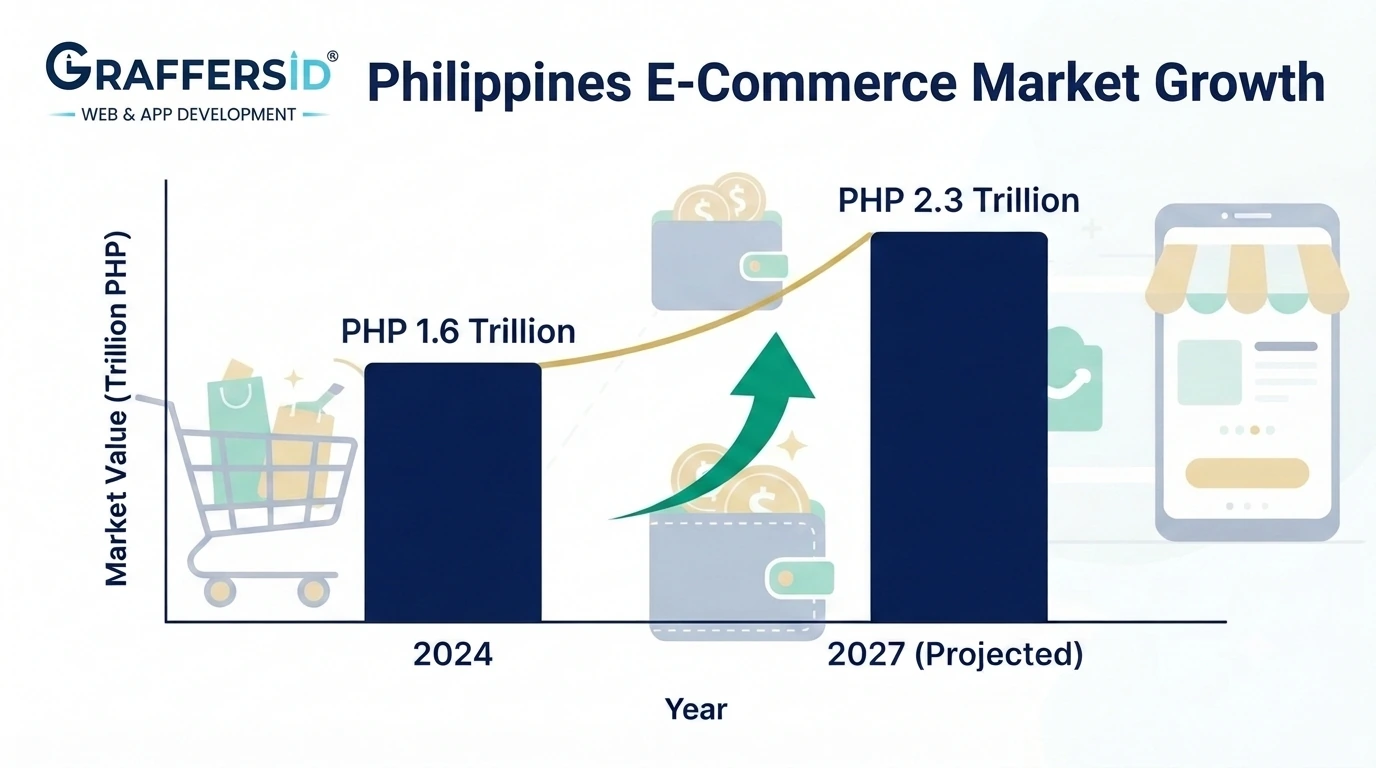
The Philippines’ e-commerce market saw significant growth in 2024, reaching over PHP 1.6 trillion, with projections indicating it will expand to more than PHP 2.3 trillion by 2027. This rapid growth highlights how quickly online selling is becoming a standard path for businesses looking to scale.
That said, entering a growing market doesn’t automatically lead to success. Many new e-commerce sites struggle not because of weak products, but due to overlooked fundamentals that affect how customers browse, engage, and complete purchases.
Whether your goal is to expand beyond a physical storefront to reach more customers or start a business entirely online, focusing on the right priorities from the beginning helps you build an e-commerce site that supports both sales and long-term growth. Here are the key areas to pay attention to when setting up your digital store.
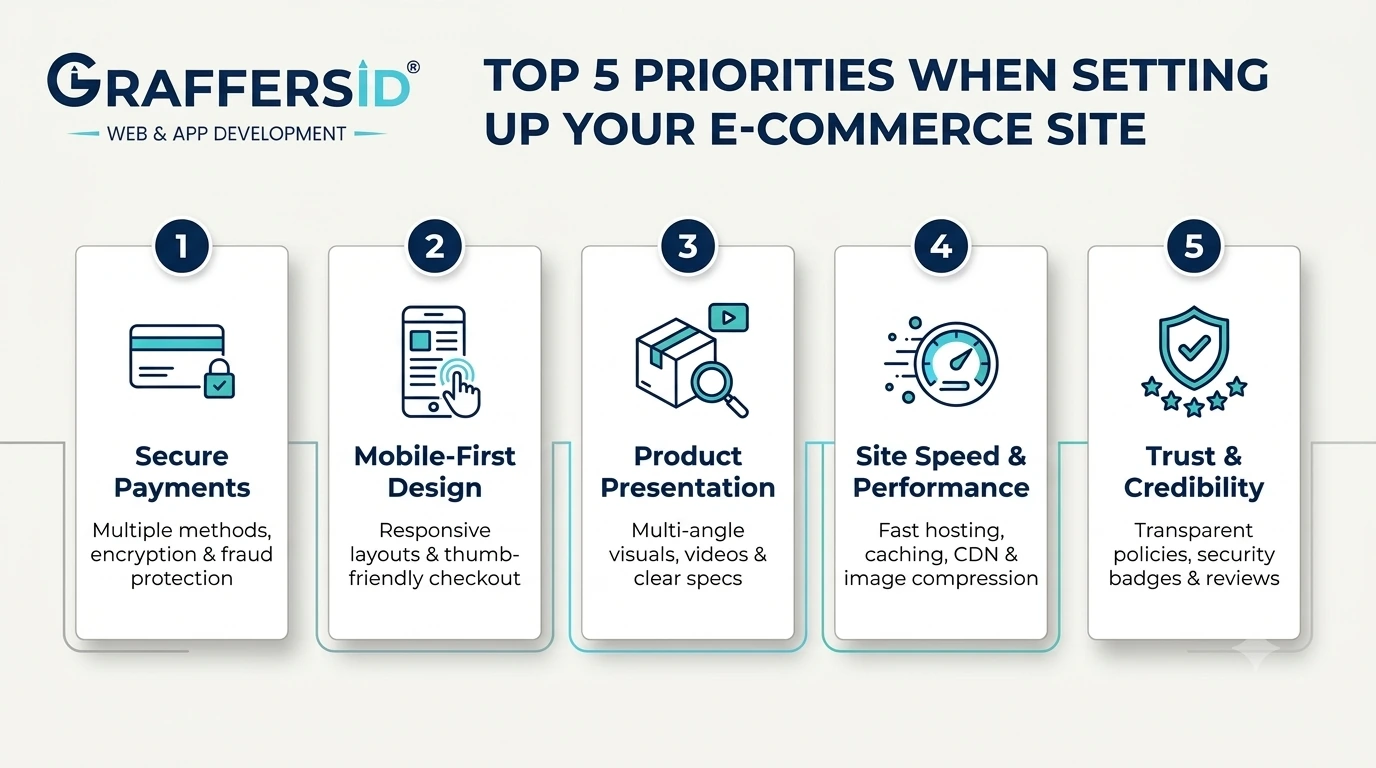
1. Secure and Seamless Payment Setup
The moment a customer decides to buy, your checkout process takes over. Any friction here can lead to abandoned carts and lost revenue. That’s why selecting a dependable online payment processing service should be at the top of your priority list.
A reliable payment setup supports multiple methods, such as credit cards, debit cards, and digital wallets, to improve chances of conversion. It should also offer strong security features like encryption and fraud detection that protect both you and your customers. Look for options that integrate easily with your existing platform so you don’t run into technical delays during setup.
Clear payment confirmations and fast processing times further improve the experience. Being able to track transactions and spot issues early can save you time as your business grows. Ultimately, a smooth payment experience builds trust, which encourages customers to come back.
2. Mobile-First Design
A large portion of online shopping now happens on mobile devices. If your site doesn’t perform well on smaller screens, you risk losing a significant share of potential customers.
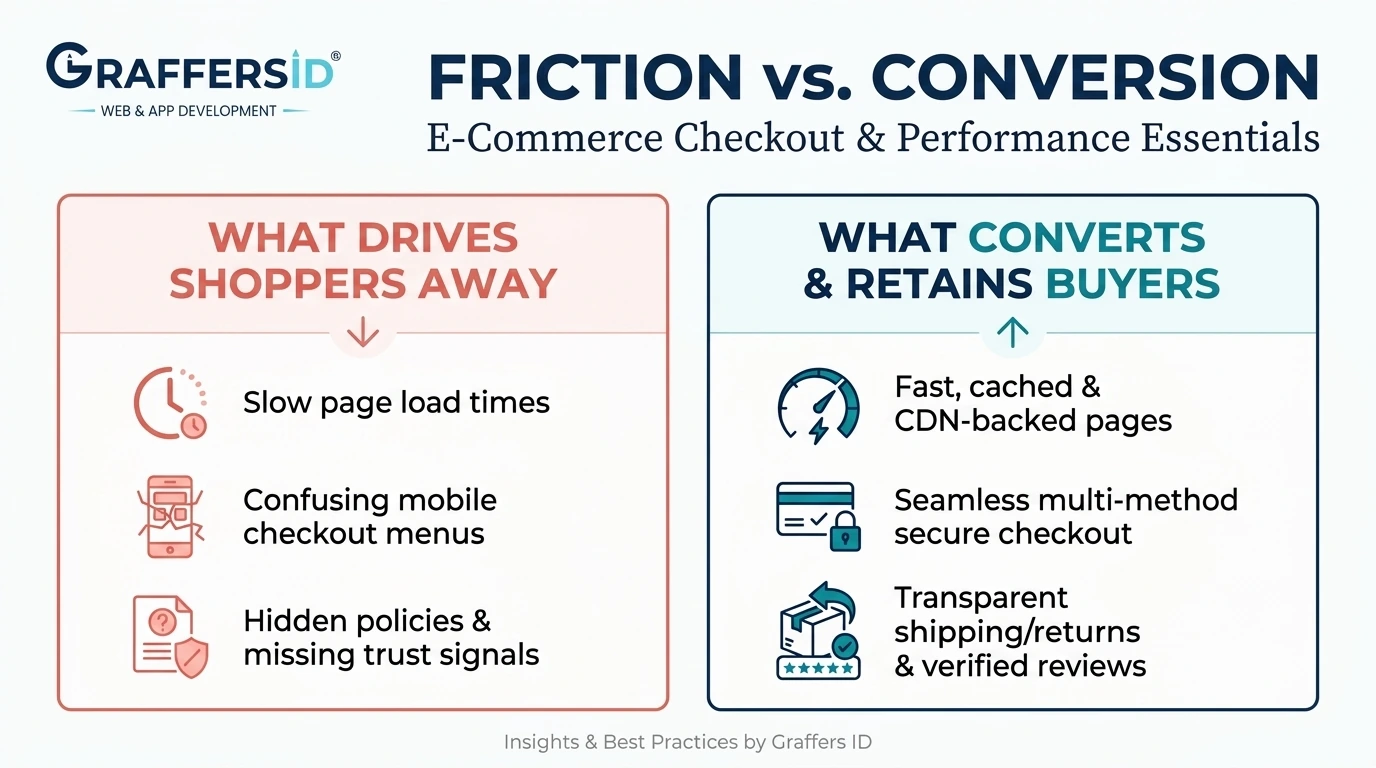
Responsive mobile-first design ensures your pages adjust smoothly to different screen sizes. Buttons should be easy to tap, text should be readable, and images should load properly without slowing down the experience. Imagine if the navigation menus of your checkout page collapse into confusing dropdowns or if the input fields are too small to type in comfortably. Those kinds of frustrations, particularly on your checkout page, can quickly drive shoppers away.
You should also test your site across different devices to catch issues early and adjust accordingly. When your site feels smooth and intuitive on mobile, you create a more accessible experience for more shoppers.
3. Product Presentation that Sells
Online shoppers cannot see or inspect your products in person, so your product pages need to do more than list what’s available. They should answer questions, reduce doubt, and help buyers clearly understand what they’re considering to purchase. When that clarity is missing, engagement drops and conversions become harder to achieve.
High-quality visuals play a central role in shaping first impressions. Use images that show multiple angles to give customers a better sense of what they’re getting. Detailed descriptions are also helpful when they cover practical information like size, materials, or usage. Showing how an item fits into everyday routines through lifestyle images or short videos can add another layer to make the experience feel more tangible.
Think of your product pages as your digital salesperson. They should present the items clearly, anticipate queries, and guide customers toward making an informed decision.
4. Site Speed and Performance
In e-commerce, even a few seconds of delay can mean lost sales. Slow sites frustrate visitors and hurt search visibility, making speed a priority from the outset.
Strong performance depends on dependable hosting and clean coding practices. Image compression reduces file sizes without sacrificing quality, while caching ensures returning users enjoy faster browsing. For stores serving customers across different regions, a content delivery network can further stabilize performance. Additionally, routine checks during peak traffic help you anticipate issues before they affect sales, particularly on mobile devices where connections vary.
Fast-loading pages make it easier for customers to stay engaged and move through your store without interruption. A responsive site keeps attention where it matters, which helps turn interest into completed purchases.
5. Build Trust and Credibility
Trust often forms within seconds of landing on your site. Before customers explore your products, they look for signs that your store is legitimate and safe to transact with. If those signals are missing or unclear, hesitation can set in quickly.
Clear and accessible policies help shape that first impression. When visitors can easily find details about shipping, returns, and privacy, they gain a better sense of what to expect from your store. This sense of transparency works alongside other trust signals, such as accurate contact information and visible security features. Showcasing reviews and testimonials can further strengthen confidence, especially for first-time visitors who rely on the experiences of others.
Each of these elements works together to create a more reassuring environment. When visitors feel secure, hesitation fades and the path to purchase becomes far smoother.
Setting up your e-commerce site involves more than simply uploading products online. It requires careful thought, as each decision you make influences how customers experience your brand and how smoothly your business runs behind the scenes. Focusing on these priorities early not only gives your store a stronger starting point but also makes it easier to adapt as market expectations and demand continue to evolve.
Need help building the store? Read our guide on how to hire remote developers from India, or compare staff augmentation, dedicated teams, and outsourcing before you decide.