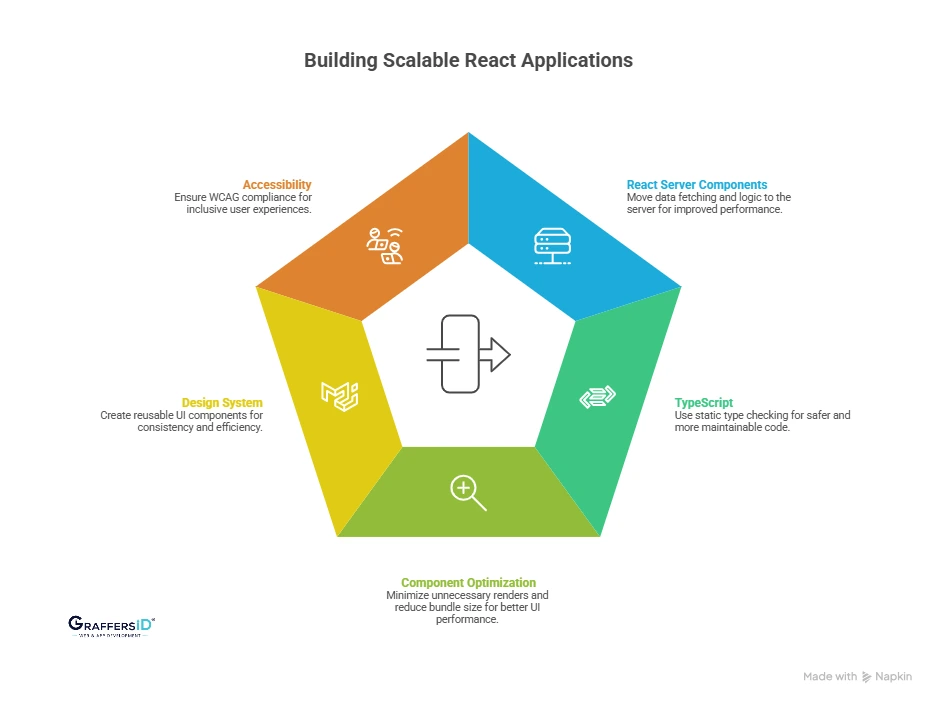

React has remained one of the most influential technologies in modern web development for over a decade. Since its launch by Meta in 2013, it has become the backbone of thousands of digital products, from fast-growing startups to enterprise platforms used by millions of users worldwide.
But React development in 2026 looks very different from what it was even a few years ago.
The ecosystem is rapidly evolving with innovations that are reshaping how modern web applications are built. Today’s React landscape is driven by:
- AI-assisted development and automation
- Server-first architectures and React Server Components
- Performance-focused rendering models
- Framework-driven development with tools like Next.js
- Type-safe, scalable applications powered by TypeScript
For CTOs, engineering leaders, and product teams, understanding these changes is no longer optional. The choices you make around architecture, frameworks, and developer tooling directly impact application performance, scalability, developer productivity, and long-term maintainability.
In this guide, we’ll break down:
- The most important React trends shaping development in 2026
- New features and improvements in modern React versions
- Best practices for building scalable and high-performance React applications
- What to look for when hiring skilled React developers

Top React Development Trends in 2026
The React ecosystem is evolving rapidly as modern web applications demand higher performance, AI-assisted development, scalable architectures, and faster user experiences.
Below are the most important React trends shaping modern web development in 2026.
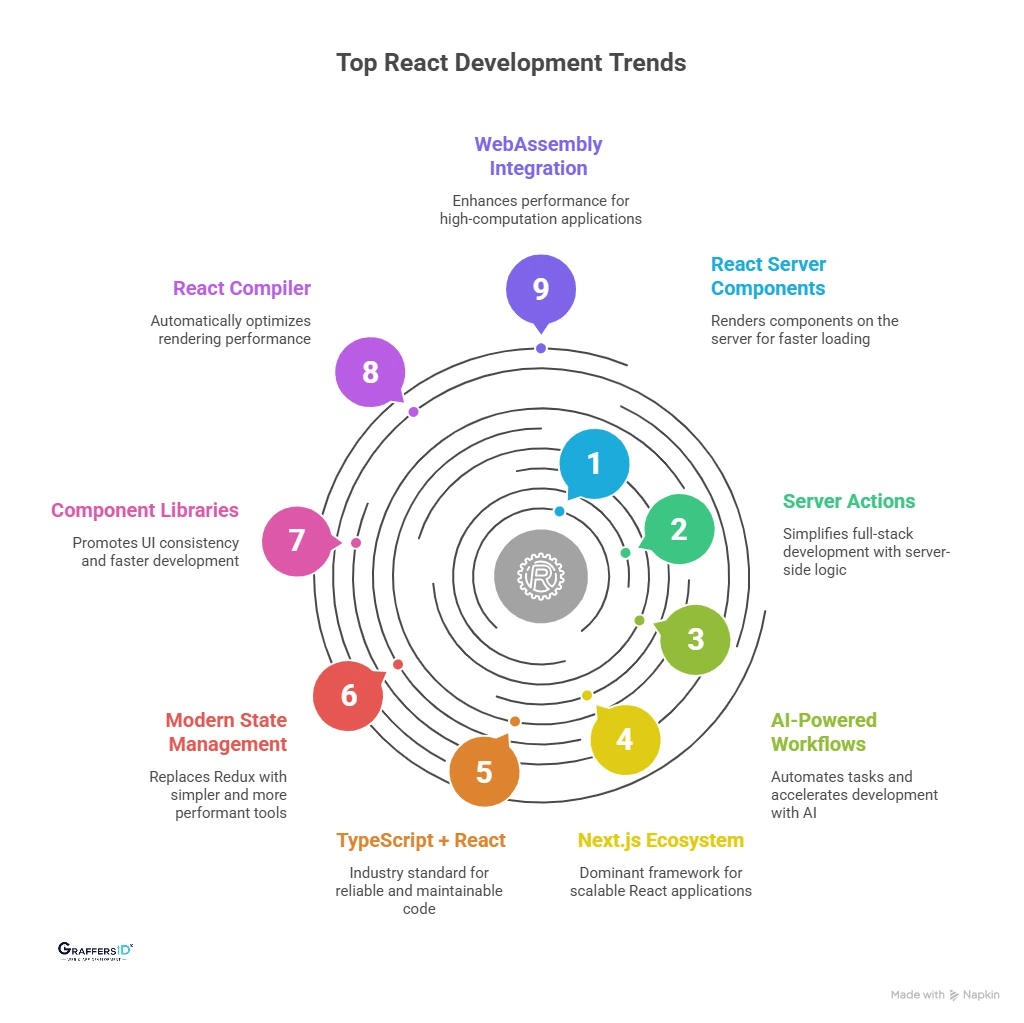
1. React Server Components (RSC) Becoming the New Standard
React Server Components (RSC) are transforming how modern React applications are built. Instead of sending large JavaScript bundles to the browser, components can be rendered directly on the server, reducing the workload on the client.
Key benefits of React Server Components include:
- Reduced client-side JavaScript
- Faster page load times
- Improved SEO performance
- Enhanced security since server logic remains hidden
Frameworks like Next.js App Router have already adopted this architecture, making RSC a core part of modern React development.
2. Server Actions Simplifying Full-Stack Development
React Server Actions allow developers to run server-side logic directly from React components without creating separate API endpoints. This approach simplifies many common operations, such as:
- Form submissions
- Database updates
- Authentication workflows
- Backend data interactions
By reducing the need for traditional REST APIs, Server Actions streamline full-stack development and improve developer productivity.
3. AI-Powered React Development Workflows
Artificial intelligence is significantly changing how React applications are developed in 2026. Developers now rely on AI tools to automate repetitive tasks and accelerate development cycles.
Common AI-driven React development use cases include:
- AI-generated React components
- Intelligent code completion
- Automated debugging and bug detection
- AI-assisted UI design suggestions
- Automated accessibility checks and testing
These tools help teams build faster, reduce development costs, and improve code quality.
4. Next.js Leading the React Framework Ecosystem
While React itself is a UI library, most production-grade applications are built using frameworks built around React. In 2026, Next.js has become the dominant framework in the React ecosystem. Next.js enables developers to build scalable applications with features such as:
- Server-Side Rendering (SSR)
- Static Site Generation (SSG)
- Edge rendering
- API routes and backend integrations
- Built-in performance optimization
Because of these capabilities, Next.js is widely used for SEO-driven websites, SaaS platforms, and high-performance applications.
5. TypeScript + React Becoming the Industry Standard
TypeScript has become the default choice for building large-scale React applications. It introduces static typing, which helps developers catch errors earlier in the development process.
Benefits of using TypeScript with React include:
- Improved code reliability
- Fewer runtime errors
- Better developer productivity
- Strong IDE support and autocomplete
- Easier scaling for large codebases
For enterprise-level applications, TypeScript is now considered a best practice rather than an optional addition.
6. Modern State Management Tools Replacing Redux
Redux was once the default state management solution for React applications. However, newer tools now offer simpler APIs, better performance, and reduced complexity. Popular state management solutions used in React applications in 2026 include:
- Zustand: lightweight and easy-to-use global state management
- Recoil: flexible state architecture designed for React
- Jotai: atomic state management with minimal boilerplate
- TanStack Query: optimized for managing server state and API data
These tools help developers build more maintainable and scalable applications with less complexity.
7. Growing Adoption of React Component Libraries and Design Systems
Modern product teams rely heavily on design systems and reusable component libraries to maintain UI consistency across applications. React’s component architecture makes it ideal for building scalable design systems that can be reused across multiple products.
Popular React UI libraries in 2026 include:
- Material UI
- Chakra UI
- Ant Design
- Radix UI
- Tailwind-based component systems
These libraries help teams build accessible, consistent, and scalable user interfaces faster.
Read More: SolidJS vs. React (2026): Which Framework Should You Choose for Your Next Web Development Project?
8. Automatic Performance Optimization with React Compiler
React is introducing smarter performance optimization through the React Compiler, which automatically improves rendering efficiency. The compiler helps by:
- Preventing unnecessary component re-renders
- Optimizing state updates
- Improving rendering performance automatically
This reduces the need for manual performance optimizations using tools such as React.memo, useMemo, and useCallback, making development simpler.
9. WebAssembly Integration for High-Performance Applications
For applications that require heavy computation, React developers are increasingly integrating WebAssembly (WASM) to improve performance. WebAssembly allows developers to run high-performance code written in languages like Rust, C++, or Go directly in the browser.
This approach is particularly useful for applications such as:
- Real-time data dashboards
- Financial trading platforms
- AI visualization tools
- Gaming and simulation platforms
By combining React with WebAssembly, developers can build high-performance web applications that rival native software.
New React Features Developers Should Know in 2026
Recent React updates have introduced several powerful features that improve performance, scalability, and developer experience. Below are some of the most important features introduced in the latest React versions.
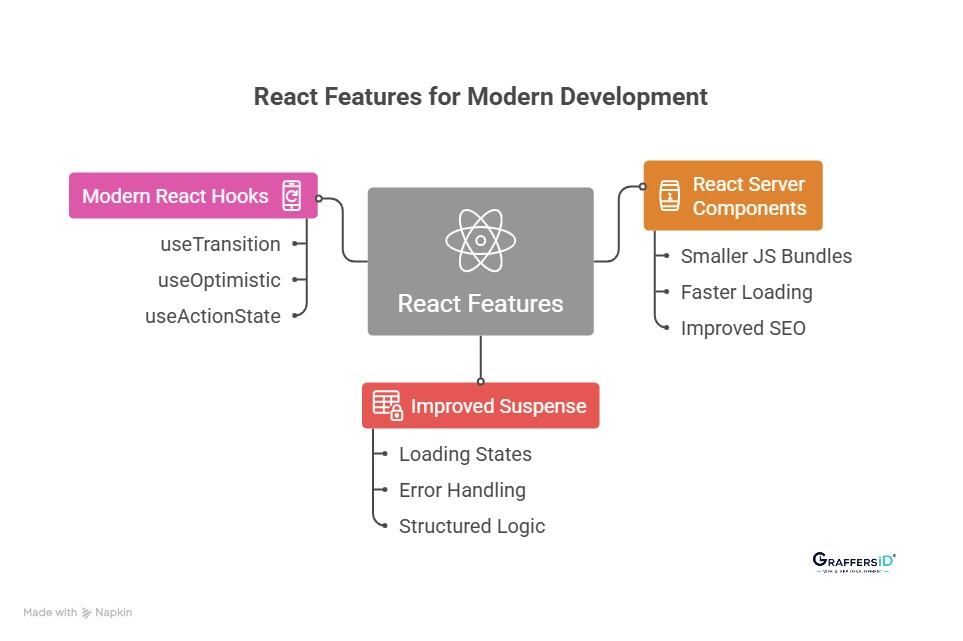
1. React Server Components (RSC)
React Server Components allow parts of the UI to be rendered directly on the server instead of the browser. This reduces the amount of JavaScript sent to the client and improves application performance. Key advantages include:
- Smaller client-side JavaScript bundles
- Faster page loading times
- Improved SEO and overall performance
This approach is widely used in frameworks like Next.js to build scalable web applications.
2. Improved Suspense for Data Fetching
React Suspense has evolved to make asynchronous data handling simpler and cleaner in modern applications. It helps developers efficiently manage:
- Loading states while data is being fetched
- Error handling during asynchronous operations
- Data fetching logic in a more structured way
This results in cleaner code, better user experiences, and more maintainable React applications.
3. Modern React Hooks for Smarter UI Updates
The latest React versions introduce new hooks that improve how applications handle updates and server actions.
- useTransition: Allows developers to prioritize important UI updates while delaying less critical ones. This keeps interfaces responsive during heavy operations.
- useOptimistic: Enables optimistic UI updates by showing expected results immediately before the server confirms the change. This improves perceived application speed.
- useActionState: Helps track the status of asynchronous actions, such as form submissions or server requests, making state management more predictable.
These features make modern React development faster, more efficient, and better suited for building scalable applications in 2026.
How to Hire Skilled React Developers in 2026 (Step-by-Step Guide)
Hiring the right React developers in 2026 requires more than basic JavaScript knowledge. Below is a practical step-by-step approach to hiring the right React developers for your team.
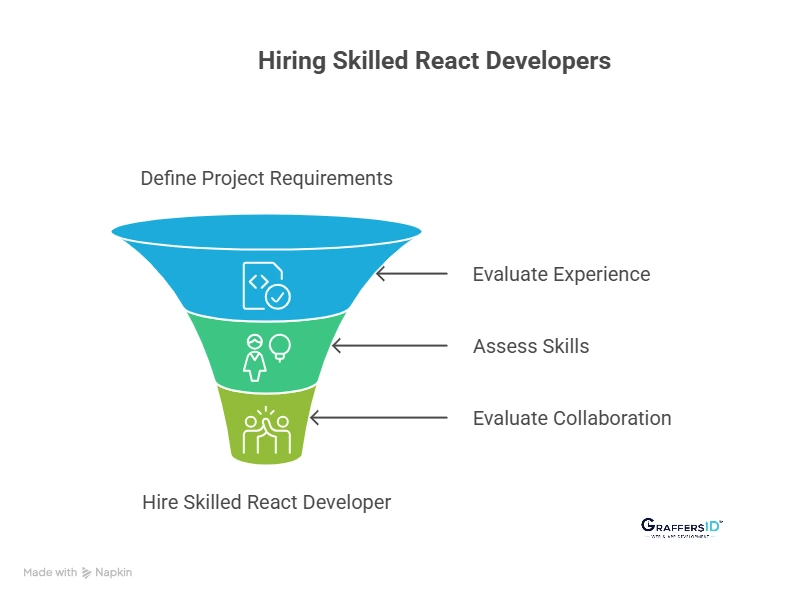
1. Define Your Project and Technical Requirements
Before starting the hiring process, clearly outline your project needs and technical stack. This helps ensure candidates have experience with the technologies your product requires. Key aspects to define include:
- Application complexity and scalability requirements
- Architecture approach (CSR, SSR, or server-first architecture)
- Framework preferences such as Next.js or Remix
- State management solutions and API integrations
Having clear requirements helps you shortlist developers with relevant expertise faster.
2. Evaluate Real React Development Experience
A strong React developer should have hands-on experience building production applications, not just theoretical knowledge. Look for experience with:
- React fundamentals and advanced hooks
- TypeScript for scalable applications
- Frameworks like Next.js
- API integrations and backend communication
- Performance optimization techniques
Whenever possible, review GitHub repositories, portfolios, or previous projects to assess coding quality and architecture decisions.
3. Assess Problem-Solving and Architecture Skills
Modern front-end developers need to think beyond UI implementation. They should understand how to build scalable and high-performance systems. During interviews, evaluate their ability to handle:
- Application architecture decisions
- Debugging complex UI issues
- Performance optimization for large applications
- Handling asynchronous data and state management
Asking candidates to explain how they solved real technical challenges can reveal their depth of expertise.
4. Evaluate Communication and Team Collaboration
React developers rarely work in isolation. They typically collaborate with multiple teams throughout the product development lifecycle. Strong candidates should be comfortable working with:
- UI/UX designers
- backend engineers
- product managers
- QA and testing teams
Clear communication and collaboration skills ensure smoother development cycles and faster delivery of high-quality products.
By following these steps, companies can identify developers who not only understand React but can also build scalable, maintainable, and high-performance applications in modern development environments.
Read More: Top ReactJS Development Companies in the USA (2026 Guide)
What Skills Should You Look for When Hiring React Developers in 2026?
Hiring the right React developer is crucial for building scalable, high-performance web applications. Beyond basic React knowledge, modern development requires expertise in the evolving React ecosystem, performance optimization, and collaboration within agile teams.
Below are the essential skills CTOs, product leaders, and engineering managers should look for when hiring React developers in 2026.